The surprising connection between a seal, a clam, and a squid


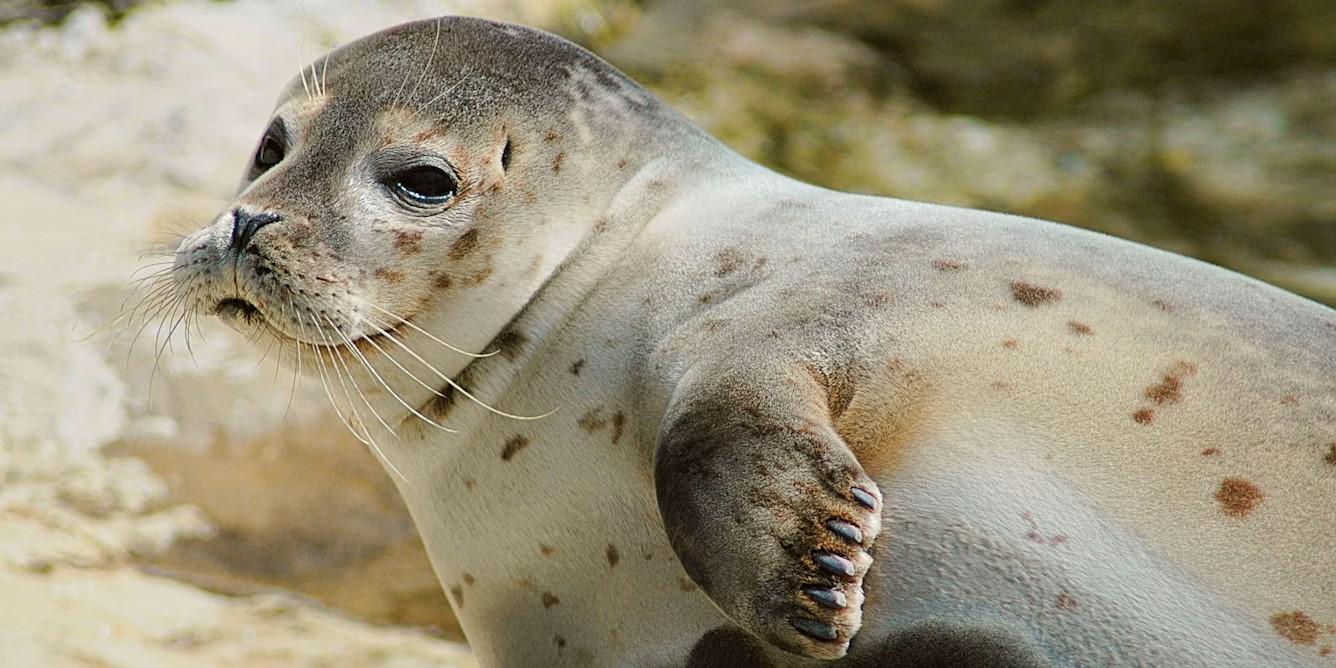
The phocids, or true seals (Phocidae), are a family of mammals adapted to aquatic environments. Wikimedia Commons., CC BY

The surprising connection between a seal, a clam, and a squid
25 October 2025
Costa del Sol News

A few days ago, my regular editor at The Conversation challenged me to find what these three very different marine animals have in common. A 400-kilogram leopard seal, a tiny clam that buries itself in the sand, and a squid that propels itself with a jet stream. I thought it would be impossible. I was wrong.

Imagine the scene: the seal leaps onto an ice floe after diving deeper than the height of the Empire State Building. The clam disappears into the sand in seconds, using only the strength of its muscular foot. The squid speeds across the ocean, displaying striking colour changes in its skin. What could these creatures possibly share?

After diving deep into research, I found four fundamental connections that reveal how evolution, when faced with the same problems, often arrives at similar solutions.

They are hydraulic engineers

This is where the connections become truly surprising. All three have mastered hydraulics, the use of pressurised fluids to generate force, the same principle that powers construction cranes and car brakes.




Seal whiskers act like radar. Wikimedia Commons., CC BY
Seal whiskers are not just facial hair. They form a sophisticated sonar system that reads changes in water pressure. Each whisker is packed with nerve endings that detect the slightest trace. 


hidrodinámico dejado por un pez. Así, la foca puede seguir esta estela invisible para rastrear a su presa hasta a 180 metros de distancia.
Aplicando el mismo principio de una forma completamente distinta, la almeja convierte su pie en un taladro muscular. Al bombear fluido desde su cavidad corporal hacia el pie, crea un ancla rígida y, luego, contrae sus músculos para arrastrar su concha hacia la arena. Es una maravilla de la ingeniería de bajo consumo.
Y si el uso que la almeja hace de la hidráulica es sutil, el calamar la convierte en un arma. Con el fin de atrapar a sus presas, presuriza el fluido de sus tentáculos para lanzarlos hacia delante a más de dos metros por segundo. Por otro lado, para defenderse, su manto actúa como el motor de un jet, expulsando agua violentamente para escapar del peligro a gran velocidad.
Se construyen con el mismo material: la piedra caliza
Esta conexión fue la que más me sorprendió: un mamífero y dos tipos diferentes de moluscos utilizan el carbonato cálcico como material de construcción de su organismo.
En el caso de la foca, esto implica integrar ese carbonato cálcico en su esqueleto, en huesos que le ayudan a gestionar la flotabilidad durante inmersiones profundas. También tiene diminutas piedras en el oído u otolitos, estructuras calcáreas esenciales para el equilibrio en su mundo submarino tridimensional.
La almeja, una maestra arquitecta, construye con esta molécula una elaborada concha cuya microestructura es más resistente que muchas cerámicas industriales, una fortaleza contra depredadores y la presión.

 
Como todos los bivalvos, la chirla (Chamelea gallina) construye su concha con carbonato cálcico. Wikimedia Commons., CC BY
Y, sorprendentemente, el calamar, descendiente de ancestros con concha como la almeja, conserva una pequeña parte de esta herencia. Posee unos pequeños y bellos órganos de equilibrio en su cabeza llamados estatolitos que, al igual que los otolitos de la foca, le ayudan a orientarse mientras navega por el océano.
Los tres externalizan su capacidad cerebral
Decir que tienen “cerebros de repuesto” podría ser simplificar demasiado, pero cada animal ha desarrollado una forma asombrosamente eficaz de gestionar tareas complejas descentralizando su sistema nervioso.
La foca, por ejemplo, puede dormir solo con medio cerebro. Este sueño “unihemisférico” permite que una mitad descanse mientras la otra permanece alerta, en una especie de piloto automático biológico. Además, una gran parte de su cerebro está dedicada exclusivamente a procesar los datos de sus bigotes, creando en esencia un “ordenador” especializado en detectar flujos.

 
El calamar europeo o calamar común (Loligo vulgaris) tiene neuronas repartidas por sus brazos, como parte de un sistema nervioso descentralizado. Wikimedia Commons., CC BY
El calamar opera con un principio de delegación similar, aunque a una escala mucho mayor. Dos tercios de sus neuronas no están en su cerebro, sino en sus brazos, cada uno de los cuales puede saborear, tocar y actuar de forma semiindependiente. Esto le permite cazar con dos brazos mientras otro explora una grieta en busca de su próxima comida.
hydrodynamic wake left by a fish. The seal can follow this invisible wake to track its prey from up to 180 metres away.
Applying the same principle in a completely different way, the clam turns its foot into a muscular drill. By pumping fluid from its body cavity into its foot, it creates a rigid anchor and then contracts its muscles to drag its shell into the sand. It is a marvel of low-energy engineering.
And if the clam's use of hydraulics is subtle, the squid turns it into a weapon. In order to catch its prey, it pressurises the fluid in its tentacles to propel them forward at over two metres per second. On the other hand, to defend itself, its mantle acts like a jet engine, violently expelling water to escape danger at high speed.
They are built from the same material: limestone
This connection surprised me the most: a mammal and two different types of molluscs use calcium carbonate as a building material for their bodies.
In the case of the seal, this involves integrating calcium carbonate into its skeleton, into bones that help it manage buoyancy during deep dives. It also has tiny stones in its ear, or otoliths, calcareous structures essential for balance in its three-dimensional underwater world.
The clam, a master architect, uses this molecule to build an elaborate shell whose microstructure is more resistant than many industrial ceramics, a fortress against predators and pressure.

 
Like all bivalves, the common clam (Chamelea gallina) builds its shell with calcium carbonate. Wikimedia Commons, CC BY
And, surprisingly, the squid, descended from shelled ancestors such as the clam, retains a small part of this heritage. It has small, beautiful balance organs in its head called statoliths which, like the otoliths of the seal, help it navigate the ocean.
All three externalise their brain capacity
To say that they have “spare brains” might be an oversimplification, but each animal has developed an astonishingly effective way of managing complex tasks by decentralising its nervous system.
Seals, for example, can sleep using only half their brain. This “unihemispheric” sleep allows one half to rest while the other remains alert, in a kind of biological autopilot. In addition, a large part of their brain is dedicated exclusively to processing data from their whiskers, essentially creating a “computer” specialised in detecting flows.

 
The European squid or common squid (Loligo vulgaris) has neurons spread throughout its arms, as part of a decentralised nervous system. Wikimedia Commons, CC BY
The squid operates on a similar principle of delegation, albeit on a much larger scale. Two-thirds of its neurons are not in its brain, but in its arms, each of which can taste, touch and act semi-independently. This allows it to hunt with two arms while another explores a crevice in search of its next meal.

Similar News

Contact us