Larios Street confirms its strength: it is the most expensive commercial street in Spain outside of Madrid and Barcelona.
It has a rent of 2,400 euros per square meter per year, with an increase of 11% compared to the previous year, according to a report by Cushman&Wakefield.
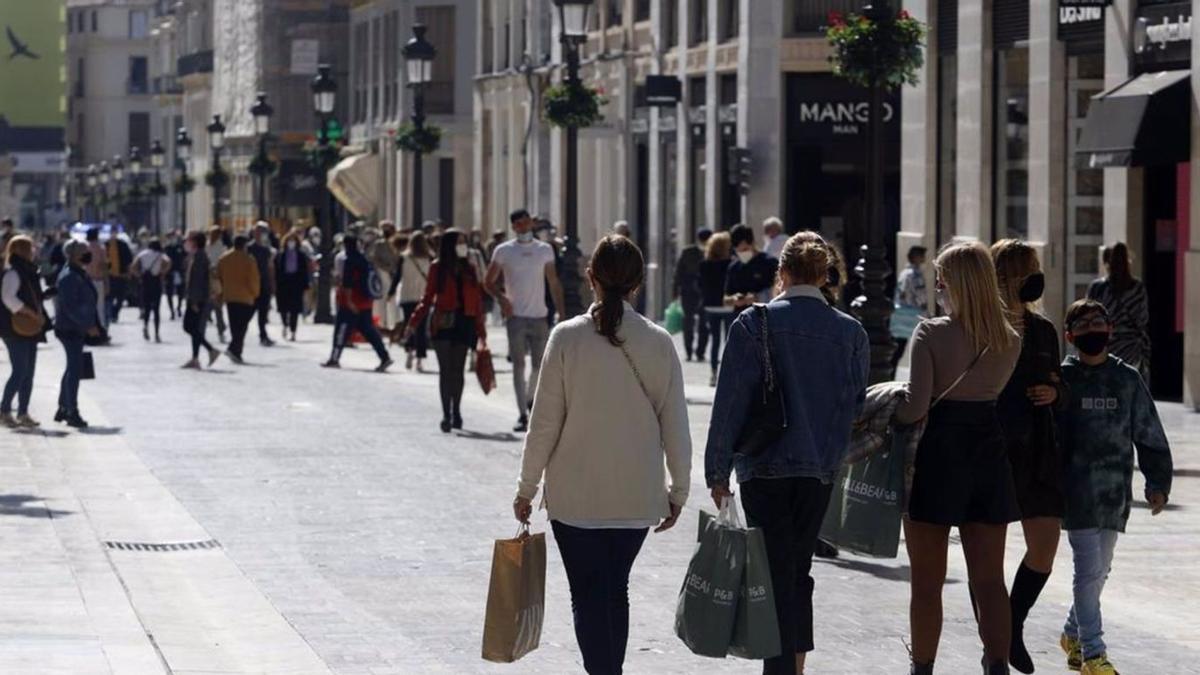

The Larios Street in Málaga has once again ranked among the most expensive commercial streets in Spain, with rents of 2,400 euros per square meter per year and a price increase of 11% compared to the previous year, according to the 34th edition of the global report 'Main Streets Across the World' by Cushman&Wakefield. This study, which analyzes rents for prime commercial streets in 92 cities around the world, places the iconic street in Málaga in sixth position in the national ranking, and it is also the first on the list that is not in Madrid or Barcelona, which occupy the top five positions. Luxury brands and retailers from other segments such as sports, cosmetics, and wellness brands continue to favor superprime commercial streets, especially those located in the most attractive tourist enclaves, according to this firm's analysis.
The Passeig de Gràcia, in Barcelona, reaffirms its position as the commercial street with the highest rents in Spain, with a prime rent of 3,180 euros per square meter per year and an increase of 6% from the previous year. The Serrano Street, in Madrid, follows closely, with rents of 3,060 euros and an increase of 4%. In Spain, completing the podium, in a shared third position and with a prime rent of 3,000 euros are Portal de l’Àngel, in Barcelona, and Gran Vía, in Madrid.
Following them, the most expensive commercial streets are Preciados, in Madrid (2,940 euros), in fourth position, and José Ortega y Gasset, also in Madrid (2,880), in fifth.
Beyond these two cities, notable streets include Larios Street, in Málaga; Fuencarral, in Madrid (2,100 euros); Colón, in Valencia, (1,560); Gran Vía de Bilbao and Tetuán, in Sevilla, (sharing ninth position with 1,500 euros); Goya, in Madrid (in tenth position, with 1,440 euros); Pelayo Street in Barcelona (1,380); Jaime III in Palma de Mallorca (1,260); Plaza de la Independencia, in Zaragoza, with 1,020 euros, the same figure as Rambla Catalunya and Avenida Diagonal, both in Barcelona. The list closes with Portaferrisa, also in Barcelona (with 960 euros per year).
Via Montenapoleone: the most expensive street in the world
The 'Main Streets Across the World' report marks for the first time a European street as the most expensive in the world. It is the Italian Via Montenapoleone, in Milan, which has recorded rents of 20,000 euros per square meter per year, with an increase of 11% compared to the same period last year. The second position is occupied by Fifth Avenue in New York with rents of 19,537 euros.
After an increase of 13%, the third position is held by the famous New Bond Street, in London, with a prime rent of 17,210 euros, which has ousted from the podium the luxurious Tsim Sha Tsui in Hong Kong, which falls from third to fourth position globally with rents of 15,697 euros. The Top 5 is completed by the Parisian Champs Elysees (12,519 euros), which has increased by 10% compared to the same period last year.
The appeal of physical stores
Data from the latest study by Cushman&Wakefield show how retailers around the world continue to bet on having a physical presence of their brands in iconic and superprime locations globally, characterized by high competition for space and a very limited offer.
"Brands are betting on physical stores in the best locations in the world. This is due to the competition to capture consumer attention, driving the need for a superior shopping experience, as well as better product display and in-store experience," explained this Wednesday the head of Retail EMEA at Cushman & Wakefield, Robert Travers.
Travers adds that while e-commerce plays "a huge role in an omnichannel strategy," the physical representation of the brand "is what really establishes a link with customers."
"As a result, availability on prime streets remains exceptionally low, resulting in high prime rents that retailers are willing to pay to secure and maintain their space," he comments.
In this line, the report indicates that, at the same time, beyond the luxury sector, retailers from other segments also continue to bet on superprime commercial streets; this has led to growth of brands from sports, cosmetics, and wellness competing for space on these streets.
As a result of this competitive tension for limited space, the year-over-year growth in rents has occurred in more than half of the 138 streets analyzed, some of which have shown significant increases.
Tourism drives superprime commerce
Tourism, and especially international tourism, is a significant driver of the performance of superprime retail destinations. Although there are inevitably local variations, approximately between 40% and 50% of luxury purchases are madeduring trips. And the benefits extend beyond the luxury sector, as tourists also spend on other retail segments and leisure activities, contributing to the overall vitality of these locations.
Cushman&Wakefield recalls that between January and September 2024, Spain received 73.9 million international tourists, representing an increase of 10.9% compared to the same period in 2023. Of this total, 88.2% of visitors arrived for leisure purposes, consolidating tourism as an essential engine of the Spanish economy.
The main countries sending tourists to Spain during this period were the United Kingdom, with an increase of 5.3%; France, with a notable growth of 14.3%; and Germany, which recorded an increase of 1.1% from the previous year.
Furthermore, the total spending by international tourists reached 99.086 billion euros in the first nine months of 2024, marking a year-over-year growth of 16.9%.

Latest news


Upcoming events
17
Sep
La Pequeña Cuba Gastro-Cultural Festival in San Pedro Alcántara 2026
18
Sep
World Wellness Weekend Marbella 2026
18
Sep
Candlelight: Queen vs. ABBA in Málaga
18
Sep
Candlelight: Coldplay and Imagine Dragons in Málaga
18
Sep
3 de Corazones – Pancho Céspedes, Enrique Ramil and José Luis Jaén in Málaga
Similar News
Málaga Airport Makes History with More Than Three Million Passengers in One Month
Málaga
Port of Málaga looks beyond its docks to support future growth
Málaga
Guide to the Virgen del Carmen Processions in Málaga and the Province
Málaga