


The menu of El Estrecho, the Marbella bar that attracted Hollywood actors and folk singers, remains alive after 70 years
In the few meters of the house designated for the bar, no more than a dozen standing patrons could fit, hence the very appropriate name of the place. The concierge who created his dream factory in Marbella.
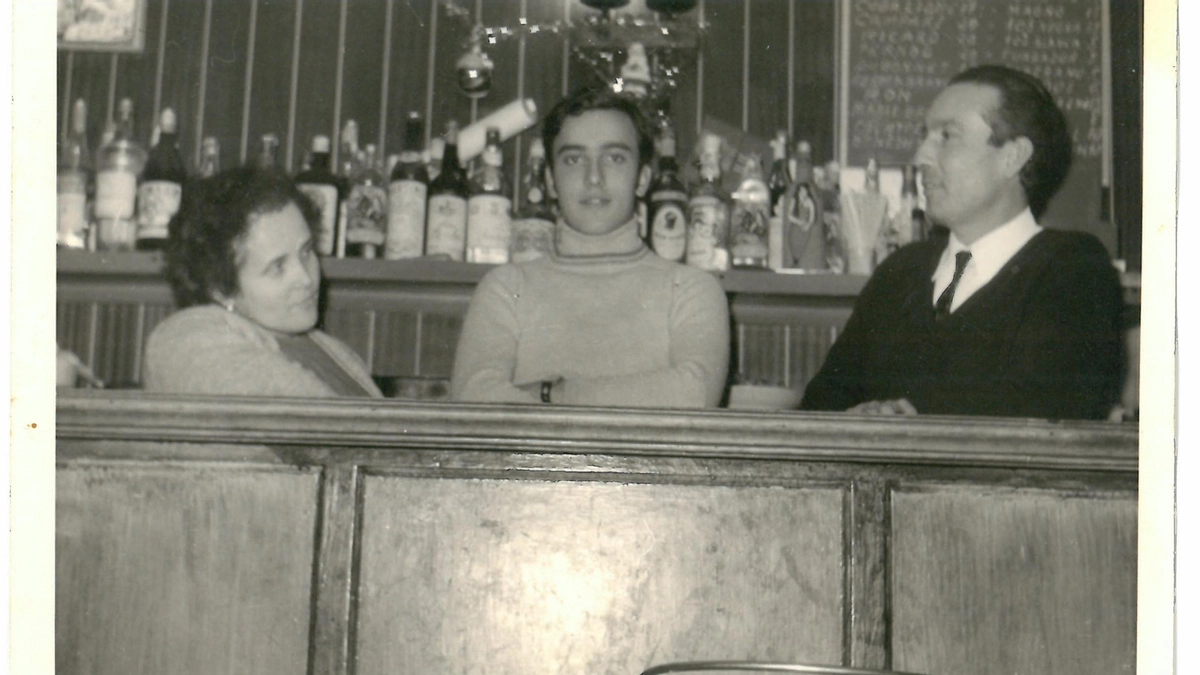

In the courtyard of the house where his grandfather Ildefonso built carts in the first half of the last century now stands the bar counter of El Estrecho. In 1954, Isabel and Paco, his parents, decided to sacrifice a few square meters of their small home in the old town of Marbella to offer what they knew best, their food. During a time of deep economic depression, they transformed part of their house into a bar, seeking a way out of a desperate situation.
—My mother used to say that with a door to the street, no matter how little you sell, you have something, comments Ildefonso Guerrero. He inherited his grandfather's name and from his parents the passion for cooking to keep alive the menu of dishes they served.
—I came into this world with a bar under my arm, says the manager of the place that was born seventy years ago when Isabel's kitchen began to serve the first tapas.
My father didn't speak another language, but he understood everyone like no one else. Interestingly, the old folks didn't know a foreign language but they understood everything. He had a group of English and Gibraltarian friends. They would go camping to play soccer matches, feeling like they represented Spain and England, they had a great time. My sister was named Elena because an English customer who came here was named Helen. She gave me a remote-controlled car that was operated with a whistle.
In the few meters of the house designated for the bar, no more than a dozen standing patrons could fit, hence the very appropriate name of the place. It worked so well that the business expanded to the patio and they built a slightly larger kitchen. In 1957, in the Plaza de la Victoria, next to the place, they installed the market and that gave more life to the area. At the end of the fifties and the beginning of the sixties, the tax collector from the City Hall used to set up his occasional office in a corner of the bar. There he sat ready to collect the stamp, the municipal contribution, from the neighbors.
Paco Guerrero with local and foreign customers. / M. H.His grandfather had been a cartwright, a craft trade disappeared. He made different types of carts on order and also built the house. His father had been working since he was nine years old at La Jaula, the bar that was in Alameda, the old Portillo bus stop.
—My memory of the bar is that it has always been full of people eating very well, my mother cooked luxuriously. From her I learned to cook, it was my great school and the success of the place has been the good food. It was the first bar in San Lázaro, then it became a street of bars.
Celebrities didn't draw attention, you saw it as something natural. Sean Connery could come and be at ease because no one harassed him. My father would tell me to attend there and not bother and there was always that respect. Ana de Pombo was a regular, she came once or twice a week because she had a boutique nearby with huge drawings by Jean Cocteau.
Hollywood actor from the twenties Mischa Auer—who acted in more than a hundred movies and participated in 1955 in La pícara molinera, starring Carmen Sevilla and Francisco Rabal— was also a customer of El Estrecho.
—Lola Flores always came here, as did Lolita, Rosarillo and even Alba when she was very young. Lola Flores brought a lot of life to the bar. She was very generous and always stirred things up, but when she left, the cash register had filled up. She was very loved. Until then you would go to Pepe Moreno's disco, you met celebrities and no one bothered them, that was a beautiful era. Everything changed with Lolita's wedding. I wasn't here that day but I had parked my car, a Seat 850 coupe, in the Church Square and when I went to pick it up the police had taken it.
In the summer of 1983, Lolita had to marry Guillermo Furiase in the sacristy of the Encarnación church in Marbella with only the priest, the godparents, and the altar boys as company. The church entrance was overwhelmed by more than five thousand people who gathered to witness the wedding. Overwhelmed by such a situation, Lola Flores ended it with a phrase that made history: if you love me at all, go away.
Actor Mischa Auer and Paco Guerrero. / M. H.When they removed the market from Plaza de la Victoria, another change occurred, the building then became a theater, a venue with a lot of cultural activity, which has produced actors like Pepón Nieto and brought a lot of life to the old town.
—The people of Marbella have always been very receptive to visitors. They have other customs, the elders used to say about foreigners, whom they saw with curiosity but in a very permissive way. Tourism has been very important for the Marbella culture, here there has always been a knowledge, a very cosmopolitan way of looking.
Our success has been to preserve the same kitchen. We continue making the dishes that my parents started: meatballs, shredded meat, chicken livers, fries, tripe (malcocinao). The book of popular Marbella cuisine by Carmen Mata faithfully collects what was cooked here and what we continue. We make homemade rice pudding. Before it was my mother and the cook Marina Carmona and now it is her daughter, Reyes Cantarero, both good cooks, whom I have insisted on doing it as we did. We were the first to prepare stuffed eggs. An English customer taught it to my mother. Back then, many Gibraltarians from the Campo de Gibraltar came here and there was a lot of exchange. They brought rock, jazz, swing records that were not available here and in the bar, this music was played while making the stuffed eggs. The bars in Marbella in the seventies were oriented towards foreigners, who have always been well received.
Ildefonso remembers that there were several bars on the road, like Salduba, Sport, Mediterráneo, Madrid, or Cantábrico. And the cinemas El Rodeo, with winter and summer rooms, Lis, or Marbella Cinema—where Gómez y Molina's jewelry store is now—where every summer they played the movie Jerónimo and it smelled of the fried squid sold there.
Mister Denis was a charming Canadian customer. He sported short white hair and mustaches that had turned black from absorbing so much dye that exposure to lead and mercury led to the worst possible outcome.
The Guerrero family at the bar entrance. / M. H.—My father had a very good relationship with him, one day he went to his house and went to the bathroom, but he got the wrong door and was surprised to see that in a room he had set up a radio station. Mister Denis had a Catalan partner, María Luisa, and lived in the Casablanca urbanization. He was over sixty years old when he died intoxicated by the dye. The issue at the time was much commented among those who knew him. We then learned that this very correct gentleman, who dyed his mustaches, was a spy.
—I see and admire the new cuisine, but I prefer traditional cooking. I recognize that this innovation can be spectacular in textures and flavors, the research work they do is important. I go to Dani García's restaurants and always learn something. In a book that Dani made with great chefs, he highlighted the papa marengo with dogfish cooked by Reyes Cantarero and appreciated the dishes from our bar in general. He also relies a lot on traditional cooking.
We continue serving meat with tomato or tripe in a clay pot. We maintain that cooking, we have only added chorizo in wine and stuffed peppers to the menu. At the first tapa festival held in Málaga at the end of the nineties, we were awarded first prize for the dishes we brought, the Russian salad, tripe with chickpeas, or snails, the entire bar's cuisine was distinguished. There was a time when the Buchinger therapeutic fasting clinic sent its patients here, to the bar, to eat tripe. We maintain a daily stew dish, traditional stews, malcocinao or beans. I learned everything from my mother, while I was studying Tourism in Málaga. I would come to work with her and knew how to make the entire menu.
Ildefonso Guerrero behind the bar. / M. H.In the summer of 1970, when Puerto Banús was inaugurated, there was a movement of some local establishments. Menchu Escobar, the public relations of Marbella, or El Nido de Jaime de Mora, the opening of the port affected the old town. In the area of La Fonda, where the first pubs and tablaos like Ana María's were already existing, several of the places closed and moved there.
—I think there has not been enough thought given to protecting local commerce. Now with so many hospitality businesses and the occupation of public roads, every street that is refurbished or pedestrianized ends up in restaurant terraces. The sidewalks of Notario Oliver street have turned into a dining room. Lobatas street is one of the few in the old town where town people still live. Gentrification and a loss of identity have occurred. Now the town has the sound of suitcase wheels. I'm not saying everything in the past was better but the spirit of the neighborhood was lost. From the old shops, only four stores remain. The fruit shop nearby, its owners are going to retire and that's it. Fewer and fewer people live in the center as happened in the eighties, then it was because they could buy a villa or a townhouse in some urbanization. Today those houses are too big for them and they would like to return.
Every day at the door I receive cards from people interested in taking over the bar but I am not interested. I have lived this since I was a child and my children know the workings of the business, Andrea is a piano teacher and Martín a language teacher, but like in my case they also came during the summers and Easter to work in the bar and they love it. We are now in the third generation. I have worked at the reception of the Biblos de Mijas hotel and El Fuerte for two years. And I decided to continue here, I understood that this was a business one could live from. To run it I count on the right people, Reyes in the kitchen and Jonatan Mérida, the head of the hall, who know how to do their job well. Eight families live from this bar, I have eight employees who work here all year round.

Latest news





Upcoming events
12
Nov
El Desembarco, la traición de Viriato at La Caja Blanca
12
Nov
HOMER El Mero Mero at Sala Trinchera Málaga
13
Nov
Marbella Startup Lab – Innovate & Collaborate
13
Nov
Candlelight: Coldplay & Imagine Dragons at Sala Fundación Unicaja María Cristina
13
Nov
Candlelight: Tribute to Ludovico Einaudi at Anantara Villa Padierna
Similar News
Prevent the Flu
Marbella
Funding will be provided for a UMA scientist's research to slow down the development of Alzheimer's
Marbella

VARIcenter, medical excellence in vascular health care
Marbella
