


"Among the ten most common tumors, three are urological"
After presiding over the Spanish Association of Urology, the head of the Urology Service at Hospital Puerta del Mar analyzes the current challenges of his specialty.
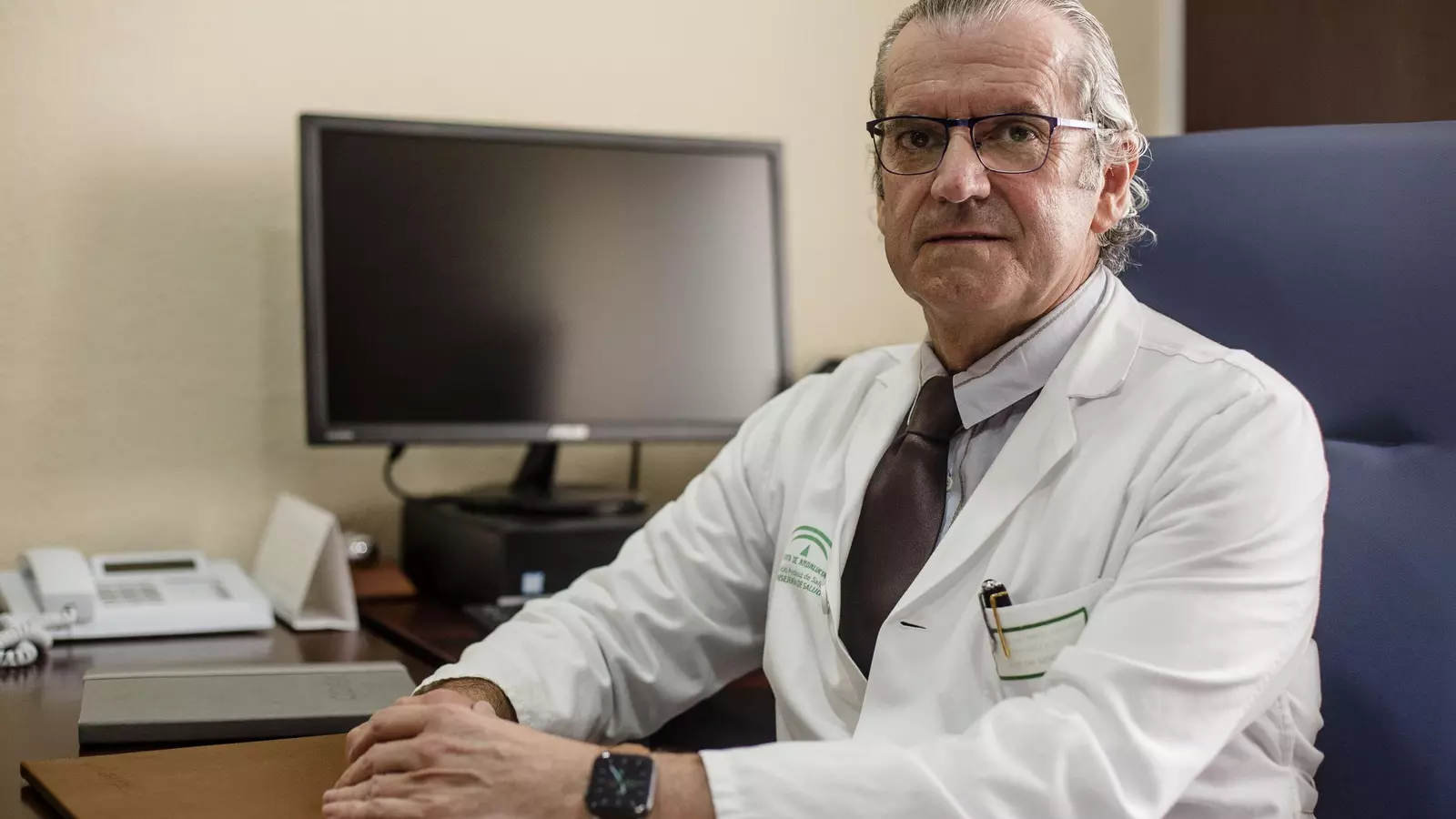

After hosting the National Congress of the Spanish Association of Urology in Cádiz, a scientific society he has presided over for the last four years, Dr. José Luis Álvarez Ossorio is now the director of the board of the Foundation for Research in Urology (FIU).
-What areas of your specialty have gained particular prominence in recent years?
-One of the fundamental pillars is uro-oncology, that is, the treatment of genitourinary tumors. Prostate cancer is the most common in men. This year, about 32,000 cases will be diagnosed in Spain. Following in frequency are bladder cancer and kidney cancer. In fact, among the ten most common tumors, three are urological. Urology is a medical-surgical specialty. We diagnose, medically treat, and if necessary, also perform surgery on the patient. In cases of advanced cancer, we also administer systemic treatments in day hospitals: intravenous, subcutaneous, or oral. Another very common pathology is benign prostatic obstruction. We treat it with techniques such as transurethral resection of the prostate (TURP), which has been used for many years, and more recent ones like prostate enucleation with laser (HoLEP), the Aquablation system, or REZUM, which seek to speed up recovery and reduce hospital stay.
-How has the implementation of robotic surgery evolved in Andalusia?
-It has been one of the great advances in our specialty. The first platforms were installed in Málaga and Sevilla in 2007-2008. For years they were the only ones in Andalusia, but now there is a platform in each province thanks to the efforts of the Andalusian health system. Robotics allows for greater surgical precision, fundamental in interventions such as radical prostatectomy, where we aim not only to remove the tumor but also to preserve urinary continence and, as much as possible, sexual function. Until recently, only the Da Vinci system existed, but new platforms like Versius, Hugo, or Toumai have now been incorporated.
“We are promoting teleconsultations to streamline processes and improve care”-What advancements would you highlight in hospital organization or coordination with Primary Care?
-Primary Care is fundamental, it is the gateway to the system. The family doctor is the one who knows the patient best. Continuity of care between primary care and urology is key, but there is still room for improvement. Sometimes there are discrepancies in the referral criteria.
-What can be done to improve?
-We go to health centers, organize meetings, establish referral and follow-up protocols. We are also promoting teleconsultations, which allow us to streamline processes and improve care.
-How is the use of Artificial Intelligence being incorporated?
-We have developed interdisciplinary guidelines that cover seven types of urological tumors: prostate, kidney, bladder (muscle invasive and non-muscle invasive), ureter, penis, and testicle. They incorporate a chatbot based on generative AI that helps reduce clinical variability and save time. Additionally, AI is advancing in other fields, such as radiological image interpretation or pathological anatomy, and can help predict which patients will respond best to certain treatments, which is crucial in oncology.

Latest news





Upcoming events
12
Nov
El Desembarco, la traición de Viriato at La Caja Blanca
12
Nov
HOMER El Mero Mero at Sala Trinchera Málaga
13
Nov
Marbella Startup Lab – Innovate & Collaborate
13
Nov
Candlelight: Coldplay & Imagine Dragons at Sala Fundación Unicaja María Cristina
13
Nov
Candlelight: Tribute to Ludovico Einaudi at Anantara Villa Padierna
Similar News
Prevent the Flu
Marbella
Funding will be provided for a UMA scientist's research to slow down the development of Alzheimer's
Marbella
VARIcenter, medical excellence in vascular health care
Marbella
