


The Spain Structured by Genetics
Experts and managers call for a coordinated and sustainable national strategy to not miss the train of innovation and integrate precision personalized medicine into the healthcare system.

Precision personalized medicine is an approach that tailors disease prevention and treatment to the individual characteristics of each person, combining genetic information, biomarkers, clinical history, and other factors. It relies on technologies such as DNA sequencing, molecular biomarker analysis, and the use of big data to integrate large volumes of clinical and biological data, enabling more precise decisions in diagnosis, prognosis, and therapeutic choice. This approach is already being applied in areas such as oncology, pharmacogenomics, and the detection of mutations responsible for rare genetic diseases.
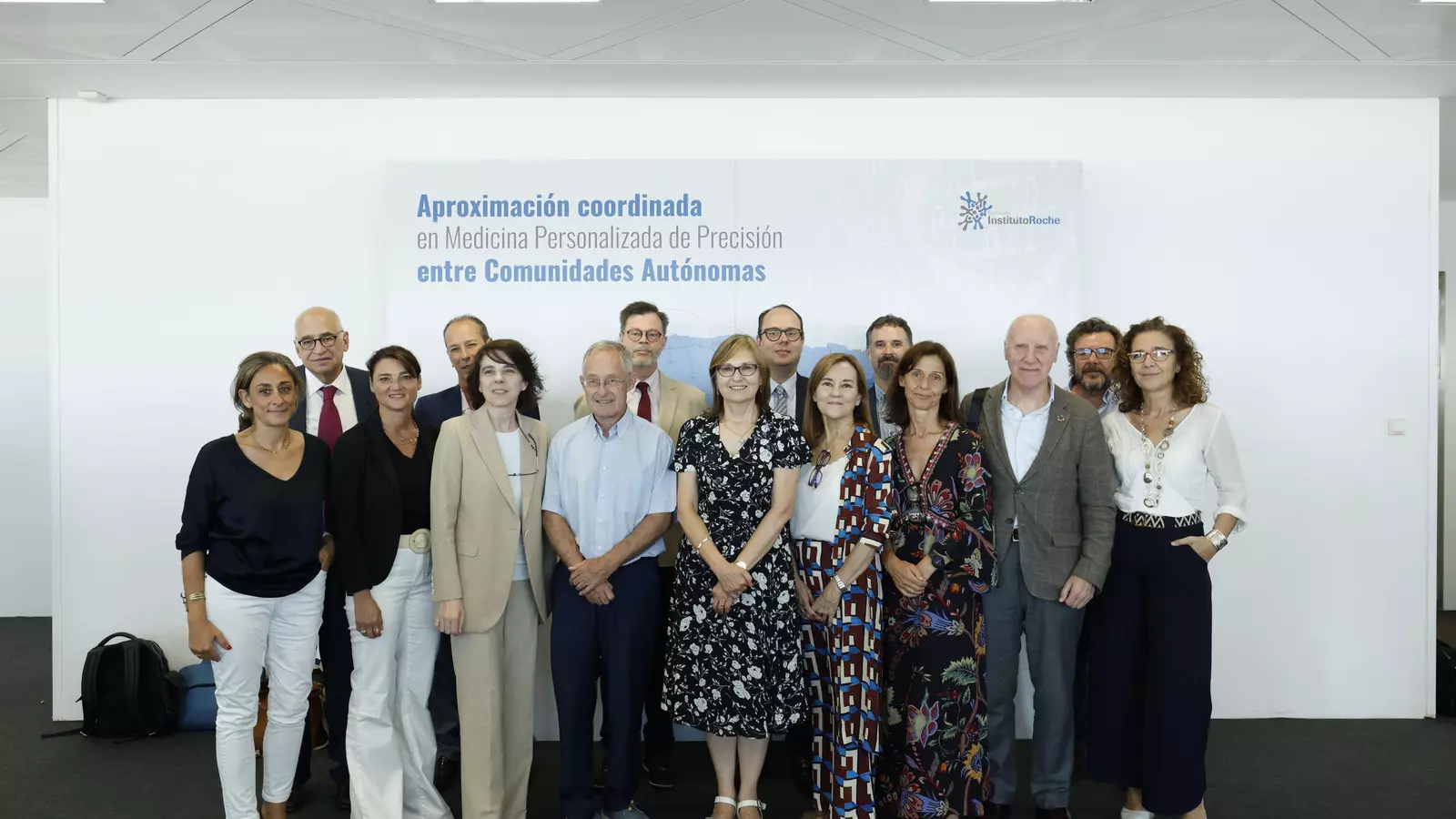
However, its implementation in the healthcare system remains a complex process, requiring not only investment but also a clear strategy from health policy. This was highlighted during the event ‘Coordinated Approach in Precision Personalized Medicine among Autonomous Communities’, organized by the Roche Institute Foundation last Wednesday in Madrid. During the event, the Secretary of State for Science, Innovation, and Universities, Juan Cruz Cigudosa, emphasized the need to incorporate these technologies under the principles of equity and sustainability, and pointed to the Advanced Health PERTE as an example of public-private collaboration aimed at this purpose.
The "great treasure of data"
The meeting brought together experts in personalized medicine and regional officials to discuss advances and challenges in this field. One key point noted was the digitalization of the system and the use of clinical data both in clinical practice and research. "Data is the great treasure," said Joaquín Dopazo, director of the Computational Medicine Platform of the Progreso y Salud Foundation. "30% of the data generated in the world are health-related, and we outsource computing and analysis processes outside the system. We need nodes that integrate this structure within the healthcare realm."
Dopazo proposed outsourcing computing services through public-private consortia and cited the role of Contract Research Organizations (CROs), companies that provide services to the pharmaceutical and biotechnology industries for conducting clinical research tasks. He also highlighted the value of retrospective studies with health databases, which offer valuable information and a high return on investment.
The event was opened by Dr. Ángel Carracedo, director of the Galician Public Foundation of Genomic Medicine and coordinator of the Genomic Medicine Group at the University of Santiago de Compostela, who argued that "precision personalized medicine should be a right for all citizens, not a privilege conditioned by the autonomous community in which they live."
Carracedo reviewed various strategies underway at both the state and regional levels, and highlighted the recent approval of the Catalog of Genetic and Genomic Tests within the Common Services Portfolio of the National Health System as a decisive milestone for the consolidation of this model.
Strategic Axes
The event also presented a report from the Roche Institute Foundation, analyzing the state of personalized medicine in different regions and proposing eight strategic axes to advance coordination: governance, regulation, funding, digitalization, research, translation to the clinical setting, new professional profiles, and training. Among the proposals discussed, participants agreed on the need to create a Technical Commission for Precision Personalized Medicine within the Interterritorial Council of the SNS, composed of technical rather than political profiles, to ensure the continuity and coherence of initiatives.
Another shared aspect was the importance of training. Spain has been the last European country to create the specialties of Medical Genetics and Laboratory Genetics, approved just ten days ago by the Ministry of Health. For many attendees, this step is as symbolic as it is essential to ensure the sustainable and equitable development of future medicine.
Cooperation between autonomous communities
Dr. Enrique De Álava, specialist in Pathological Anatomy and coordinator of the Plan for Personalized and Precision Medicine of the Health Department of the Andalusian Regional Government, stated that "the talent and knowledge exist, but without cooperation between autonomous communities, it will not be fully utilized. We need to share best practices, harmonize criteria, and establish common standards to achieve a more precise and fair medicine for all."

Latest news





Upcoming events
12
Nov
El Desembarco, la traición de Viriato at La Caja Blanca
12
Nov
HOMER El Mero Mero at Sala Trinchera Málaga
13
Nov
Marbella Startup Lab – Innovate & Collaborate
13
Nov
Candlelight: Coldplay & Imagine Dragons at Sala Fundación Unicaja María Cristina
13
Nov
Candlelight: Tribute to Ludovico Einaudi at Anantara Villa Padierna
Similar News
Prevent the Flu
Marbella
Funding will be provided for a UMA scientist's research to slow down the development of Alzheimer's
Marbella
VARIcenter, medical excellence in vascular health care
Marbella
