


Twelve Málaga Municipalities Now Have More Than 40% Foreign-Born Residents
Benahavís leads Málaga’s new demographic map, with almost two out of every three residents born outside Spain. Municipalities on the Costa del Sol and in the Axarquía record the highest percentages, while Málaga city has the largest foreign-born population in absolute terms.
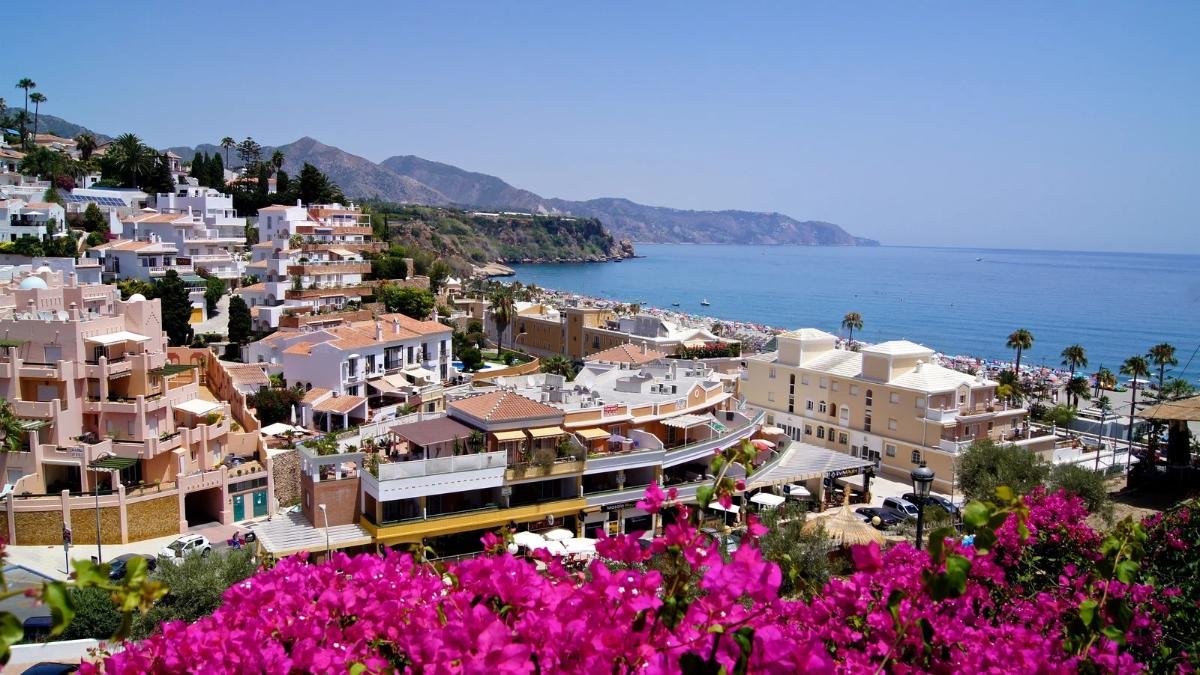

International residents reshape Málaga province
Foreign-born residents are no longer concentrated exclusively in the Costa del Sol’s large tourist destinations. The latest population figures show that this demographic transformation also extends to small inland villages, particularly in the Axarquía.
In 12 of Málaga province’s 103 municipalities, more than 40% of residents were born outside Spain.
Benahavís leads by a substantial margin. A total of 6,684 of its 10,148 residents were born abroad, representing 65.9% of the population.
This means that almost two out of every three people registered in the municipality were born in another country. Cómpeta ranks second at 48.4%, followed by Sayalonga at 47.2%.
The figures confirm Málaga’s strong ability to attract international residents, although they are distributed unevenly across the province.
The 12 municipalities with the highest percentages
| Municipality | Total population | Born abroad | Percentage |
|---|---|---|---|
| Benahavís | 10,148 | 6,684 | 65.9% |
| Cómpeta | 3,848 | 1,862 | 48.4% |
| Sayalonga | 1,725 | 814 | 47.2% |
| Fuengirola | 85,484 | 38,550 | 45.1% |
| Alcaucín | 2,819 | 1,256 | 44.6% |
| Torrox | 22,261 | 9,806 | 44.1% |
| Manilva | 18,619 | 8,127 | 43.6% |
| La Viñuela | 2,098 | 896 | 42.7% |
| Marbella | 163,012 | 65,978 | 40.5% |
| Comares | 1,335 | 540 | 40.4% |
| Árchez | 469 | 189 | 40.3% |
| Frigiliana | 3,550 | 1,429 | 40.3% |
The ranking combines large coastal destinations associated with residential tourism and small white villages in the Axarquía. This shows that Málaga does not have a single model of international resident.
Benahavís is Málaga’s most international municipality
Benahavís remains the municipality with the highest proportion of people born abroad. Its 65.9% is well above the levels recorded in Marbella, Fuengirola, Manilva and other established Costa del Sol destinations.
Its proximity to Marbella and Estepona, luxury housing developments, golf courses and internationally focused property market help explain its appeal.
The transformation has been taking place for years. Benahavís has expanded rapidly over the past decade, and multilingual daily life has become a normal feature of the municipality.
The indicator refers to country of birth rather than current nationality. It therefore includes people born abroad who may subsequently have obtained Spanish citizenship.
Seven Axarquía municipalities appear on the list
The other major concentration is in the Axarquía. Cómpeta, Sayalonga, Alcaucín, Torrox, La Viñuela, Comares and Árchez all appear among the 12 municipalities with the highest proportion of foreign-born residents.
Their presence shows the continued appeal of inland villages to people seeking rural surroundings, tranquillity, a mild climate and proximity to the coast.
Many are small municipalities where the arrival of several hundred residents can substantially alter the demographic balance.
Cómpeta has 1,862 foreign-born residents out of a total population of 3,848. Sayalonga has 814 out of 1,725, while Alcaucín records 1,256 residents born abroad.
Torrox follows a different model because of its size and direct connection with the coast. It has 9,806 foreign-born residents, representing 44.1% of its 22,261 inhabitants.
Fuengirola and Marbella stand out
Fuengirola ranks fourth in percentage terms but is particularly notable for its total number of international residents. Of its 85,484 inhabitants, 38,550 were born abroad.
The proportion reaches 45.1%, meaning that almost one in every two Fuengirola residents was born in another country.
Marbella also combines a high percentage with a substantial population. The city has 65,978 foreign-born residents, representing 40.5% of its 163,012 inhabitants.
These figures reflect decades of residential tourism, property investment, service-sector employment and international residents settling permanently on the Costa del Sol.
Manilva completes the western group, with 8,127 foreign-born residents and a proportion of 43.6%.
Málaga city leads in absolute numbers
The ranking changes completely when the total number of people is considered instead of percentages.
Málaga city has the province’s largest foreign-born population, with 108,076 residents. However, because the city’s total population stands at 603,514, they represent 17.9%.
The capital is followed by Marbella with 65,978; Fuengirola with 38,550; Mijas with 38,194; and Benalmádena with 30,327.
This demonstrates the importance of distinguishing between absolute and relative figures. Málaga city has the greatest number, but foreign-born residents have a much larger influence on everyday life in smaller municipalities such as Benahavís, Cómpeta and Sayalonga.
One in four people in Málaga province was born abroad
Málaga province had 1,814,538 inhabitants on 1 January 2026. Of these, 457,201 were born outside Spain, representing 25.2% of the total.
The increase has been significant. In 2021, the province had 342,364 foreign-born residents, equivalent to 20.2% of its population.
Over five years, this group grew by approximately 114,800 people and increased its demographic share by five percentage points.
International residents have been one of the principal drivers of Málaga’s population growth, particularly during a period characterised by remote working, international mobility and the province’s consolidation as a year-round place to live.
Country of birth is not the same as nationality
The figures classify residents by their country of birth, not their present citizenship.
Someone born in the United Kingdom, Argentina, Morocco or Germany who later became a Spanish citizen remains within the foreign-born category.
Similarly, a Spanish citizen born outside Spain may also be included.
The proportion of residents holding foreign nationality is therefore generally lower than the percentage born abroad. The two indicators describe related but different demographic realities.
Housing and public-service challenges
International population growth generates economic activity, consumption and cultural diversity, but it also creates challenges.
In small municipalities, new residents can help sustain shops, restaurants and services that might struggle to survive on local demand alone.
However, strong residential demand can also place pressure on property and rental prices, particularly where the housing supply is limited.
Local councils must provide administrative services and public information to residents speaking different languages and coming from widely varied backgrounds.
Transport, healthcare, water management and other essential services may also need to be expanded, especially in municipalities where the effective population rises further during holiday periods.
Two different international population models
The provincial map broadly reveals two distinct patterns.
The western Costa del Sol has urban and residential municipalities connected with tourism, golf, property and international services. Benahavís, Fuengirola, Manilva and Marbella are the clearest examples.
In the Axarquía, small villages and rural properties play a more important role. Cómpeta, Sayalonga, Alcaucín, La Viñuela, Comares and Árchez show that international settlement extends well beyond major coastal developments.
Torrox and Frigiliana sit between the two models, combining tourism, proximity to the coast and a strong local identity.
An increasingly diverse province
The latest figures confirm that Málaga’s international character is not restricted to airports, beaches or tourist districts. It has become part of the everyday structure of many municipalities.
In some villages, foreign-born residents now play a decisive role in the economy, community life and the survival of local services. The challenge will be to benefit from this diversity while preserving access to housing and each municipality’s identity.
Málaga no longer merely welcomes visitors from around the world. A growing proportion have chosen to stay and make the province their permanent home.

Latest news


Upcoming events
28
Nov
Atajate Fiesta del Mosto 2026
28
Nov
Discover Málaga’s Automobile and Fashion Museum – Theatrical Tour
28
Nov
Transdisciplina T#26 – 10th Anniversary Audiovisual Festival in Málaga
28
Nov
Tomasito García y sus Desensamblados – Venezuela, Caribbean and World Music in Málaga
28
Nov
Candlelight: Tribute to Phil Collins at Museo Carmen Thyssen Málaga Date: Saturday, 28 November 2026.
Similar News

Pizarra Offers Free Traditional Migas, Live Music and a Craft Market This Sunday
Provincia de Málaga

More Than 200 New Homes Planned in Estepona, with Prices from €395,000 to Over €2 Million
Provincia de Málaga

How to Keep Your Poinsettia Alive Throughout Christmas: The Watering Mistake That Can Ruin It
Provincia de Málaga
