More than 2,400 Andalusian schoolchildren to help protect beaches and marine wildlife
Fundación Unicaja and Fundación Aula del Mar Mediterráneo are expanding their marine environmental education programme to 48 coastal municipalities across Andalusia during the 2026/2027 academic year. Schoolchildren will monitor beach conditions, study marine biodiversity and collect environmental data, with the initiative aiming to cover up to 100 kilometres of coastline.
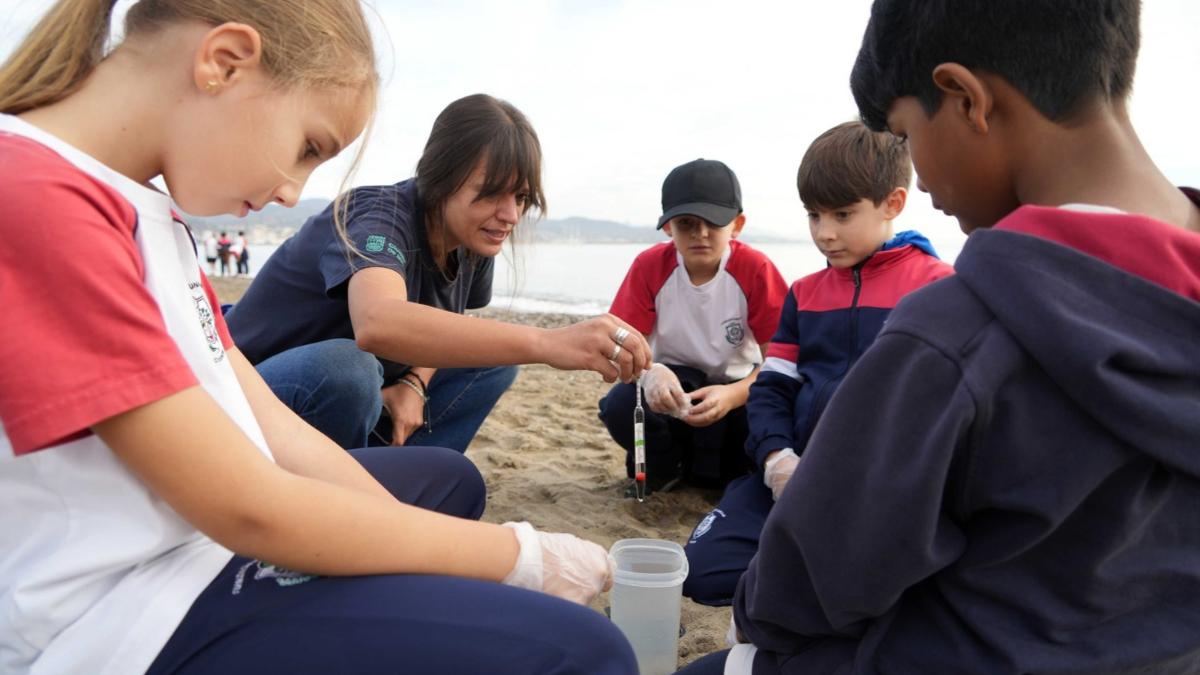

Beaches across Andalusia are set to become outdoor classrooms for thousands of schoolchildren, who will learn about marine conservation by investigating the condition of their local coastline. The Marine Protection School Network (Red Escolar de Protección Marina, REPM), supported by Fundación Unicaja and Fundación Aula del Mar Mediterráneo, is preparing a new edition that aims to involve more than 2,400 pupils in coastal monitoring and environmental protection.
The programme combines environmental education with community participation and is expected to reach 48 schools in 48 coastal municipalities across Andalusia, stretching from Almería to Huelva, during the 2026/2027 academic year.
The initiative encourages pupils to take an active role in observing beaches near their schools, learning to identify marine biodiversity, recognise possible environmental changes and collect information about coastal conditions.
The aim is to ensure that environmental education goes beyond a one-off visit to the beach, helping schools develop an ongoing relationship with the natural areas around them.
According to the organisers' projections, participation could reach 2,880 pupils and approximately 100 teachers, with between 48 and 100 kilometres of coastline monitored through the programme.
Málaga pupils become guardians of the coastline
One of the activities demonstrating how the initiative works has already taken place at Misericordia Beach in Málaga.
Around 100 pupils from Colegio Fundación Unicaja Rosario Moreno participated in an environmental education session designed to introduce them to coastal ecosystems and teach them how to assess their condition.
The activity began with an explanation of the programme and the responsibilities involved in monitoring the coastline.
A four-kilometre stretch of Misericordia Beach was then selected for a practical environmental assessment.
During the visit, pupils observed different features of the coastal environment, collected samples and recorded information about the conditions they encountered.
The activity also included a group presentation, allowing participants to share their findings and discuss the results of their observations.
This approach introduced the children to several stages of environmental research, including observation, data collection, interpretation and communication.
At the end of the session, participants received the 'Marine Protection School Network Sentinels' certificate, recognising their contribution to the initiative.
What is the Marine Protection School Network and how does it work?
The Marine Protection School Network is an educational programme designed to bring scientific knowledge about the sea into schools through practical activities.
Its defining feature is that participating schools become responsible for observing a specific stretch of coastline near their location.
Each group is expected to monitor at least one kilometre of coastline, carrying out environmental observation, assessment and follow-up activities.
The initiative is not intended to replace professional environmental monitoring or the responsibilities of public authorities.
Instead, its purpose is to help schoolchildren understand the characteristics of coastal environments and recognise factors that may affect their conservation.
The planned activities include:
- Biodiversity observation: Identifying organisms and natural features found in coastal habitats.
- Beach condition assessments: Examining the environmental characteristics of selected coastal areas.
- Data collection: Using questionnaires and observation records to document findings.
- Coastal monitoring: Carrying out activities that help pupils understand changes in the local environment.
- Teamwork: Working in groups to analyse information and present results.
- Environmental awareness: Learning responsible habits that contribute to marine conservation.
This approach gives pupils an introduction to basic scientific research methods outside the classroom.
It also provides teachers with opportunities to connect academic subjects with environmental issues affecting their local communities.
Up to 100 kilometres of Andalusian coastline to be monitored
The expansion represents a significant increase in the scale of the programme compared with the previous academic year.
For 2026/2027, Fundación Aula del Mar Mediterráneo plans to organise 48 educational coastal itineraries across Andalusia.
The programme expects to involve between 2,400 and 2,880 pupils, supported by approximately 100 teachers.
Each participating group will monitor at least one kilometre of coastline, although some may cover larger areas.
If the targets are achieved, the network could monitor between 48 and 100 kilometres of the Andalusian coast.
| Indicator | Target for 2026/2027 |
|---|---|
| Participating municipalities | 48 |
| Schools | 48 |
| Expected pupils | 2,400–2,880 |
| Estimated teachers | Approximately 100 |
| Educational itineraries | 48 |
| Minimum coastline per group | 1 kilometre |
| Total coastline targeted | 48–100 kilometres |
| Geographical coverage | Andalusian coast, from Almería to Huelva |
These figures represent the programme's objectives rather than participation numbers already achieved.
The final results will depend on the number of schools taking part and the development of the planned activities.
The organisers hope to establish a coordinated educational network covering different parts of Andalusia's coastline.
The programme expands after involving more than 2,000 pupils
The decision to expand the initiative follows the results achieved during the previous academic year.
That edition involved 2,067 pupils from 23 schools, who carried out environmental monitoring activities in 12 Andalusian municipalities.
Together, the participating groups monitored 35.5 kilometres of coastline.
The experience has provided the foundation for a larger programme involving more schools, students and coastal areas.
The new edition aims to add 25 schools, increasing the total from 23 to 48.
The number of participating municipalities is also expected to rise considerably.
| Indicator | Previous edition | 2026/2027 target |
|---|---|---|
| Pupils | 2,067 | 2,400–2,880 |
| Schools | 23 | 48 |
| Municipalities | 12 | 48 |
| Coastline monitored | 35.5 km | 48–100 km |
The comparison highlights the scale of the planned expansion.
However, the programme is not simply focused on increasing participation.
It also aims to strengthen its educational activities and continue monitoring coastal areas studied during earlier editions.
Environmental data collected by pupils will contribute to scientific assessments
One of the most significant aspects of the Marine Protection School Network is that pupils' observations will not be used solely as classroom exercises.
Information recorded through coastal assessment questionnaires will be reviewed and analysed by the technical team at Fundación Aula del Mar Mediterráneo.
The organisation will use these findings to prepare reports on the environmental conditions of the areas studied.
This approach is closely linked to citizen science, a form of public participation in which people who are not professional researchers contribute observations and data that may support scientific work.
Within the school network, pupils carry out their activities under the guidance of teachers and the programme's technical specialists.
Collecting information from different coastal locations can help develop a better understanding of the characteristics and changing conditions of these environments.
Repeated observations also allow pupils to discover that natural ecosystems are constantly evolving rather than remaining unchanged over time.
The quality and scientific usefulness of the results will depend on the data collection procedures and subsequent analysis by specialists.
An interactive map will show the beaches studied by participating schools
The 2026/2027 edition will introduce additional resources to support the programme and make its results more accessible.
Among the planned developments is an interactive map of the Marine Protection School Network.
The map will display the coastal areas assigned to participating schools and help illustrate the environmental work carried out in different locations.
The resource is intended to provide an overview of the network's activities across the Andalusian coastline.
Organisers also plan to develop a Marine Protection School Network Teaching Guide for educators.
The guide will provide learning materials and resources to support activities involving coastal observation and marine conservation.
These developments will be accompanied by continued monitoring of coastal areas studied during previous editions.
Maintaining observations over time can be particularly valuable in helping pupils understand how environmental conditions change.
Environmental education moves beyond the classroom
The programme places particular emphasis on combining academic learning with direct experiences in natural environments.
During the activities, children do not simply receive information about the importance of protecting the sea.
They are also encouraged to observe their surroundings, ask questions, collect data and share their conclusions.
This process introduces them to concepts related to biodiversity, ecosystem conservation and the impact of human activities on coastal environments.
Direct contact with nature can also make complex environmental issues easier to understand.
Marine litter, coastal habitats and visible changes in beach conditions are among the subjects that can be explored through practical observation.
In this way, the coastline becomes an educational resource linking different school subjects to real-world situations.
Teachers play an essential role in helping pupils understand their findings and integrate these experiences into their wider learning.
Protecting Andalusia's coastline is a shared responsibility
Andalusia's coastline is home to environmentally important ecosystems and represents one of the region's most widely used natural spaces.
Beaches, seabeds and river estuaries form part of a complex environment supporting different species and natural processes.
Human activity, waste accumulation and other environmental pressures can affect the condition of these habitats.
For this reason, environmental education plays an important role in promoting knowledge and responsible behaviour.
The Marine Protection School Network is based on the idea that understanding natural environments can encourage greater involvement in their protection.
Through practical monitoring activities, pupils learn that protecting a beach involves more than simply keeping it free from litter.
It also requires an understanding of biodiversity, natural habitats and the factors influencing coastal ecosystems.
The programme aims to pass this knowledge on to younger generations through experiences connected to their everyday surroundings.
Andalusia aims to train a new generation of marine guardians
With its planned expansion during the 2026/2027 academic year, Fundación Unicaja and Fundación Aula del Mar Mediterráneo hope to consolidate an educational network connecting schools across Andalusia's coastal municipalities.
The involvement of more than 2,400 pupils, the organisation of 48 educational itineraries and the possibility of monitoring up to 100 kilometres of coastline are among the main objectives of the new edition.
The activity held at Málaga's Misericordia Beach demonstrates how the programme will operate: introductory learning, direct environmental observation, data collection and presentation of results.
The development of a teaching guide and interactive map should also help strengthen coordination and make the initiative's activities more accessible.
Beyond participation figures, the programme encourages children and teenagers to play an active role in understanding and caring for their local natural environments.
The ultimate goal is for thousands of young people across Andalusia to see their beaches not only as places for recreation, but as valuable ecosystems that deserve to be studied, respected and protected.

Latest news



Similar News
Málaga's Baños del Carmen beach transformation takes shape as expansion to 12,700 square metres progresses
Málaga

Matías Prats to switch on Málaga's Christmas lights on November 27: times, El Kanka concert and what's new
Málaga

ILUNION plans €45 million Málaga complex with 266 apartments for professionals
Málaga