Málaga village to turn its streets into a museum of words to preserve the language of its grandparents
The village of Monda, in Málaga province, has launched 'Habla Viva Monda', a cultural project that will display at least 30 traditional words and expressions on walls and façades throughout the village. Residents can contribute their linguistic memories until 31 January 2027, helping preserve a part of local history that has survived through generations of storytelling and everyday conversation.
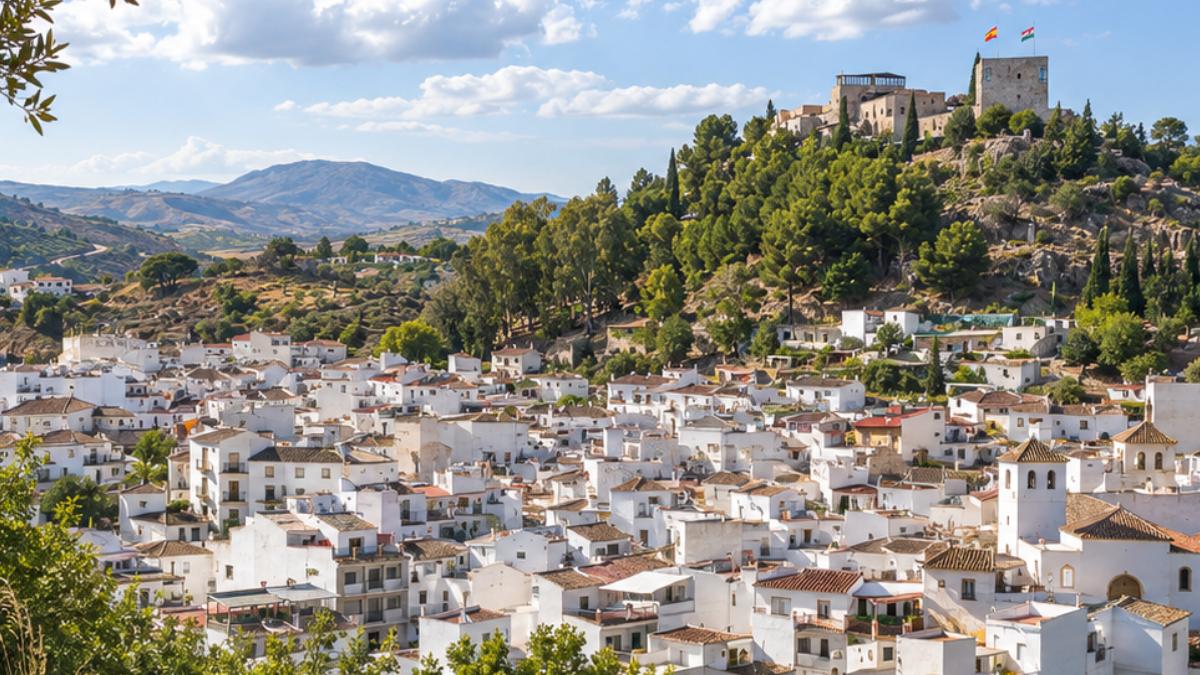

In many villages across Málaga, there are still words that rarely appear in dictionaries and expressions whose meanings are familiar only to those who grew up hearing them. They form part of a cultural heritage preserved not in monuments or historical documents, but in family conversations and the memories of older generations.
The village of Monda, in Málaga province, has decided to give this traditional vocabulary a new lease of life through an initiative that will transform its streets into a celebration of local linguistic heritage. The local council has launched Habla Viva Monda, a community-led cultural project designed to identify, document and promote words, sayings and expressions associated with the village.
The initiative aims to select at least 30 traditional words or expressions, which will subsequently be displayed as artistic installations in different public spaces. Each will be accompanied by its meaning and a QR code allowing visitors to hear how it is pronounced.
In this way, expressions that might otherwise remain in the memories of a few residents will become part of the village's everyday landscape.
Monda's streets will display words that tell the story of the village
One of the most distinctive features of Habla Viva Monda is that the collected expressions will not simply be stored in an archive.
Instead, the council intends to bring a selection of them into the streets, displaying them on walls and building façades as small cultural installations that both residents and visitors can discover.
Each installation will feature a selected word or expression alongside an explanation of its meaning, making it accessible even to people who have never encountered it before.
A committee made up of representatives from cultural, social, historical and linguistic backgrounds will be responsible for reviewing the submissions.
The committee will evaluate the contributions and select at least 30 words or expressions to be included in the artistic project.
The initiative offers a different way of exploring Monda's history, looking beyond its buildings, traditions and historical events to focus on the language used by generations of residents.
QR codes will allow visitors to hear traditional local expressions
The project will go beyond preserving words in written form. It also aims to protect one of the most distinctive elements of spoken language: its sound.
Each installation will include a QR code that visitors can scan to hear the pronunciation of the word or expression, reflecting the characteristics of the local dialect.
This feature is particularly important because language is not defined solely by vocabulary. Intonation, accent and the pronunciation of certain sounds also contribute to the linguistic identity of a community.
Preserving these characteristics will help document how traditional expressions are spoken in Monda and make them more accessible to younger generations.
The technology will also allow visitors to listen to the recordings directly from their mobile phones, creating an interactive cultural experience.
By combining public art with digital resources, the council hopes to connect a centuries-old tradition of oral communication with modern technology.
Why Monda wants to recover the expressions used by older generations
Everyday language carries references to customs, traditional occupations, family relationships and experiences shared by a community.
Some expressions survive for decades because they continue to be used in ordinary conversations. Others gradually disappear as the social circumstances in which they were commonly spoken change.
In this context, recovering traditional vocabulary also means preserving information about how previous generations lived, worked and interacted.
Monda's mayor, María Fernández, has emphasised the importance of protecting these cultural expressions and passing them on to younger residents.
The council wants words once learnt from parents and grandparents to remain familiar to future generations rather than gradually fading from everyday use.
The councillor for Local Development and Education, Candela Ruiz, has also highlighted the project's intention to incorporate these linguistic memories into the village's urban environment.
The aim is for Monda's streets to reflect not only its architectural and historical heritage, but also the way its inhabitants have spoken over the years.
The initiative is therefore designed as a community effort, with local residents playing a central role in preserving their shared cultural identity.
How to take part in 'Habla Viva Monda' and submit traditional expressions
The council has invited anyone with knowledge of words, expressions or popular sayings associated with Monda to contribute to the project.
Participants do not necessarily need to submit particularly old or unusual words. What matters is that the expressions have a connection to the village and can help document its linguistic traditions.
Those wishing to participate must complete a submission form with the words or sayings they would like to propose.
Each form allows up to three submissions, although participants who wish to contribute more can complete additional forms.
For every proposed word or expression, contributors should provide:
- The traditional word or expression: The term they would like to include in the project.
- Its meaning: A clear explanation of what the word or saying means.
- An example of its use: A sentence or situation demonstrating how it would be used in everyday conversation.
These details will help ensure that the collection goes beyond a simple vocabulary list and documents how the expressions are used.
For example, the same expression may carry slightly different meanings depending on the circumstances in which it is spoken. Recording these examples will help preserve its original context within the local community.
Where to submit your words and the deadline for participation
Residents and other contributors have two options for submitting their suggestions.
The first is to hand in the completed form at the Monda Municipal Library.
Alternatively, submissions can be made by email.
Anyone wishing to participate electronically should request the form by contacting cultura@monda.es, complete it and return it to the same email address.
The submission period opened on 16 November 2026 and will remain open until 31 January 2027.
| Information | Details |
|---|---|
| Project | Habla Viva Monda |
| Location | Monda, Málaga |
| Submissions open | 16 November 2026 |
| Submission deadline | 31 January 2027 |
| Maximum entries per form | Three |
| In-person submissions | Monda Municipal Library |
| cultura@monda.es | |
| Planned selection | At least 30 words or expressions |
Once the submission period closes, the committee overseeing the initiative will review the contributions and select those to be included in the public art installations.
Private building façades will require the owners' permission
The cultural installations are intended to be distributed throughout the village, including on some building façades.
However, the council has made it clear that no installation will be placed on privately owned property without the owner's permission.
Where private façades are involved, the property owner must give their consent, and the conditions of the installation must be agreed with the local authority in advance.
This requirement is intended to ensure that the project respects property owners' rights while allowing the installations to become part of Monda's streetscape.
The council has not yet publicly confirmed which streets will host the installations or when they will be permanently installed.
These details will depend on the progress of the project and subsequent decisions regarding the selection and placement of the pieces.
A permanent archive to preserve Monda's linguistic heritage
Although the public installations will be the most visible part of Habla Viva Monda, the project also has a longer-term objective.
All the contributions received will help create an archive dedicated to the village's linguistic heritage.
The collection could be expanded through future calls for submissions and used as a starting point for publications, educational resources and other cultural materials.
The local authority intends for the initiative to continue beyond its first edition rather than remain a one-off cultural activity.
Creating this archive will help preserve expressions that might otherwise disappear from everyday conversations without any written or recorded evidence of their meaning or pronunciation.
It could also provide a useful resource for anyone interested in studying local vocabulary and regional linguistic traditions.
Why protecting traditional speech matters in Málaga's villages
Andalusia is known for its rich variety of accents, vocabulary and popular expressions, all of which contribute to the region's cultural identity.
Within this linguistic diversity, individual towns and villages often preserve words and expressions linked to their particular history, customs and traditional ways of life.
Family conversations have long played an essential role in passing this heritage from one generation to the next.
However, generational changes and evolving communication habits can gradually reduce the use of certain expressions.
That is why projects such as Habla Viva Monda can play an important role in documenting cultural traditions that are not always represented in conventional historical archives.
The initiative also creates opportunities for conversations between generations. Older residents can share words and expressions they remember, while younger people can discover their meanings and learn how they are pronounced.
Monda is seeking to preserve part of its identity through something as simple, yet meaningful, as the words spoken by its residents.
Once the installations are in place, visitors will be able to explore the village's collective memory through a cultural experience in which each expression represents a small piece of local history.
Until 31 January 2027, residents and anyone familiar with Monda's traditional expressions have the opportunity to contribute to that collection, helping ensure that words once spoken by their grandparents are not forgotten.
Latest news
Similar News
Málaga village to turn its streets into a museum of words to preserve the language of its grandparents
Provincia de Málaga