Málaga joins the fight against peritoneal cancer with a crochet blanket to raise awareness of a little-known disease
The Peritoneum Association is organising a public charity event in Málaga on Friday, November 6. The initiative aims to raise awareness of peritoneal tumours, support patients and encourage further research into these conditions
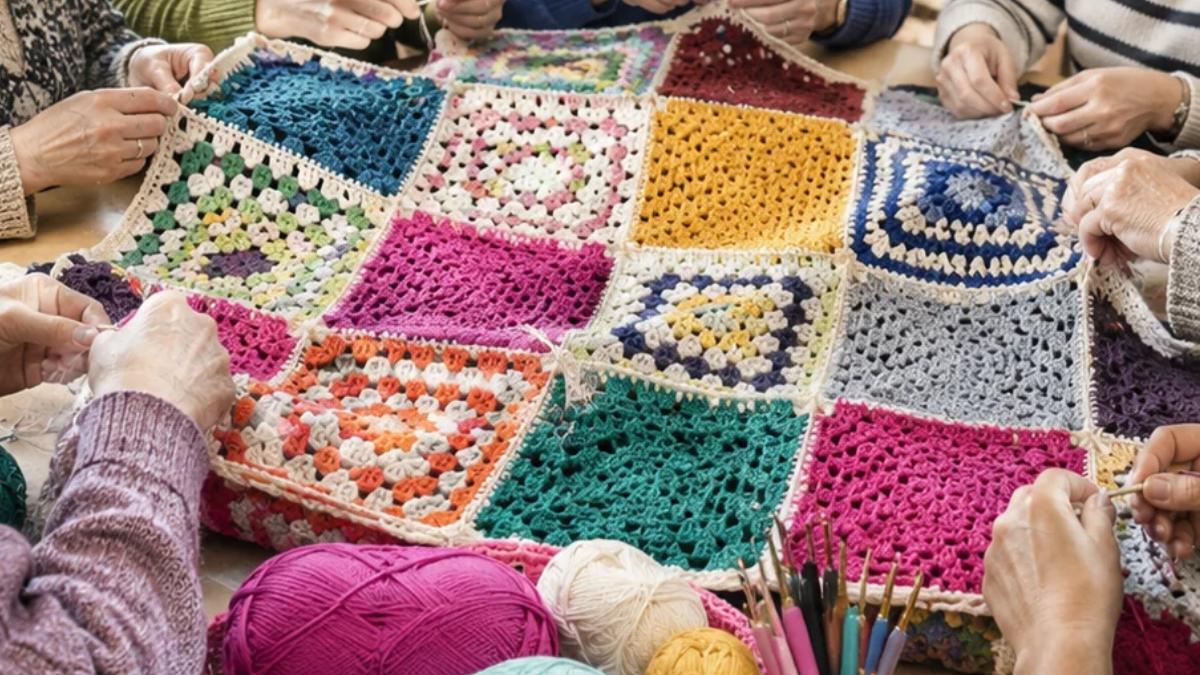

Málaga will host a special charity event on Friday, November 6, using crochet to raise awareness of one of the least understood forms of cancer: peritoneal tumours. The initiative invites residents to help create a collective blanket made from individual wool squares, turning a traditional craft activity into a symbol of support for people affected by these diseases.
The event will take place from 5.30 pm to 8.30 pm at El Rincón de las Lanas y las Labores, located at Calle Compás de la Victoria, 7, in Málaga city.
Organised by the Peritoneum Association, the activity forms part of a campaign called Tejiendo Unidos, Sumando Vida (Knitting Together, Adding Life), which aims to increase public understanding of tumours affecting the peritoneum and highlight the importance of diagnosis, research and access to specialist medical care.
Anyone interested in supporting the initiative is welcome to participate. Attendees can bring crochet squares they have prepared in advance or help join the pieces together to create one or more blankets.
The event will also feature an information stand to help residents learn more about diseases that remain unfamiliar to much of the general public.
A handmade blanket to raise awareness of peritoneal cancer in Málaga
The activity involves collecting small crochet squares, commonly known as granny squares, which will be sewn or crocheted together to create large blankets.
Each piece represents an individual contribution to a shared cause: supporting patients and their families while increasing awareness of peritoneal tumours.
The organisers are encouraging both experienced crochet enthusiasts and people who simply want to help assemble the blankets to take part.
The squares should measure approximately 20 by 20 centimetres and be made using wool suitable for size 6 or 7 crochet hooks.
There is no compulsory design or colour scheme, allowing each participant to contribute their own creation.
The initiative also has a fundraising purpose. According to information released about the campaign, the completed blankets will be raffled to raise money for research into peritoneal tumours.
The response from Málaga residents has been positive, according to the association, which has highlighted the interest shown by people willing to participate.
What is peritoneal cancer and why is it so little known?
The peritoneum is a membrane that lines the inside of the abdominal cavity and covers many of the organs located within it.
It plays an important role in the body by helping protect abdominal organs and allowing them to move smoothly against one another.
However, this part of the body is not widely understood outside healthcare settings, making diseases affecting it particularly unfamiliar to many people.
Peritoneal tumours do not represent a single disease, but rather a group of conditions with different origins and characteristics.
Some cancers develop in the peritoneum itself, while others occur when a tumour originating in another organ spreads to this membrane.
Among the rarer conditions are pseudomyxoma peritonei and peritoneal mesothelioma.
Pseudomyxoma peritonei is commonly associated with tumours originating in the appendix and can cause a build-up of mucin within the abdominal cavity.
Peritoneal mesothelioma, meanwhile, is a rare cancer affecting the cells of the peritoneal lining.
Another condition is peritoneal carcinomatosis, a term used to describe the spread of certain cancer cells to the peritoneum.
This can occur with cancers such as colorectal, ovarian or stomach cancer.
Each condition has different characteristics, treatment options and prognoses, making specialist medical assessment essential.
Symptoms can be mistaken for common digestive problems
One of the main challenges associated with peritoneal tumours is that their initial symptoms can be vague and difficult to identify.
Possible symptoms include persistent abdominal swelling, abdominal pain, changes in bowel habits and fatigue.
In some cases, these problems may initially be interpreted as less serious digestive or gynaecological conditions.
This does not mean that experiencing any of these symptoms necessarily indicates the presence of cancer.
They are common complaints that can have many different causes, most of which are not cancer-related.
However, if symptoms persist, worsen or appear alongside other significant changes, seeking medical advice is important.
The Peritoneum Association emphasises the need to improve awareness of these diseases to encourage their identification and reduce the difficulties some patients experience before receiving a diagnosis.
Sandra Lara's experience: discovering a disease few people have heard of
Behind the initiative are patients who understand first-hand the challenges associated with peritoneal tumours.
One of them is Sandra Lara de Liz, president of the Peritoneum Association, who has publicly shared her experience following a diagnosis of pseudomyxoma peritonei.
Her story illustrates how an uncommon disease can initially go unnoticed because its symptoms resemble those of other conditions.
The association's president explains that the lack of awareness begins with the name of the affected part of the body, as many people do not know what the peritoneum is.
In her case, her initial health problems suggested a gynaecological condition. Further tests, however, revealed an abdominal tumour requiring specialist treatment.
Experiences such as hers have helped shape the association's work, which focuses on providing patients with better information and improving access to medical professionals experienced in treating these conditions.
Complex surgery and specialist treatment options
Treating certain peritoneal tumours can involve highly complex surgical procedures.
One option used in selected patients is cytoreductive surgery, which aims to remove as much visible tumour tissue as possible from the abdominal cavity.
In some cases, the operation is combined with a procedure known as HIPEC, or hyperthermic intraperitoneal chemotherapy.
This involves delivering a heated chemotherapy solution directly into the abdominal cavity during surgery.
The aim is to target certain cancer cells that may remain after the visible tumour has been removed.
HIPEC is a specialist treatment and is not appropriate for every patient or every type of peritoneal cancer.
Its use depends on factors including the origin of the tumour, how far the disease has spread, the patient's overall health and the assessment of a multidisciplinary medical team.
These operations can last several hours and require professionals with experience in complex cancer surgery.
For this reason, patient associations emphasise the importance of access to specialist centres and medical teams experienced in peritoneal oncology.
Patients call for more research and better access to specialists
Alongside raising public awareness, the Peritoneum Association aims to draw attention to the needs of people living with these diseases.
One of its main priorities is improving the information available to patients and their families.
The organisation also advocates better coordination between healthcare services and access to specialist medical teams, regardless of where patients live.
Research is another central concern.
The rarity of some peritoneal conditions makes certain clinical studies particularly difficult, increasing the importance of collaboration between hospitals, researchers and patient organisations.
In the case of pseudomyxoma peritonei, for example, scientific projects are investigating the biological mechanisms of the disease and exploring potential treatment targets.
The association believes that greater public visibility can help support this research and improve the assistance available to patients.
Málaga joins the first World Peritoneal Cancer and Tumour Day campaign
Friday's event is part of activities associated with the first World Peritoneal Cancer and Tumour Day, observed on October 30, 2026.
The date is linked to the presentation of an international patients' manifesto during a congress organised by the specialist organisation PSOGI in Barcelona on October 30, 2025.
The document brought together patient associations from several countries, including Spain, France, the United States, the United Kingdom and the Netherlands.
Its purpose was to increase the visibility of patients and communicate their needs to healthcare institutions and the wider public.
To mark the first international awareness day, the Peritoneum Association has organised information and awareness activities in several Spanish cities.
These have included events at hospitals in Madrid, Barcelona, Sant Joan Despí and Córdoba.
The crochet campaign began on October 31 in Madrid, where participants created a collective blanket similar to the one planned in Málaga.
How to take part in Málaga's charity crochet event
The event will take place on Friday, November 6, 2026, between 5.30 pm and 8.30 pm, at El Rincón de las Lanas y las Labores, located at Calle Compás de la Victoria, 7, Málaga.
The gathering is open to people who would like to help make the blankets and learn more about the work of the Peritoneum Association.
Those who know how to crochet can bring completed squares, preferably measuring around 20 centimetres on each side.
Visitors can also participate by helping connect pieces made by other people.
An information stand will be available throughout the event, offering general information about peritoneal tumours and raising awareness of the needs of affected patients.
The published announcement does not specify an admission fee or indicate that advance booking is required, although participation will be subject to the space available at the venue.
Turning small acts of kindness into meaningful support
The event in Málaga aims to demonstrate how community activities can become valuable tools for raising health awareness.
Creating a blanket together allows people of different ages to come together through a simple craft while opening conversations about diseases that receive relatively little public attention.
In this case, crochet becomes a way of highlighting the experiences of people affected by peritoneal tumours and their families.
The campaign also aims to bring these conditions into wider public discussion and reinforce the importance of medical research and specialist care.
Málaga will therefore join a nationwide initiative in which every wool square represents a contribution towards the same goal: helping people affected by peritoneal cancer receive greater awareness, information and support.

Latest news