


Seasonal wellbeing: why autumn can affect your sleep, energy and daily routine
Shorter days, milder temperatures and the return to more structured routines can change the way we sleep, move and feel. Staying active, reducing sedentary time and looking after your rest can help make the transition into autumn easier.

Autumn does not only bring lower temperatures and shorter days. It can also change the way we sleep, move and organise our daily routines. After the more flexible rhythm of summer, September and October usually mark the return to work schedules, classes, commuting and more time spent indoors.
That does not mean the body literally needs a “reset”, but it can be a good time to review certain habits.
The gradual reduction in daylight affects the environmental signals that help regulate our circadian rhythm, the internal system involved in sleep-wake cycles. Light and darkness are two of the main references used by this biological clock.
At the same time, changes in routine can mean that some people walk less, spend more hours sitting down or stop doing some of the outdoor activities they enjoyed during summer.
Why can we feel more tired when the season changes?
Feeling more tired in autumn does not have a single cause.
The amount of light we receive throughout the day influences our biological clock. The light-dark cycle is involved, among other processes, in regulating melatonin, a hormone linked to preparing the body for sleep.
More everyday factors can also play a role: getting up earlier, returning to full working days, spending more time in front of screens or reducing the activities we did during the holidays.
That is why, before attributing any change entirely to the arrival of autumn, it is worth looking at how our routines have changed too.
Keeping relatively regular sleep schedules, making the most of natural daylight and maintaining some level of physical activity are all measures that can help support more stable habits. In this area, some specialist wellness destinations have developed programmes specifically focused on rest and energy, such as the Marbella Club Wellness programmes, which include experiences designed around better sleep, stress reduction and physical wellbeing.
We spend more time sitting than we realise
Another common change after summer is the return to more sedentary days.
The World Health Organization defines sedentary behaviour as periods of waking time involving very low energy expenditure, such as sitting or reclining for long periods. It also stresses that regular physical activity benefits both physical health and mental wellbeing.
Spain’s Ministry of Health recommends breaking up long periods of sitting, introducing short active breaks, stretches or brief walks throughout the day.
There is no need to completely transform your routine in order to move more.
Walking part of the way to work, using the stairs, getting up from your desk regularly or doing short mobility sessions are all simple ways to increase daily movement.
Do we need to change the way we exercise in autumn?
There is no rule saying exercise must change with every season.
The most important thing is to maintain physical activity suited to each person’s age, health and circumstances.
However, autumn can be a good time to ask whether our current routine still matches our needs.
After spending several hours sitting down, for example, it may be useful to combine cardiovascular or strength training with exercises focused on mobility, flexibility and balance.
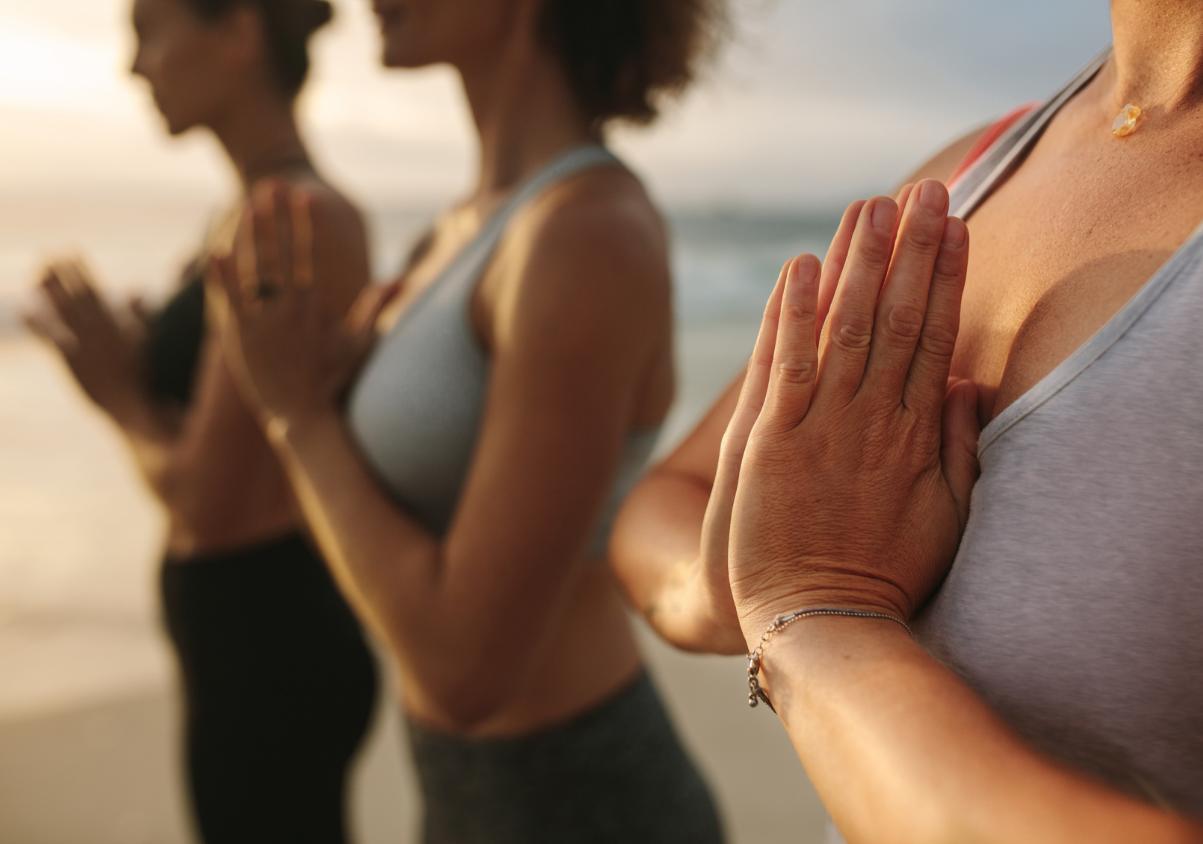
Yoga is one activity that can bring several of these elements together. Some of its postures are used to work on flexibility and range of motion. In broader wellbeing approaches, such as Marbella Club Wellness, yoga is combined with meditation and different fitness activities designed to support both physical and mental balance.
That does not mean yoga is essential. Walking, swimming, strength training, cycling, Pilates or simply adding more movement to everyday life can achieve similar goals depending on the individual.
Feeling stiff does not mean you should avoid exercise
Returning to long hours in front of a computer or behind the wheel can create the feeling that certain areas of the body are becoming stiffer.
The hips, back, neck and shoulders are often especially sensitive to maintaining the same posture for long periods.
One important point is that you do not need to be highly flexible before starting to work on mobility.
Exercises can be gradually adapted to each person’s range of motion. The same applies to activities such as yoga or Pilates: starting at beginner level allows progress to happen gradually without the need to perform complex positions.
Anyone experiencing persistent pain, previous injuries or significant physical limitations should speak to a healthcare professional before starting a new exercise routine.
Mild weather can still work in your favour
In much of Spain, especially in Mediterranean and southern areas, autumn offers another advantage: temperatures are often milder than during the height of summer.
This can make outdoor activities more comfortable than they were in July or August.
Walking, exercising, doing mobility work or training outdoors can therefore become a simple way to combine movement with exposure to natural daylight.
Spain’s Ministry of Health also includes increasing outdoor activity among its recommendations for improving everyday physical activity levels.
Five simple habits for adapting to the change of season
There is no need to turn to “detox” programmes or radical lifestyle changes to adapt your routine to autumn.
A few simple adjustments may be enough:
- keep sleep schedules as regular as possible;
- make the most of natural daylight;
- reduce long periods of sitting;
- maintain regular physical activity;
- combine cardiovascular or strength exercise with mobility and flexibility work.
The WHO stresses that any amount of physical activity is better than none and that gradually increasing daily movement provides health benefits.
The key, therefore, is not so much to “reset” the body as to adapt our habits to a new routine.
Autumn as an opportunity to review our habits
The change of season can be a useful reminder to check how we feel after summer.
Are we getting enough sleep? Are we sitting for too many hours? Are we still moving regularly? Is our exercise routine still realistic?
Answering these questions can be more useful than trying to maintain exactly the same habits all year round.
Autumn does not require a radical lifestyle change, but it can offer a good opportunity to return to sustainable routines before the months with fewer daylight hours begin.

Latest news





Upcoming events
12
Nov
El Desembarco, la traición de Viriato at La Caja Blanca
12
Nov
HOMER El Mero Mero at Sala Trinchera Málaga
13
Nov
Marbella Startup Lab – Innovate & Collaborate
13
Nov
Candlelight: Coldplay & Imagine Dragons at Sala Fundación Unicaja María Cristina
13
Nov
Candlelight: Tribute to Ludovico Einaudi at Anantara Villa Padierna
