


Singilia Barba takes a major step towards recovering Antequera’s hidden Roman city
An investment of more than €380,000 will be used to consolidate archaeological remains, protect the site and prepare new access routes and visitor paths around one of Antequera’s most important historic sites.
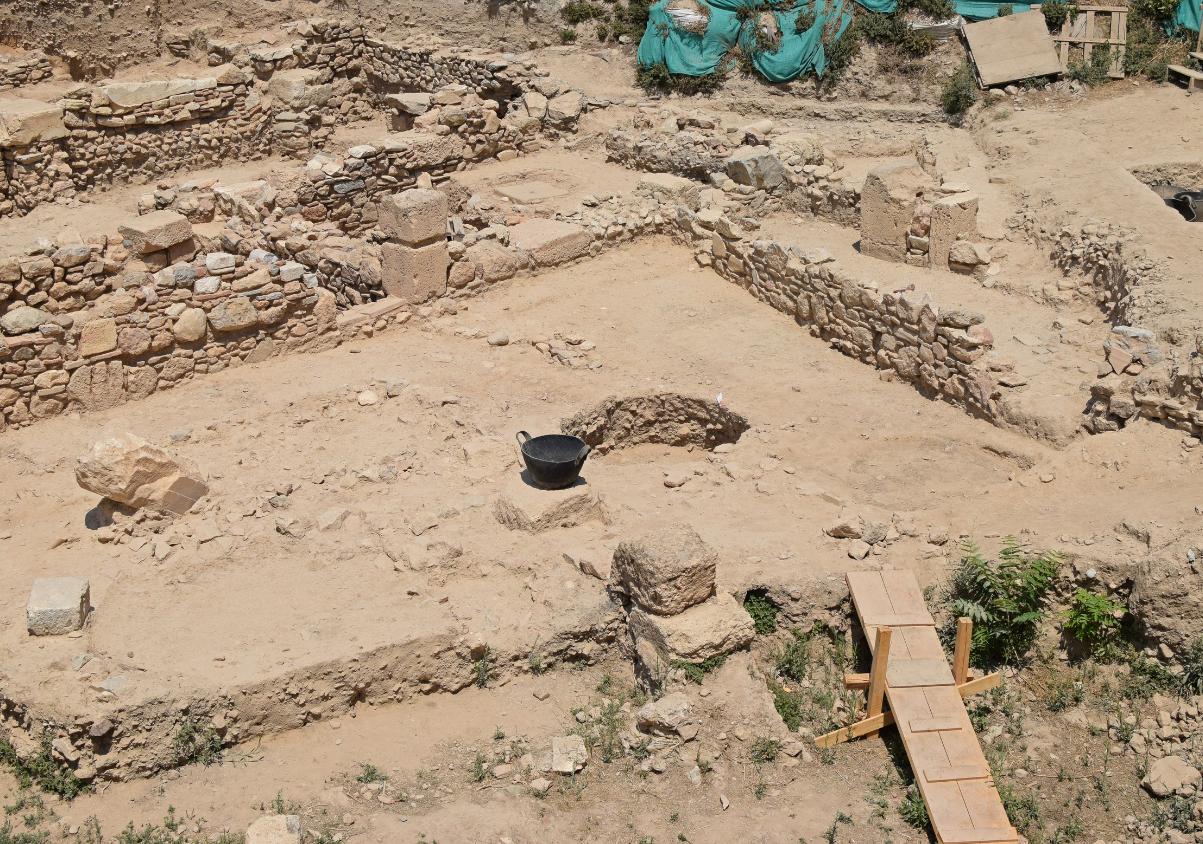

Antequera is preparing to take an important step towards recovering one of its lesser-known heritage sites. While the Dolmens and El Torcal are firmly established on the city’s international tourism map, just a few kilometres from the centre lies Singilia Barba, an ancient Roman city whose remains are still unfamiliar to many visitors.
Antequera Town Hall has issued a favourable report on the municipal licence required for the conservation and protection works at the archaeological site, a project promoted by the Andalusian Regional Government’s Department of Culture with a material execution budget of €380,099.33.
The decision clears an essential administrative hurdle before work can begin and opens a new chapter for a site officially protected as an Asset of Cultural Interest (BIC) in the Archaeological Zone category since 1996.
The aim is not simply to preserve what has survived. The project is also designed to improve access, interpretation and the possibility of future public visits.
What was Singilia Barba?
To understand the importance of the project, it is necessary to travel back around two thousand years.
Archaeological research identifies Singilia Barba as an important urban settlement during the Roman imperial period which eventually achieved the status of a municipium.
The city extended across a hillside to the north-west of present-day Antequera, around the Cortijo del Castillón area, on land where an earlier settlement had already existed.
The remains discovered so far provide a partial picture of what the Roman city once looked like.
Archaeologists have documented structures associated with a monumental area believed to have functioned as a forum, residential buildings, a pottery production area, a necropolis, a Roman villa and the remains of a theatre.
Its history did not end with the Roman period either. Archaeological material suggests the site continued to be occupied through several later periods, including medieval times.
Four areas of work to protect the site
The planned intervention is divided into four main areas.
The first will focus on cleaning and consolidating the archaeological remains, an essential step to slow deterioration and ensure that the structures currently visible can be preserved more effectively.
The second involves improving the physical protection of the site through new fencing to clearly define different areas of the archaeological zone.
This is not simply about preventing uncontrolled access. Establishing a clear perimeter makes it easier to manage an especially sensitive archaeological area and reduces the risk of damage to excavated remains or sections where important structures may still be hidden underground.
New routes to help visitors understand the Roman city
Another significant part of the project is the improvement of access points and visitor routes.
Until now, Singilia Barba has lacked the visitor infrastructure found at some of Antequera’s better-known heritage attractions.
The new project is intended to begin changing that.
The planned routes will make it easier to move around the archaeological area in an organised way and create better conditions for visitors to understand what they are seeing and how the various areas of the Roman settlement were originally arranged.
The project will also include signage and interpretation panels, an important addition at a site where archaeological remains can be difficult to understand without proper historical context.
The work will require special archaeological precautions
Carrying out construction work on a Roman city presents an obvious challenge: unknown archaeological remains may still be hidden beneath the ground.
For that reason, the municipal reports set out several conditions designed to protect the site throughout the works.
These include restrictions on earth movement and the requirement for specialist archaeological supervision during certain stages of the project.
Such precautions are particularly important at Singilia Barba because the excavations carried out so far reveal only part of the ancient city’s total extent and layout.
Recent archaeological work has also accompanied preventive interventions involving fencing and preliminary studies inside the protected area.
A site known for centuries
Singilia Barba is far from being a recent discovery.
The existence of ancient remains in the area was already known by at least the 16th century, when a number of inscriptions helped researchers identify the location as the Roman city.
Over the following centuries, further inscriptions, artefacts and architectural remains contributed to a growing understanding of the site.
Modern archaeological investigations later identified different urban areas and confirmed the significance Singilia Barba once held during Roman times.
That creates a striking contrast: a site known for centuries that has still not become one of Antequera’s major visitor attractions.
The new project is intended to start narrowing that gap.
Another piece of Antequera’s remarkable heritage map
The recovery of Singilia Barba becomes even more significant when viewed alongside the extraordinary concentration of heritage found across the municipality.
Antequera is home to the Dolmens Site, comprising Menga, Viera and El Romeral, as well as the natural landscape of El Torcal. Together, they form part of the UNESCO World Heritage Site designation awarded in 2016.
The municipality also contains the Alcazaba, numerous churches and convents, Roman villas and other archaeological sites spread across one of the largest municipal areas in Andalucía.
Singilia Barba adds another historical period to that journey.
If the Dolmens offer a window into Prehistory and the Alcazaba reflects the medieval period, this ancient city helps explain the importance of the Antequera area during Roman Hispania.
Work has not started yet
The favourable municipal decision does not mean the archaeological site will immediately open to visitors.
What has now been approved is the licence required for the project promoted by the Andalusian Regional Government to move forward.
The next step lies with the Department of Culture, which must now activate the physical execution of the works in accordance with the approved project.
It will therefore still be necessary to wait for the final construction timetable and for details of how future public access to the site will eventually be organised.
What has changed is the outlook.
With an investment of more than €380,000, Singilia Barba is beginning to move from basic conservation towards a model in which the site can be better protected, better explained and eventually prepared to become a much more visible part of Antequera’s cultural tourism routes.
The licence, budget and planned works can be found in the official information published by Antequera Town Hall on the protection and enhancement of the Roman City of Singilia Barba.

Latest news





Upcoming events
12
Nov
El Desembarco, la traición de Viriato at La Caja Blanca
12
Nov
HOMER El Mero Mero at Sala Trinchera Málaga
13
Nov
Marbella Startup Lab – Innovate & Collaborate
13
Nov
Candlelight: Coldplay & Imagine Dragons at Sala Fundación Unicaja María Cristina
13
Nov
Candlelight: Tribute to Ludovico Einaudi at Anantara Villa Padierna
