Portugal Wine Tours: Why the Best Experiences Go Beyond the Famous Names
Discover Portugal wine tours beyond the famous wineries, from the Douro to Alentejo, and learn why the people behind the wine matter.
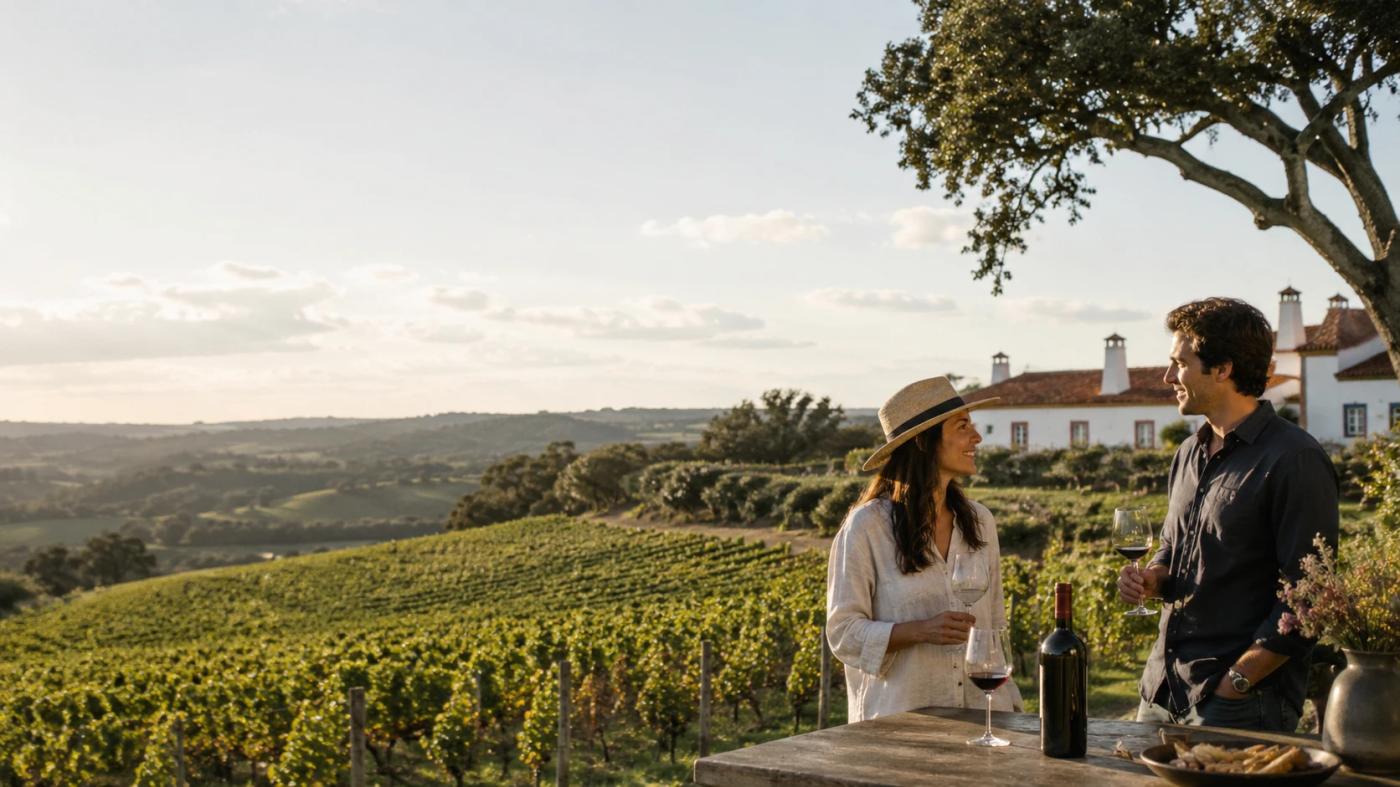

Portugal wine tours are often planned around the same question: which wineries should I visit?
It is a logical place to start, but after spending more time visiting wineries across Portugal, I have found that another question is often more useful: what do I actually want to discover?
Portugal changes considerably as you travel through its wine regions. The landscape, climate, local grapes, food and style of wine can be completely different within a few hours of driving. The Douro is not the Dão. The Alentejo is not the Algarve. Even within one region, two producers a short distance apart can make very different wines.
That is why I think the best Portugal wine tours start with the region and the people rather than simply with a list of famous estates.
For anyone planning a trip, the Secret Cellars guide to Portugal wine tours is a useful starting point for exploring the different possibilities and building a wine trip around the kind of experience you are actually looking for.
Portugal Wine Tours Are About More Than Tasting Wine
It is easy to think of a winery visit as a tasting with a cellar tour attached.
Sometimes that is exactly what it is, and there is nothing wrong with that. Larger wineries are often very good at receiving visitors. They have professional tasting rooms, scheduled tours and several experiences to choose from.
However, wine becomes much more interesting to me when the visit gives you some understanding of the place behind it.
You may see where the grapes grow, hear why a winemaker works with a particular variety or discover why one vineyard behaves differently from another. Sometimes the most useful part of a visit is not the formal tasting at all. It is a conversation beside a tank, a walk through the vineyard or a bottle opened over lunch.
Those moments also make the wine easier to remember.
If I simply taste ten wines in a row, I can take notes about acidity, fruit, tannin and oak. A month later, however, some of those wines will inevitably blend together in my memory.
When I have met the person who made the wine, walked through the property and understood a little more about why they made certain choices, the bottle has a completely different context.
For me, that is where wine tourism becomes genuinely interesting.
Choose the Wine Region Before the Winery
Portugal offers enough diversity that choosing a region can shape the entire trip.
The Douro is an obvious starting point for many international visitors. Its steep vineyard landscape and long association with Port make it one of Portugal's most recognizable wine destinations. Today, of course, there is much more to discover there than fortified wine alone.
Dão gives you something different. Granite soils, altitude, and mountain influences create an entirely different setting. It is also an important region for grapes such as Touriga Nacional and Encruzado.
Move further south into the Alentejo and the landscape opens up. Cork oaks, olive trees and broad stretches of countryside become part of the journey. The climate is generally warmer, although even here it would be a mistake to assume that every vineyard and every wine follows the same style.
Then there is the Algarve, a region most visitors still associate more quickly with beaches than with vineyards. Yet wine is produced here too, and local grapes such as Negra Mole give you another side of southern Portugal.
This regional variety is one reason I would never describe “Portuguese wine” as a single style.
A wine tour makes that difference much easier to understand because you are physically moving through the landscapes that create the wines.
Why Smaller Wineries Can Change the Experience
I enjoy visiting established and famous wineries. They often have fascinating histories, beautiful properties and access to wines that are difficult to taste elsewhere.
Still, some of my most memorable visits in Portugal have been at much smaller producers.
The experience is different partly because the distance between the visitor and the person making the wine becomes much smaller.
At a small winery, the person explaining the vineyard may also be the person making decisions in the cellar. The owner may be pouring the wines. You can ask why they planted one grape rather than another, why they waited longer before harvesting a particular parcel or why an older vintage developed differently than expected.
You are no longer only learning about wine in general. You are learning about that person's wine.
There is also less guarantee that the visit will follow a polished script.
Personally, I like that.
Wine is an agricultural product before it becomes a bottle on a restaurant table. Harvest dates change. Weather changes. Equipment has to be cleaned. Bottling takes time. Some vintages are easier than others.
Seeing a little of that reality gives a very different perspective from simply arriving at a tasting room.
A Wine Visit With Joaquim Arnaud in the Alentejo
One experience that stayed with me was a visit to Joaquim Arnaud in Pavia, in the Alentejo.
The visit started long before the first wine was poured.
Driving through the Alentejo, the surroundings already tell you that you are somewhere different. Cork trees, olive trees and the open landscape gradually replace the more developed areas closer to the coast. By the time I arrived at Casa Arnaud, the journey had already become part of the experience.
Joaquim's story interested me because wine there cannot really be separated from the property, the family history, the food or the surrounding agricultural landscape.
We tasted through the wines, including reds that particularly interested me because of the way Alicante Bouschet was used. However, the visit was not simply a technical tasting.
There was food, conversation and time to look around the house and buildings. Old agricultural machinery, books and other details of the property gave a much better idea of where the wines fit into the wider history of the place.
That kind of experience is difficult to reproduce in a standard tasting format.
I wrote separately about my visit with Joaquim Arnaud in the Alentejo because it is a good example of what I mean when I say that the people behind a wine can be just as interesting as the bottle itself.
The tasting matters, of course. But understanding where the wine came from made me look at it differently.
Do Not Turn a Wine Tour Into a Race
When planning wine tours in Portugal, it is tempting to fit as many wineries as possible into the day.
On paper, four visits might look better than two.
In practice, I would usually choose the opposite.
A proper winery visit can easily take longer than expected, especially when you are dealing with smaller producers. There may be a vineyard walk or a cellar tour. Someone may open an additional bottle. Lunch takes time, as it should in Portugal. And the roads between wineries are not simply wasted travel time when the landscape itself is part of what you came to see.
There is another practical problem with visiting too many wineries: tasting fatigue.
By the fourth or fifth tasting, even experienced wine drinkers can find it harder to give each wine the same attention.
I would rather spend more time at two wineries, have a good lunch and actually remember the people and wines than finish the day with a list of five estates that have started to merge into one experience.
Portugal is not going anywhere. You can always come back.
Leave Some Space for Discovery
Planning still matters.
Many smaller wineries work by appointment, so turning up without contacting them first is not always a good idea. Distances can also be deceptive, particularly in rural wine regions where a short distance on a map does not necessarily mean a quick drive.
However, I would not plan every hour of the day.
Some of the best recommendations come from the people you meet along the way.
Ask a winemaker which local restaurant they like. Ask what other producers in the area are doing that's interesting. Ask which grape you should try next.
Those recommendations often lead somewhere you would never have found by searching for the “top ten wineries” before leaving home.
That is one of the things I increasingly appreciate about traveling through Portugal for wine. One producer leads to another. One grape introduces you to a different region. A wine you have never heard of sends you down another road.
It becomes less about completing an itinerary and more about following your curiosity.
Portugal as a Wine Destination From Spain
For wine lovers in Spain, Portugal is also an interesting neighbor precisely because the wine culture feels both familiar and different.
Both countries have long wine histories, strong regional food traditions and an enormous variety of indigenous grapes. Yet crossing the border does not mean simply finding Portuguese versions of Spanish wines.
The grape varieties change. So do the classifications, landscapes and regional traditions.
If you are familiar with Tempranillo, Garnacha, or Albariño, exploring Portuguese grapes such as Touriga Nacional, Baga, Encruzado, Arinto, Castelão, Alicante Bouschet, or Negra Mole can quickly open up another part of the Iberian wine map.
That makes Portugal especially interesting for someone who already enjoys traveling through the wine regions of Spain.
There is familiarity in the importance of food, agriculture and regional identity, but enough difference to make the experience feel completely new.
What Makes a Good Portugal Wine Tour?
For me, a good wine tour does not depend on how famous the wineries are or how many bottles you taste.
It starts with understanding where you are.
Choose a region that interests you. Learn the names of two or three local grapes before you arrive. Visit a producer with a more established visitor experience if that helps you understand the region, but also leave room for a smaller winery where you might have a very different conversation.
Most importantly, ask questions.
Why does this grape work here? What changed in this vintage? Which wine does the producer drink themselves? What local food would they put next to it?
Those questions tell you much more than simply asking which bottle has won the most awards.
Since I started visiting Portuguese wineries, I have found that every trip gives me a slightly better understanding of the country and more places I want to visit.
For me, that is exactly what a good wine tour should do.
You arrive wanting to taste wine. You leave wanting to understand where the next bottle came from.

Latest news

Upcoming events
17
Sep
La Pequeña Cuba Gastro-Cultural Festival in San Pedro Alcántara 2026
18
Sep
World Wellness Weekend Marbella 2026
18
Sep
Candlelight: Queen vs. ABBA in Málaga
18
Sep
Candlelight: Coldplay and Imagine Dragons in Málaga
18
Sep
3 de Corazones – Pancho Céspedes, Enrique Ramil and José Luis Jaén in Málaga
Similar News
Álora’s Arab Stairway: 256 Steps Above the Gorge in the Sierra de Huma