Lunar eclipse in Málaga: what time to watch it on 28 August and how to see it
The early hours of Friday will bring one of the final major astronomical events of the summer, as the Moon becomes almost completely covered by the Earth’s shadow and the partial eclipse can be seen from Málaga.
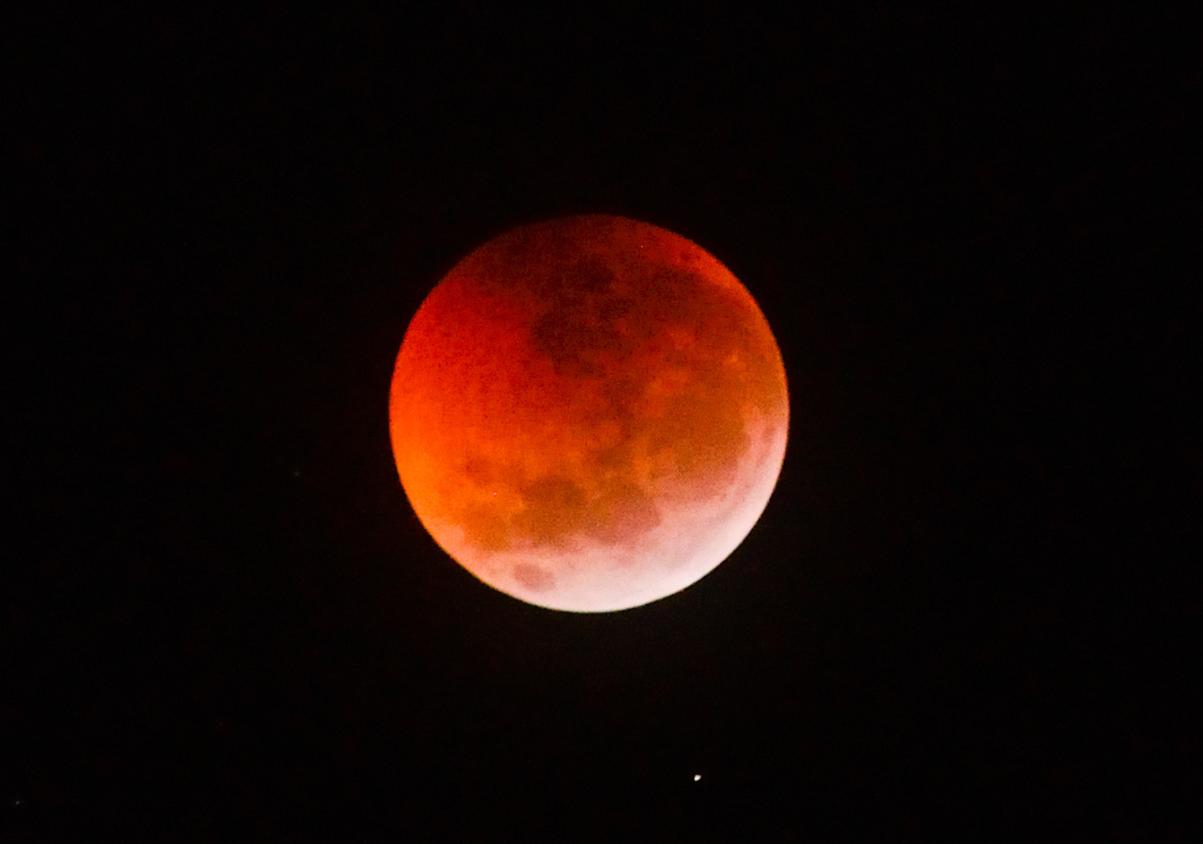

After the total solar eclipse on 12 August, the night sky will take centre stage again before the end of the month. In the early hours of Friday 28 August 2026, Málaga will be able to witness a partial lunar eclipse reaching a magnitude of around 0.93.
The phenomenon will be visible across Spain, although conditions will vary depending on location. From Málaga, almost the entire partial phase will be visible before the Moon sets shortly before 8am.
Unlike a solar eclipse, no special glasses or filters are needed to watch a lunar eclipse safely.
What time will the lunar eclipse be visible in Málaga?
Anyone hoping to follow the eclipse from the beginning will need to be up very early.
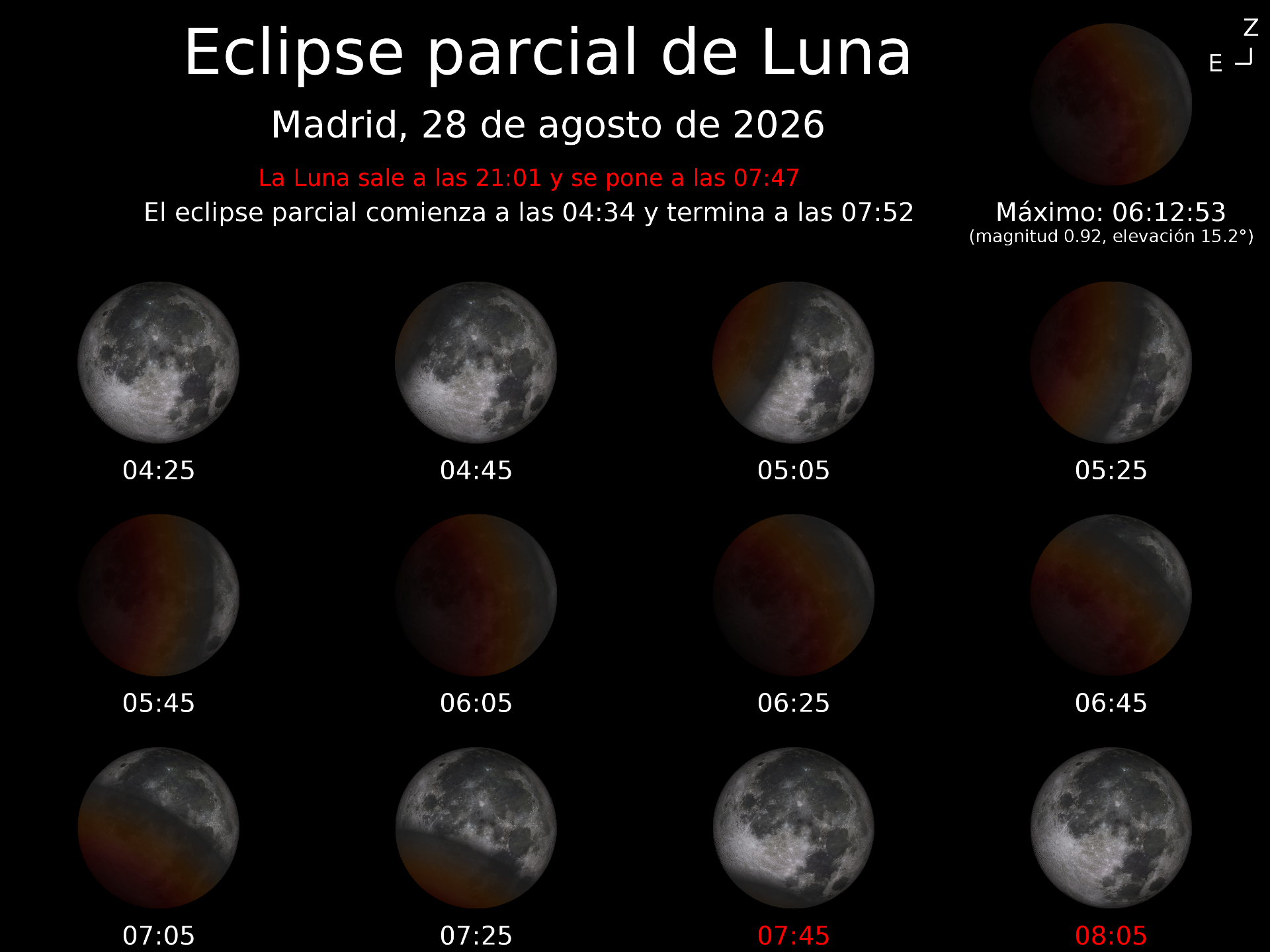
The first stage will begin at around 3.23am, when the Moon starts entering the Earth’s penumbra. At this point, the change in brightness will be subtle and may be difficult to notice with the naked eye.
The more obvious part of the eclipse will begin at approximately 4.34am, when the Moon starts entering the Earth’s darker central shadow, known as the umbra.
The eclipse will reach its maximum at around 6.12am.
With a magnitude of approximately 0.93, most of the Moon’s diameter will be inside the Earth’s shadow, leaving only a relatively small section directly illuminated by the Sun.
The partial phase will end at around 7.52am, with moonset in Málaga taking place only a few minutes later, at approximately 7.54am.
Lunar eclipse timetable for Málaga
- 3.23am: Penumbral eclipse begins
- 4.34am: Partial eclipse begins
- 6.12am: Maximum eclipse
- 7.52am: Partial eclipse ends
- Around 7.54am: Moonset in Málaga
What will the eclipse look like?
A lunar eclipse occurs when the Earth moves between the Sun and the Moon, preventing sunlight from reaching part or all of the lunar surface.
This time, the eclipse will not be total. The Moon will never be completely inside the Earth’s umbra, meaning that a small part of it will remain directly illuminated.
As the eclipse progresses, observers will be able to watch the shadow gradually move across the lunar disc until the maximum shortly after 6am.
The eclipsed section may also take on reddish, copper or orange tones because some sunlight passes through the Earth’s atmosphere before being refracted towards the Moon.
However, because this is a partial eclipse, it will not produce the fully red appearance commonly associated with a “Blood Moon”.
Where is the best place to watch it in Málaga?
A telescope is not necessary, but choosing the right location will make a considerable difference.
By the time the eclipse reaches its maximum, the Moon will already be moving lower towards the western horizon. It is therefore advisable to find a location with a clear view towards the west and south-west, away from buildings, trees or mountains that could block the view.
Lower levels of light pollution will also help. Although the eclipse should still be visible from Málaga city if skies are clear, darker areas will make the changes in brightness and colour easier to appreciate.
The main uncertainty will be the weather. Cloud cover during the early hours of Friday could partially or completely block the phenomenon.
No special eclipse glasses are required
There is an important difference between this event and the solar eclipse seen across Spain earlier in August.
It is completely safe to look directly at a lunar eclipse. No certified eclipse glasses, solar filters or other eye protection are required.
The phenomenon can be enjoyed with the naked eye, although binoculars or a small telescope will reveal more detail as the Earth’s shadow moves across the Moon’s craters and surface.
It could also provide an interesting opportunity for night photography, particularly around the time of maximum eclipse.
The final eclipse of 2026 before a major event for Málaga
The lunar eclipse on 28 August will round off an especially eventful summer for astronomy enthusiasts in Spain.
But Málaga already has another important date on the calendar: 2 August 2027.
That morning, a total solar eclipse will cross parts of southern Spain, with Málaga lying inside the path of totality and expected to experience around one minute and 48 seconds of total eclipse at approximately 10.48am.
Before that major event arrives, however, the next spectacle will come from the Moon during the final hours before sunrise this Friday.
Full timings, visibility maps and official information about the event can be found on the Instituto Geográfico Nacional’s official page for the partial lunar eclipse of 28 August 2026.

Latest news





Upcoming events
17
Sep
La Pequeña Cuba Gastro-Cultural Festival in San Pedro Alcántara 2026
18
Sep
World Wellness Weekend Marbella 2026
18
Sep
Candlelight: Queen vs. ABBA in Málaga
18
Sep
Candlelight: Coldplay and Imagine Dragons in Málaga
18
Sep
3 de Corazones – Pancho Céspedes, Enrique Ramil and José Luis Jaén in Málaga
Similar News

Málaga’s Palacio de la Tinta reborn as a five-star hotel opposite La Malagueta
Málaga

Virgen de la Victoria in Málaga 2026: times, procession and full route for 7 and 8 September
Málaga

Málaga school calendar 2026-2027: when classes start and all the main holiday dates
Málaga