


Six Málaga beaches closed to swimming after E. coli detected following storms
Campo de Golf-San Julián, Guadalmar, La Misericordia, Sacaba, San Andrés and El Palo remain under a red flag after water tests found E. coli levels above recommended limits.
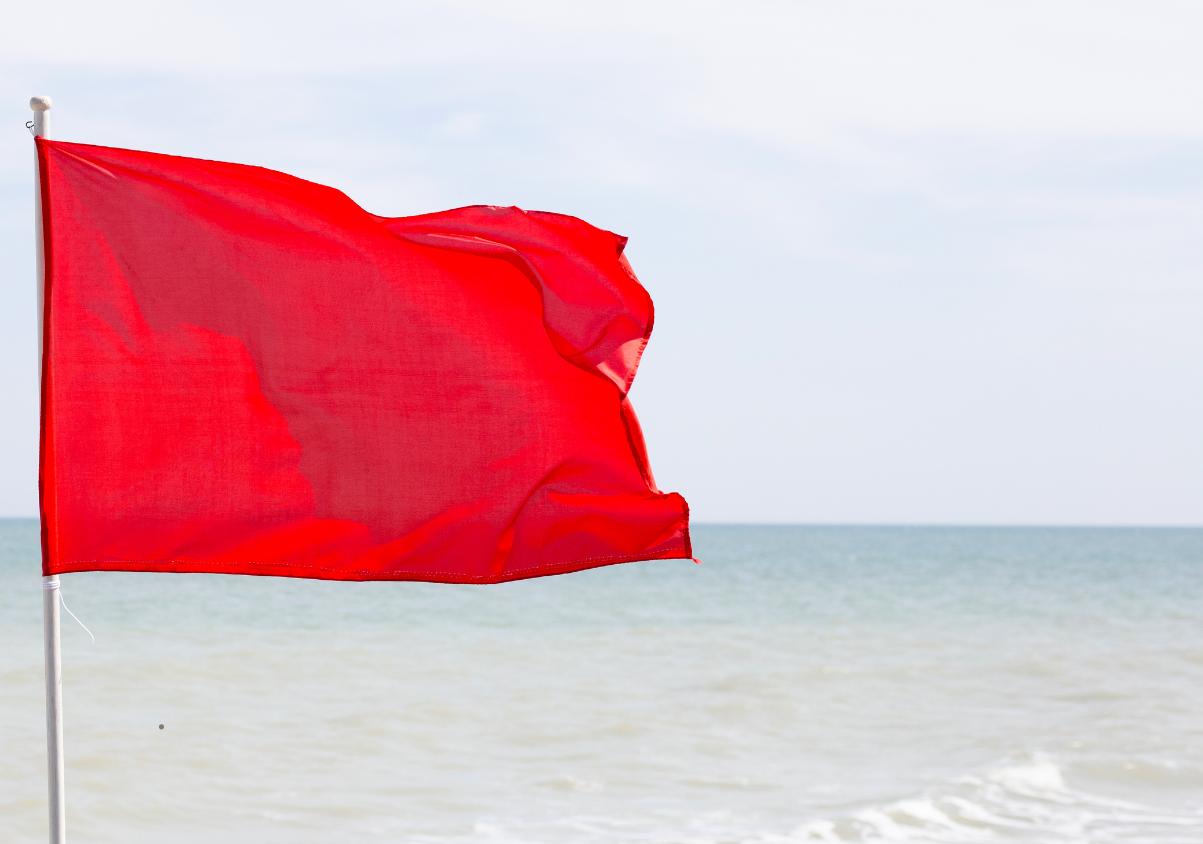

The height of the summer season has brought an unusual situation to the coastline of Málaga city. Six beaches have been temporarily closed to swimming after tests carried out by the municipal water company Emasa detected levels of Escherichia coli above the recommended threshold.
The restriction affects several areas on both the western and eastern sides of the city and comes during the second half of August, coinciding with Málaga Fair 2026.
According to the latest official information, the affected beaches remain under a red flag while further water samples are analysed. Swimming will only be allowed again once tests confirm that water quality has returned to acceptable levels.
Which beaches in Málaga are closed?
The swimming ban currently affects six beaches in Málaga city:
- Campo de Golf-San Julián
- Guadalmar
- La Misericordia
- Sacaba
- San Andrés
- El Palo
In this case, the red flags are linked to water quality, rather than the usual reasons such as rough seas, strong currents or dangerous weather conditions.
The restriction followed tests on samples collected on Sunday 16 August, which detected a temporary concentration of E. coli above the recommended levels for bathing water.
Storms on 15 August are linked to the problem
The episode is connected to the heavy rainfall that affected Málaga during the early hours of Saturday 15 August.
The storms led to overflow incidents in different parts of the city and caused material and wastewater to reach the sea. Municipal services subsequently carried out cleaning operations to remove debris washed towards the coastline.
The situation has changed several times since then.
Campo de Golf-San Julián, La Misericordia, Sacaba and San Andrés initially displayed red flags as a precautionary measure following the storm-related discharges.
Some of these beaches temporarily returned to green-flag conditions after cleaning work, but subsequent microbiological tests led authorities to reintroduce restrictions and extend the ban to Guadalmar and El Palo.
Why are some reports talking about eight closed beaches?
The difference between reports mentioning six and those referring to eight beaches comes from combining different municipalities and two separate incidents.
The six beaches listed above are all located in Málaga city and are affected by the E. coli findings.
Two additional beaches, Santa Ana and Las Gaviotas in Benalmádena, were also temporarily closed as a precaution after several swimmers reported skin reactions.
Other beaches in Benalmádena had initially been affected but subsequently reopened, while the cause of the incidents there remained under investigation.
The two situations should therefore not automatically be treated as the same problem.
The most accurate summary is that six Málaga city beaches are closed because of E. coli levels, while references to eight beaches also include two separate precautionary closures in Benalmádena.
What does E. coli in seawater mean?
Escherichia coli is one of the microbiological indicators used to assess the sanitary quality of bathing water.
High concentrations can indicate recent faecal contamination, which is why the bacteria are regularly monitored at beaches.
In this case, Málaga City Council has referred to a temporary increase above recommended levels, rather than a permanent problem affecting the entire coastline.
The swimming ban applies only to the six identified beaches and will remain in place until new tests confirm that conditions are once again suitable for bathing.
When will the beaches reopen?
There is currently no fixed reopening date.
Emasa will continue collecting and analysing water samples, and the beaches will reopen once laboratory results confirm that bathing conditions are safe again.
Until then, visitors should respect the red flags and avoid entering the water at the affected beaches, even if the sea appears clean and calm.
Unlike a red flag caused by waves or currents, microbiological contamination cannot be detected simply by looking at the water.
Closures come at the busiest point of the summer
The restrictions have arrived at one of the busiest times of the year for Málaga’s beaches.
August brings large numbers of residents and tourists to the coastline, and the closures also coincide with Málaga Fair, when the city receives an additional influx of visitors.
The tourism sector has expressed concern about the possible impact on holidaymakers’ experience, particularly for visitors who have chosen the Costa del Sol specifically for its beaches.
However, the restrictions are also a reminder that public health takes priority and that beaches should remain closed until water quality can be guaranteed.
Not all Málaga beaches are affected
The closure of six beaches does not mean swimming is banned along the whole Málaga coastline.
The city has around 14 kilometres of beaches, and many popular areas remain outside the current restriction, including La Malagueta, La Caleta, Baños del Carmen, Pedregalejo-Las Acacias, El Dedo, Peñón del Cuervo and La Araña.
Anyone planning a beach day should check the latest local information and pay attention to flags and official notices before entering the water.
The situation may change as new laboratory results become available, so checking the status of individual beaches is particularly important over the coming days.
According to the latest official information, the swimming ban specifically affects Campo de Golf-San Julián, Guadalmar, La Misericordia, Sacaba, San Andrés and El Palo, and will remain in place until tests confirm that water quality is safe again; updates can be checked in the official notice published by Málaga City Council.

Latest news




Upcoming events
12
Nov
El Desembarco, la traición de Viriato at La Caja Blanca
12
Nov
HOMER El Mero Mero at Sala Trinchera Málaga
13
Nov
Marbella Startup Lab – Innovate & Collaborate
13
Nov
Candlelight: Coldplay & Imagine Dragons at Sala Fundación Unicaja María Cristina
13
Nov
Candlelight: Tribute to Ludovico Einaudi at Anantara Villa Padierna
Similar News

Bancosol’s Great Food Collection returns to Malaga: how and where to donate
Málaga

Christmas lunches in Málaga are already booking up: restaurants almost full after reservations began in May
Málaga

Malaga Marathon 2026 road closures: affected streets and times this Sunday
Málaga
