


Solar eclipse in Málaga 2026: how to watch it today without damaging your eyesight and which glasses you need
The Moon will cover around 95% of the Sun across Málaga province this Wednesday, 12 August, but the eclipse will remain partial, meaning certified eclipse glasses must stay on whenever looking directly at the Sun.
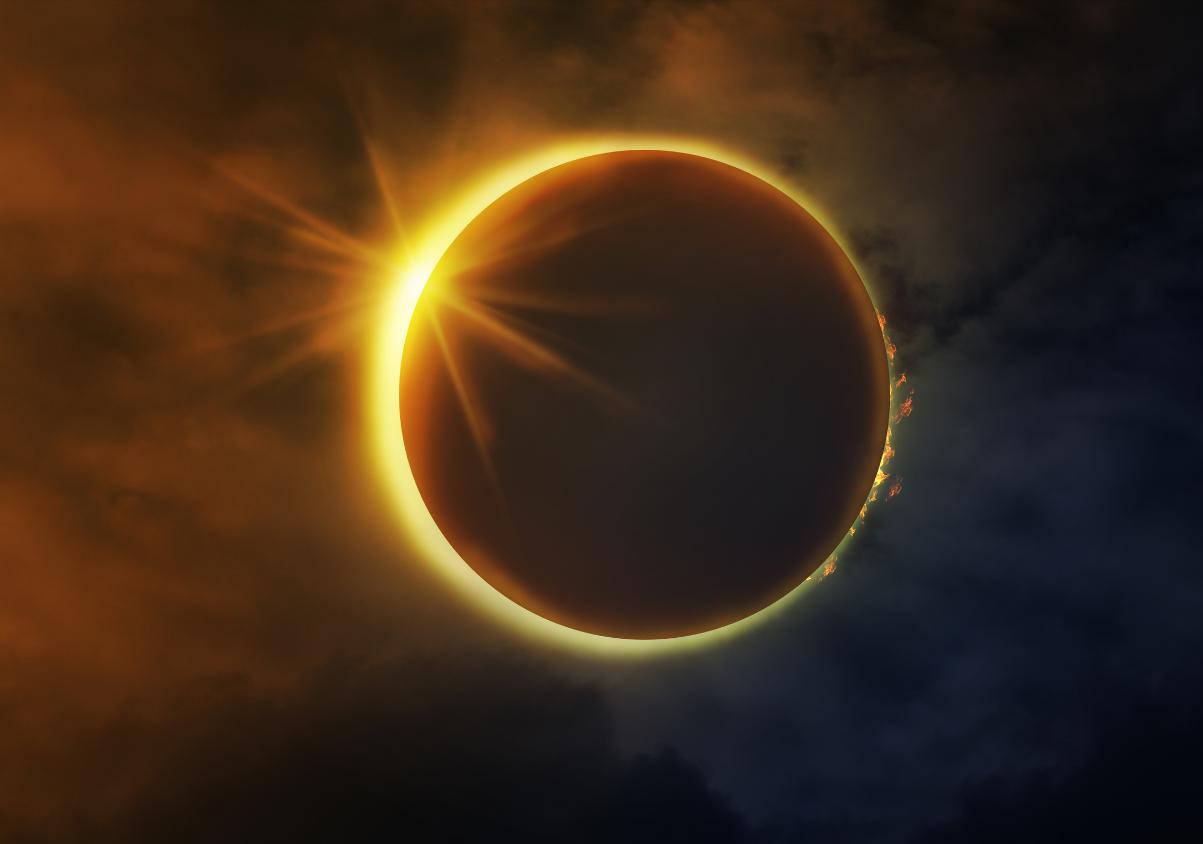

Málaga will experience one of the most eagerly awaited astronomical events of recent years this Wednesday, 12 August 2026. The first eclipse in the so-called Iberian Eclipse Trio will cross Spain at sunset and, although it will become total across parts of northern Spain, in Málaga province it will be seen as a very deep partial solar eclipse.
The Moon will cover approximately 95% of the solar disc in different parts of Málaga, creating a spectacular sight while the Sun is already very low over the western horizon.
However, the fact that only a small part of the Sun will remain visible does not make it safe to look at directly. In fact, there will be no point during the eclipse in Málaga when observers should remove their protective glasses while looking at the Sun.
The president of the Málaga Astronomical Society (Sociedad Malagueña de Astronomía), María Rosa López Ramírez, has stressed that eye protection will be necessary throughout the entire period of direct observation. Málaga is outside the path of totality, meaning the Sun will never be completely hidden.
What time is the solar eclipse in Málaga?
The eclipse will begin in Málaga province at approximately 7:40 pm, although the exact time will vary slightly depending on the municipality.
The most dramatic moment is expected between approximately 8:30 pm and 8:38 pm, when the Moon reaches maximum coverage of the Sun in different areas of the province.
The timing will make this eclipse particularly dependent on location. As it takes place close to sunset, with the Sun very low in the sky, finding somewhere with a completely clear western horizon will be essential.
Buildings, mountains and even trees could block the view before maximum eclipse is reached. Spain’s National Geographic Institute therefore recommends choosing a location with good visibility towards the west.
In Málaga, eclipse glasses must stay on at all times
This is probably the most important difference between watching the eclipse from Málaga and observing it from somewhere within the path of totality.
In areas where the Moon completely covers the Sun, there is a short period during totality when the solar corona can safely be viewed without eclipse glasses. As soon as any part of the Sun reappears, eye protection must be put back on.
But Málaga will not experience totality on 12 August.
Even when only a small fraction of the solar disc remains visible at maximum eclipse, that light is still powerful enough to cause eye damage if viewed directly.
For Málaga, the rule is therefore straightforward: if you are looking directly at the Sun, keep your eclipse glasses on throughout the entire event.
Normal sunglasses are not enough
One of the most dangerous mistakes is assuming that very dark sunglasses can replace proper eclipse glasses.
They cannot.
Anyone looking directly at the eclipse must use certified glasses specifically designed for solar observation. Official guidance from Spain’s National Geographic Institute recommends filters compliant with EN ISO 12312-2:2015, together with the appropriate CE marking when purchased within the European Union.
Before using them, check that the glasses are in good condition and have no scratches, holes, cracks or other damage.
They should also fit properly and completely cover the field of view. Even with certified protection, it is better not to stare continuously at the Sun for long periods.
X-rays, CDs and dark glass are not safe either
Homemade solutions should not be used to view the eclipse.
This includes X-ray film, CDs, smoked glass, unsuitable welding filters, homemade filters and ordinary sunglasses, regardless of how dark they may appear.
Reducing visible brightness does not necessarily mean that harmful solar radiation is being blocked properly.
The safest option is to use only filters specifically certified for direct solar observation.
Why can an eclipse damage your eyes without you noticing?
One of the biggest dangers of looking directly at the Sun is that the damage may not cause immediate pain.
Intense sunlight can injure the retina’s light-sensitive cells and lead to a condition known as solar retinopathy. Possible symptoms include blurred vision, dark spots in the centre of your vision, increased sensitivity to light and changes in colour perception.
Symptoms may also appear several hours after exposure, meaning someone can damage their eyes without immediately realising it.
The retina does not contain pain receptors, so an injury caused by staring at the Sun may occur without any immediate warning.
Anyone experiencing changes in their vision after looking directly at the Sun should seek medical assessment.
Be especially careful with phones, cameras, binoculars and telescopes
Eclipse glasses protect your eyes when looking directly at the Sun, but they do not make it safe to look through binoculars, telescopes or camera lenses.
These devices concentrate solar radiation and require special solar filters fitted correctly over the front of the optical equipment.
You should never look through binoculars or a telescope while simply wearing eclipse glasses. The concentrated sunlight can overwhelm the filter and cause serious eye injury.
The same applies to cameras and other equipment used to photograph the Sun at high magnification.
Anyone planning to photograph the eclipse with professional equipment should use solar filters specifically designed for the lens and follow the manufacturer’s instructions.
Tree shadows will create another eclipse spectacle
Not everything worth seeing requires looking directly at the sky.
During a partial eclipse, a curious pinhole effect can be seen simply by looking at the ground.
Small gaps between tree leaves act like tiny pinhole cameras, projecting images of the eclipsed Sun below. Instead of the usual round patches of sunlight, the ground can become covered in small crescent shapes.
It is one of the easiest and safest ways to experience the eclipse without looking directly at the Sun.
The same principle can be recreated by making a small hole in a piece of card and projecting the image of the Sun onto another surface behind it.
Where to watch the eclipse in Málaga
As well as having the correct protective glasses, choosing the right location will be particularly important this year.
Because maximum eclipse will take place late in the day, look for somewhere with open views towards the west, avoiding mountains, tall buildings or other obstructions.
Beaches and open spaces facing west may offer some of the best viewing conditions, provided the horizon is clear.
In inland areas of the province, the landscape could have a greater impact. In Antequera, for example, the eclipse is expected to begin at around 7:42 pm and reach maximum coverage at approximately 8:37 pm, with around 95% of the Sun obscured.
Anyone planning to leave the city and travel to a viewpoint or higher ground should also allow extra time, as popular observation spots could attract significant numbers of people.
The first of three extraordinary eclipses for Málaga
This Wednesday’s eclipse is only the beginning.
Spain will experience three major solar eclipses between 2026 and 2028, an exceptional sequence known as the Iberian Eclipse Trio.
For Málaga, the most spectacular event will come next year.
On 2 August 2027, the path of totality will cross southern Spain and include much of Málaga province. In Málaga city, the total phase is expected to last approximately one minute and 48 seconds.
Then, on 26 January 2028, Málaga will also lie within the region from which an annular solar eclipse can be observed.
But for this first event, the essential advice is simple: find a clear western horizon, use certified eye protection and remember that the eclipse will remain partial in Málaga, so eclipse glasses should never be removed while looking directly at the Sun.
Exact times by municipality, obscuration percentages and official safety advice can be checked on the official 12 August 2026 solar eclipse website from Spain’s National Geographic Institute.

Latest news




Upcoming events
12
Nov
El Desembarco, la traición de Viriato at La Caja Blanca
12
Nov
HOMER El Mero Mero at Sala Trinchera Málaga
13
Nov
Marbella Startup Lab – Innovate & Collaborate
13
Nov
Candlelight: Coldplay & Imagine Dragons at Sala Fundación Unicaja María Cristina
13
Nov
Candlelight: Tribute to Ludovico Einaudi at Anantara Villa Padierna
Similar News

Bancosol’s Great Food Collection returns to Malaga: how and where to donate
Málaga

Christmas lunches in Málaga are already booking up: restaurants almost full after reservations began in May
Málaga

Malaga Marathon 2026 road closures: affected streets and times this Sunday
Málaga
