The day Marbella became the capital of Málaga province for 24 hours
The town won first prize in the 1967 Málaga Province Town Beautification Competition, a distinction that led Marbella to symbolically become the provincial capital for a day in 1968.
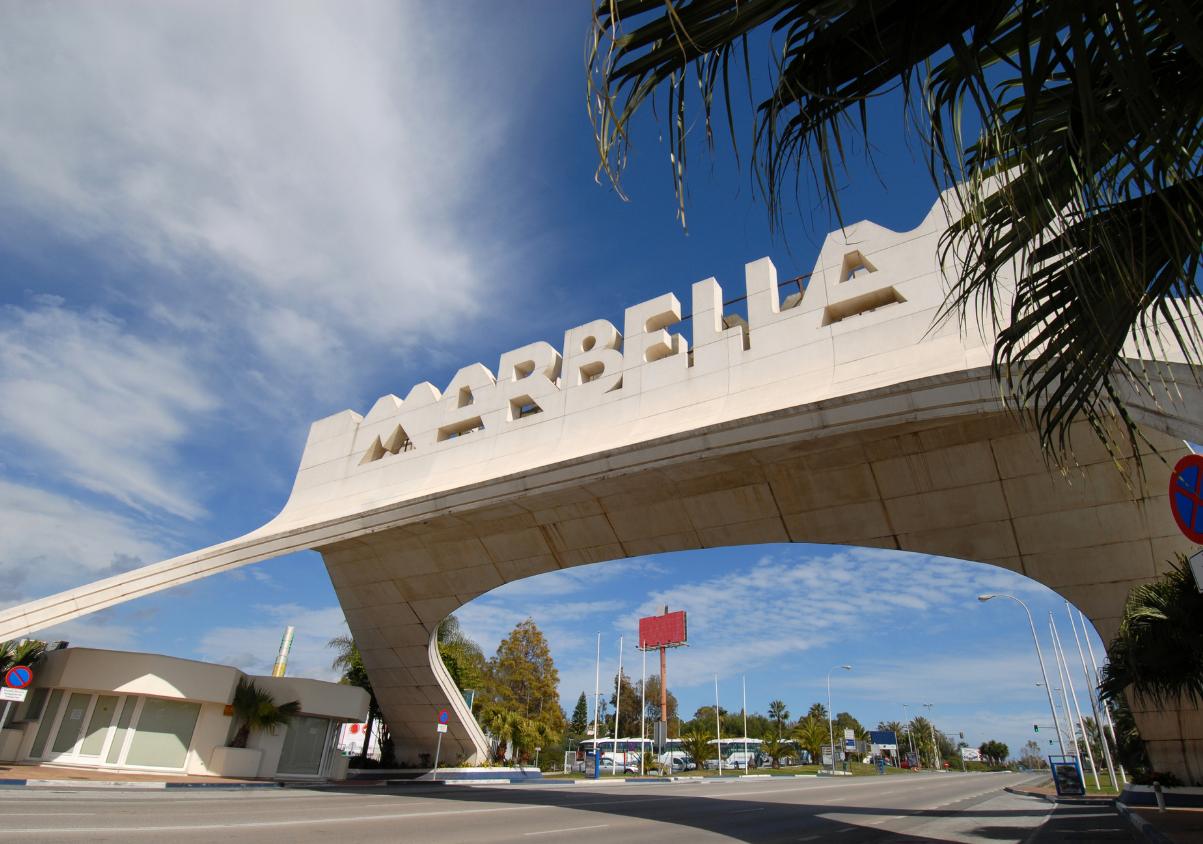

Long before becoming one of the Mediterranean’s best-known tourist destinations, there was a day when Marbella was considered the capital of Málaga province for 24 hours.
It was not an administrative transfer of the provincial capital, but a symbolic distinction linked to a competition created to improve the appearance of towns across Málaga during the second half of the 20th century.
The story began in 1967, when Marbella won first place in its category at the ninth edition of the Málaga Province Town Beautification Competition. As a result of that award, the following year’s provincial celebrations placed Marbella at the centre of attention.
It was a very different Marbella from the one visitors know today, although some of the elements that would eventually turn it into an international destination were already beginning to emerge.
A Marbella undergoing rapid transformation
By the late 1960s, Marbella was changing quickly.
Its traditional economy, previously linked to activities such as agriculture and fishing, was gradually giving way to a new reality shaped by urban growth and the development of tourism on the Costa del Sol.
The town itself also looked very different.
From the area around the former Club Náutico marina, today known as Puerto Virgen del Carmen, it was still possible to enjoy open views towards Sierra Blanca and the distinctive silhouette of La Concha, without the dense development that would later transform much of Marbella’s coastline.
At the same time, new hotels, residential developments and businesses aimed at visitors were beginning to reshape the municipality.
The local council also faced the challenge of keeping pace with that growth, improving municipal services and maintaining order in a town that was becoming increasingly busy.
At the head of the council was Francisco Cantos Gallardo, whose name appears in official municipal records from the period preserved by Marbella’s Historical Archive.
The competition that rewarded Málaga’s best-kept towns
The origin of Marbella’s unusual one-day capital status can be traced back to the Málaga Province Town Beautification Competition.
The initiative began in 1958 and was designed to encourage municipalities to improve areas such as cleanliness, street maintenance, gardens, building façades and the overall image presented to both residents and visitors.
The 1967 edition was the ninth competition.
It was divided into two categories. One included towns that had already achieved one of the top positions in previous editions, while the other was open to the remaining municipalities.
A total of 76 towns initially entered that year, although 63 were ultimately assessed after the improvements carried out in each location were reviewed.
Marbella emerged as the winner of the main category.
Marbella won 250,000 pesetas for its transformation
The first prize went to Marbella, which received 250,000 pesetas.
Other Málaga municipalities also received recognition. Benalmádena finished second, followed by Cuevas Bajas, Carratraca and Vélez-Málaga.
The award highlighted the scale of the improvement works already completed in Marbella, as well as projects that were still under way and the cooperation between the local council and residents.
The prize brought more than just financial recognition. It also allowed Marbella to progress towards the national competition and helped strengthen the image of a town that was rapidly establishing itself as an increasingly important tourist destination.
Marbella became the provincial capital for a day
The most unusual consequence came in 1968.
That year, the province’s official celebrations were centred on Marbella and, for 24 hours, the town was symbolically regarded as the capital of Málaga province.
The distinction placed provincial attention firmly on a destination that was already creating much of the tourism identity it continues to promote today.
Marbella was increasingly associated with whitewashed streets, flowers, Mediterranean weather, major hotels and international visitors.
Many of those elements were used in promotional campaigns following the award.
Advertising at the time highlighted whitewashed buildings, geraniums and flowerpots lining the streets of the old town, Sierra Blanca, luxury hotels and Marbella’s growing cosmopolitan character.
More than half a century later, much of that combination remains central to the town’s image.
Marbella City Council still highlights the importance of its Old Town, where traces of different historical periods remain visible and Plaza de los Naranjos continues to be one of its most recognisable landmarks.
How much did a holiday in Marbella cost in 1967?
Marbella in the late 1960s also offers some curious details that help illustrate everyday life during the town’s tourism boom.
In December 1967, for example, promotional offers advertised seven-day Christmas and New Year holidays for 2,500 pesetas.
The property market was developing at the same time. Homes in the Nueva Marbella development were advertised with an initial payment of 48,577 pesetas followed by monthly instalments of 3,605 pesetas.
Municipal documents from 1967 preserved by Marbella’s Historical Archive also contain references to Nueva Marbella among the building permits and urban development projects taking place at the time.
Restaurants provide another glimpse into life in the town.
In Plaza de los Naranjos, La Escafandra restaurant offered a Christmas dinner for 350 pesetas, including assorted starters, prawn bisque, stuffed turkey, dessert, coffee, wine and champagne.
For everyday dining, more affordable restaurants popular with workers, including Sol y Sombra and Casa Eladio, offered daily menus for around 80 to 90 pesetas.
Heavy rain and a major sinkhole on Calle Arte
Winning the beautification award did not mean Marbella was free from urban problems.
The autumn of 1967 was marked by heavy rainfall, which caused damage in several parts of the town.
One of the most striking incidents occurred on Calle Arte, next to the defensive walls of Marbella Castle.
A major collapse opened up in the street, creating a large sinkhole that threatened nearby homes.
Municipal teams worked intensively to repair the road before Christmas.
The location also has considerable historical importance. The castle and surrounding streets form part of Marbella’s medieval centre, where remains of the town’s Islamic past can still be seen today.
The old defensive walls once followed areas close to the present-day Calle Arte and Calle Muro.
From a small coastal town to an international destination
The story of Marbella becoming the provincial capital for 24 hours takes on a different meaning when viewed from the town we know today.
In the late 1960s, Marbella was at a decisive stage of its transformation. International tourism was growing, new hotels and residential developments were appearing and the municipality was beginning to build a distinctive identity within the Costa del Sol.
That historic campaign describing white streets filled with flowers, Sierra Blanca in the background and an increasingly cosmopolitan atmosphere could, with only a few changes, still be used to promote Marbella today.
The scale of the town, its urban landscape and its international profile have changed dramatically, but many of the features that helped Marbella win that award in 1967 remain among its most recognisable characteristics.
And for one brief chapter in that transformation, Marbella could also boast of being, symbolically and for just 24 hours, the capital of the entire province of Málaga.
The historical development of the town and official municipal documents from this period can be explored through the Marbella City Council Historical Archive.

Latest news

Upcoming events
17
Sep
La Pequeña Cuba Gastro-Cultural Festival in San Pedro Alcántara 2026
18
Sep
World Wellness Weekend Marbella 2026
18
Sep
Candlelight: Queen vs. ABBA in Málaga
18
Sep
Candlelight: Coldplay and Imagine Dragons in Málaga
18
Sep
3 de Corazones – Pancho Céspedes, Enrique Ramil and José Luis Jaén in Málaga
Similar News
Málaga’s Palacio de la Tinta reborn as a five-star hotel opposite La Malagueta
Málaga
Virgen de la Victoria in Málaga 2026: times, procession and full route for 7 and 8 September
Málaga

Málaga school calendar 2026-2027: when classes start and all the main holiday dates
Málaga