Málaga welcomes fewer travellers, but hotel guests are staying longer
The city ended the first half of 2026 with a decline in the number of hotel guests, while overnight stays increased and the average visit rose to more than two days.
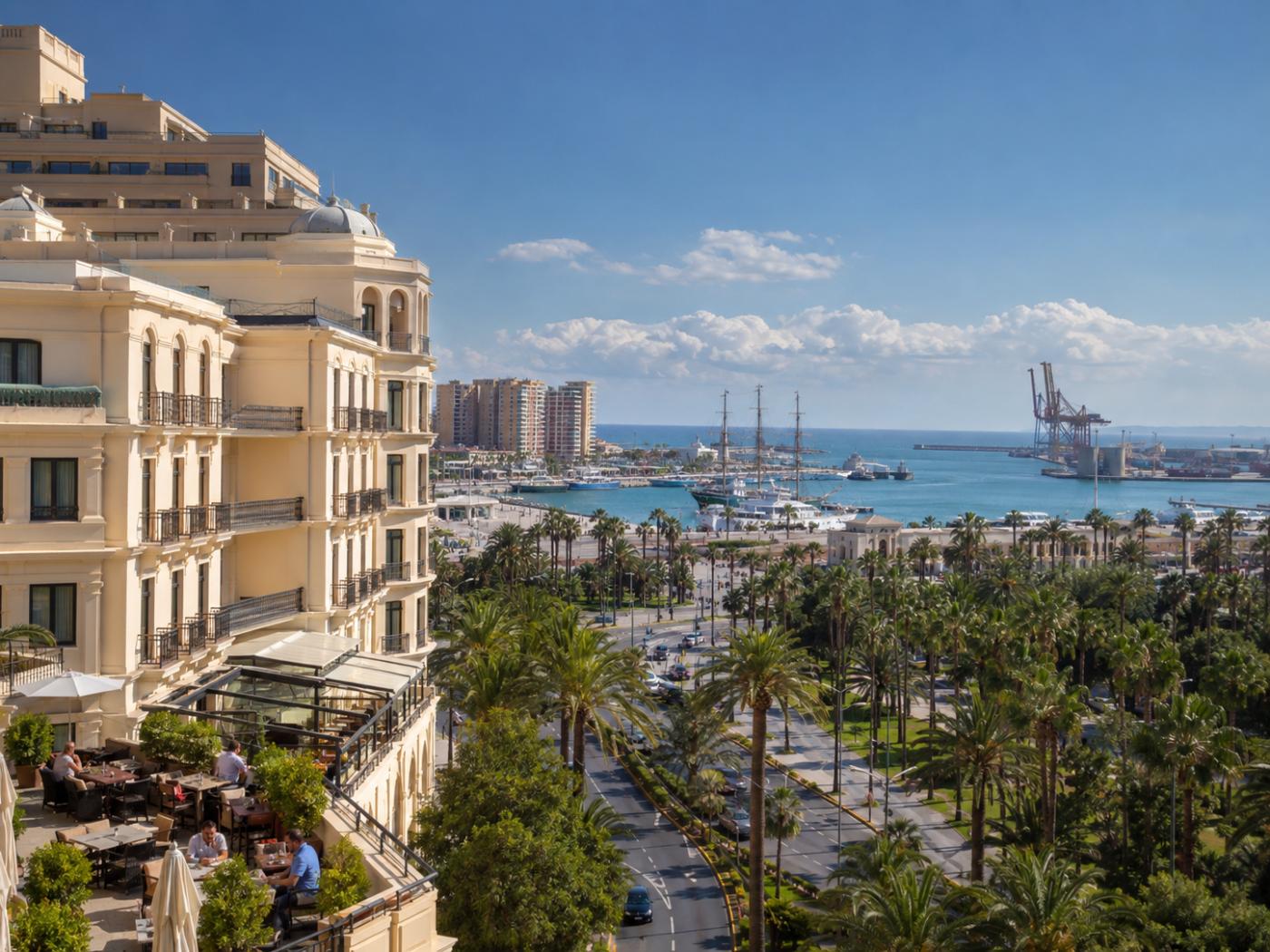

Hotel tourism in Málaga city is beginning to show a change in direction. Fewer travellers are arriving than a year ago, but those who do visit are spending more time in the destination. This shift has helped increase the number of hotel nights and maintain strong occupancy levels despite the fall in arrivals.
During the first half of 2026, Málaga’s hotels welcomed 823,065 travellers, 4.97% fewer than in the same period last year. However, these guests generated 1,747,146 overnight stays, an increase of 2.73%, equivalent to 46,368 additional nights.
Average stays rise above two days
The contrasting trends in arrivals and overnight stays pushed the average visit up to 2.12 days, compared with 1.96 days during the first six months of 2025.
The figures suggest that Málaga is encouraging more visitors to spend additional time exploring the city. Rather than serving only as a gateway to the Costa del Sol or a destination for a brief city break, the capital is gaining ground as a place where travellers choose to stay for several nights.
Longer visits may also increase tourism spending in sectors such as restaurants, shops, museums, transport and cultural activities, as guests have more opportunities to explore and spend within the destination.
June records fewer guests but the highest occupancy of the first half
The contrast was particularly noticeable in June. Málaga’s hotels received 135,083 travellers, 16.78% fewer than in the same month of 2025. Overnight stays also declined, although more moderately, reaching 299,159 nights, a fall of 6.06%.
Despite these decreases, the average stay rose to 2.21 days, 12.76% higher than a year earlier. This was the longest monthly stay recorded during the first half of 2026, ahead of 2.18 days in May and 2.15 in January.
Room occupancy also reached 88.28%, the highest rate recorded during the first six months of the year. This represented an increase of 4.92 percentage points compared with the 83.36% registered in June 2025.
International visitors continue to support hotel demand
Foreign visitors remain the main driver of Málaga’s hotel sector. Between January and June, hotels welcomed 552,766 international travellers, compared with 270,299 residents of Spain.
The international market generated 1,281,843 overnight stays, 8.25% more than during the first half of 2025. Overseas travellers therefore accounted for approximately three out of every four hotel nights in the city and generated 97,661 additional overnight stays.
In June, non-resident arrivals fell by 13.27% to 92,271 travellers, but their overnight stays remained almost unchanged at 225,309 nights.
The domestic market performed more weakly, with 42,812 travellers and 73,850 overnight stays, representing declines of 23.47% and 19.78% respectively.
The United States gains importance
One of June’s most notable developments was the growth of the United States as a source market. The country ranked second internationally in both travellers and overnight stays, behind only the United Kingdom.
Málaga’s hotels welcomed 9,292 American travellers during the month, generating 20,535 nights and an average stay of more than 2.2 days.
Across the first half of the year, the United States accounted for 41,090 hotel guests and 90,546 overnight stays.
The United Kingdom remained the leading international market, with 89,565 travellers and 235,697 nights between January and June. Overnight stays by British visitors increased by 12.17% compared with the same period last year.
Germany also recorded a positive trend. Although the number of German travellers declined in June, their overnight stays increased. Across the first half of the year, the market generated 121,751 hotel nights, 15.67% more than in 2025.
Dutch and British travellers record the longest stays
Among Málaga’s main international markets, visitors from the Netherlands stayed the longest in June, with an average visit of 2.79 days.
They were followed by travellers from the United Kingdom at 2.68 days, Germany at 2.67, Italy at 2.35 and the United States at 2.21 days.
Within the domestic market, Andalusia remained the leading region of origin, followed by Madrid, Catalonia and the Valencian Community.
Lower visitor numbers, but longer stays
The figures point to a change in Málaga’s tourism patterns. Although the total number of hotel guests has fallen, longer visits are helping maintain overnight stays and improve occupancy.
This development could support a model focused less exclusively on increasing arrivals and more on encouraging visitors to remain in the city, discover a broader range of attractions and generate a wider economic impact.
The challenge will be to determine whether this trend continues over the coming months and whether the strength of international demand can offset the decline in the Spanish domestic market.
Information sources: Diario SUR and Málaga City Council, based on the Hotel Occupancy Survey published by Spain’s National Statistics Institute.

Latest news


Upcoming events
17
Sep
La Pequeña Cuba Gastro-Cultural Festival in San Pedro Alcántara 2026
18
Sep
World Wellness Weekend Marbella 2026
18
Sep
Candlelight: Queen vs. ABBA in Málaga
18
Sep
Candlelight: Coldplay and Imagine Dragons in Málaga
18
Sep
3 de Corazones – Pancho Céspedes, Enrique Ramil and José Luis Jaén in Málaga
Similar News

Málaga awaits the opening of the new Hotel Zenit San Telmo this September
Málaga

Málaga Hosts Andalusia’s First Concert for Dogs with Live Piano Music
Málaga