


Spain’s 2026 World Cup victory could add up to €8 billion to the economy
An analysis published in The Conversation suggests that winning a World Cup can create a temporary boost to GDP, exports, tourism-related stock values and the country’s international brand.
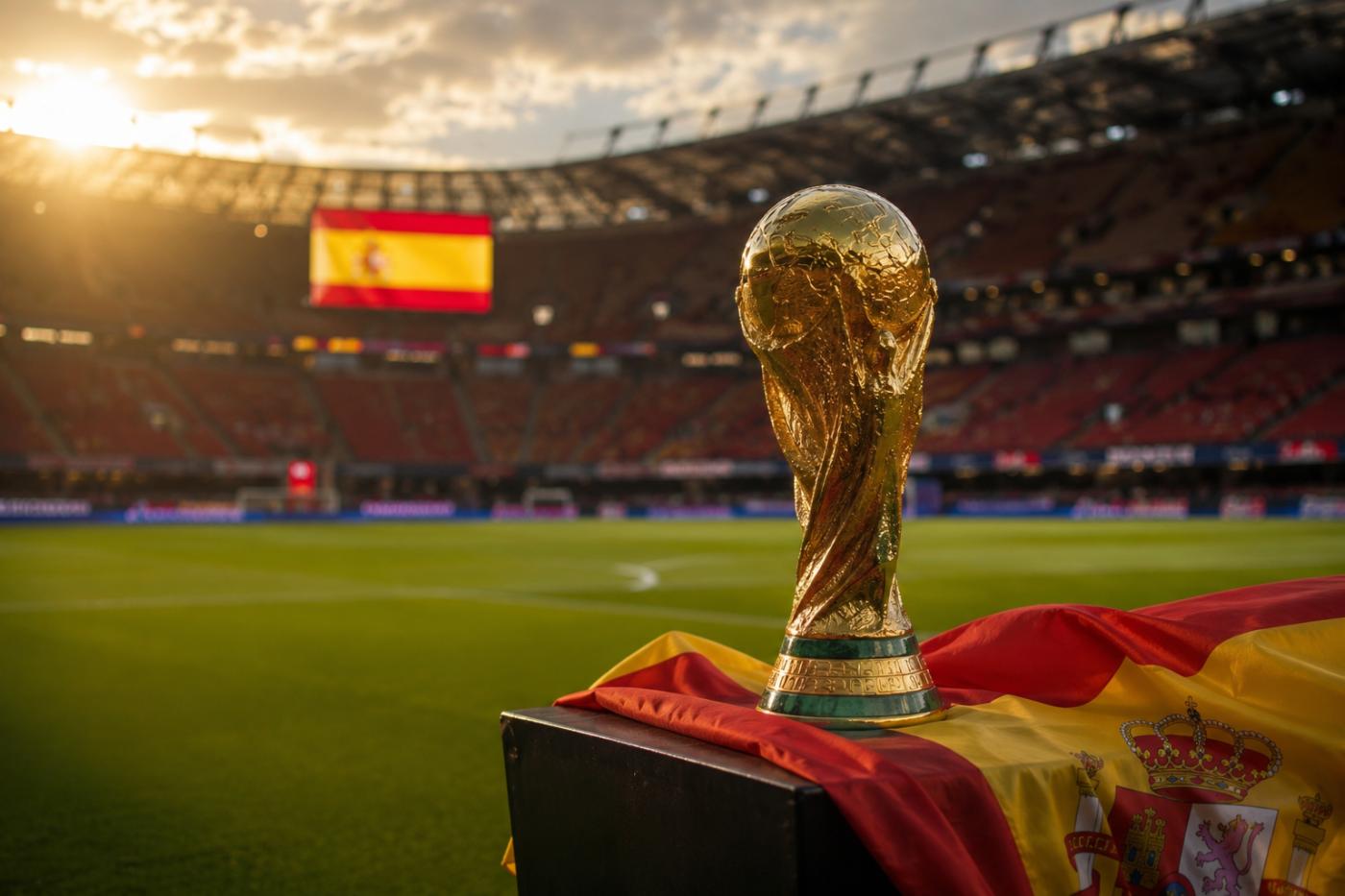

Spain’s second star is not only a sporting achievement. La Roja’s victory at the 2026 World Cup, after beating Argentina 1-0 in the final with a goal by Ferran Torres in extra time, also opens up an economic reading of what a title of this scale can mean for the winning country.
According to an analysis published by The Conversation and written by Jorge Martín Magdalena, professor at Universidad Pontificia Comillas ICAI-ICADE, winning the World Cup can have a positive effect on the Spanish economy in the months following the tournament. The main estimate points to an additional growth boost of 0.48 percentage points, which in Spain’s case would be equivalent to around €8 billion.
Winning is not the same as hosting
The analysis distinguishes between two very different impacts: hosting a World Cup and winning it. While host countries usually take on major investments in stadiums, infrastructure and security, the champion receives global visibility without having to bear that cost.
That international exposure can become a boost for the country brand, especially when the victory is associated with sectors such as tourism, gastronomy, culture, sport and exports. In Spain’s case, the title also arrives in a more favourable economic context than in 2010, when the country celebrated its first World Cup during the financial crisis.
The “champion’s dividend”
The article draws on economic studies that have analysed the performance of World Cup-winning countries since 1961. Their conclusion is that winning the tournament can generate a short-term effect on growth, particularly during the six months following the final.
This impact would not come so much from a rise in domestic consumption, but from greater international projection. According to the analysis, exports from the winning country can grow between five and six points faster after the victory, driven by the global visibility of the triumph.
A final watched by millions
The key lies in the global showcase offered by football. The 2026 final is estimated to have reached around 2.2 billion viewers, an audience that few institutional or advertising campaigns could match. For weeks, Spain’s name, players, cities and symbols occupied headlines, broadcasts and conversations around the world.
This effect can especially benefit sectors closely linked to the country’s international image, such as tourism. The 2010 precedent already showed a positive reaction among some major Spanish tourism companies, although experts warn that not all champions experience the same market behaviour.
Tourism, markets and sports enthusiasm
The economic impact of winning a World Cup can also be measured beyond GDP. Victory can strengthen the country’s external perception, improve its tourism appeal, stimulate sport-related consumption and increase the fan base.
The analysis recalls that major titles often have lasting effects on sports participation and interest in football. In Spain, for example, the women’s national team’s victory in 2023 helped boost federation licences and reinforced the growth of women’s football.
Looking ahead to the 2030 World Cup
The reflection also comes at a key moment: Spain will be one of the hosts of the 2030 World Cup, alongside Portugal and Morocco. The article raises an interesting idea: hosting the tournament may not always be the great economic business it is often presented as, but playing close to home can increase sporting chances.
For 2030, therefore, the challenge will not only be to host matches or attract visitors, but also to turn the event into an opportunity to strengthen Spain’s international image and, if sporting performance follows, capture that “champion’s dividend” once again.
A victory with impact beyond football
The 2026 World Cup confirms that football remains one of the most powerful visibility platforms in the world. For Spain, the title represents sporting pride, but also an economic opportunity linked to the country brand, exports, tourism and international projection.
The effect will not be permanent or automatic, but it can act as a boost over the coming months. The star won by La Roja therefore has a value that goes far beyond the badge.
📍 Champion country: Spain.
🏆 Tournament: FIFA World Cup 2026.
⚽ Final: Spain 1-0 Argentina.
📈 Estimated impact: 0.48 additional growth points.
💶 Equivalent for Spain: around €8 billion.
🌍 Main effect: greater international visibility, export boost and stronger country brand.
🔮 Next challenge: using the 2030 World Cup as a sporting, tourism and economic showcase.
The information comes from the analysis published by The Conversation on the economic value of Spain’s 2026 World Cup victory.

Latest news





Upcoming events
12
Nov
El Desembarco, la traición de Viriato at La Caja Blanca
12
Nov
HOMER El Mero Mero at Sala Trinchera Málaga
13
Nov
Marbella Startup Lab – Innovate & Collaborate
13
Nov
Candlelight: Coldplay & Imagine Dragons at Sala Fundación Unicaja María Cristina
13
Nov
Candlelight: Tribute to Ludovico Einaudi at Anantara Villa Padierna
