Hans Christian Andersen found his favourite corner of Spain in Andalusia
The author of The Little Mermaid and The Ugly Duckling visited Málaga in 1862 and was captivated by the sea, the light, the hospitality of its residents and the sight of the Cathedral and Gibralfaro towering over the city. His impressions were recorded in his book Travels in Spain.

Hans Christian Andersen is known around the world for stories such as The Little Mermaid, The Ugly Duckling, The Snow Queen and The Emperor’s New Clothes. However, the Danish writer was also an indefatigable traveller who explored much of Europe and recorded his impressions of the places he visited.
One of those journeys brought him to Spain in 1862. During his travels, he visited cities including Barcelona, Valencia, Alicante, Cartagena, Granada and Madrid, but one Andalusian destination made an especially profound impression on him: Málaga.
The writer was so captivated by his stay that he wrote one of the most memorable descriptions of the capital of the Costa del Sol: “In no other Spanish city have I felt as happy and as comfortable as I did in Málaga.”
More than 160 years later, the city continues to preserve the memory of his visit through a statue in Plaza de la Marina and several landmarks where visitors can follow in the footsteps of the celebrated Danish author.
Hans Christian Andersen arrived in Málaga in 1862
Andersen began his journey through Spain when he was already one of Europe’s most renowned writers.
He crossed the border in September 1862 and embarked on an extensive tour of the country. Along the way, he took notes about the landscapes, customs, architecture and everyday life he encountered.
Those observations later formed the basis of I Spanien, published in 1863 and known in English as In Spain or Travels in Spain.
In the book, Andersen does not simply list monuments. He focuses on people, streets, sounds, markets, forms of transport and small everyday scenes that provide an insight into Spanish cities during the mid-19th century.
Málaga occupies a prominent place in this account. The writer stayed in the city on two separate occasions, divided by a visit to Granada, and found a combination of scenery, climate and hospitality that he experienced nowhere else in the country.
The first view of Málaga that surprised the writer
Andersen arrived in Málaga by sea and observed the city from a distance before disembarking.
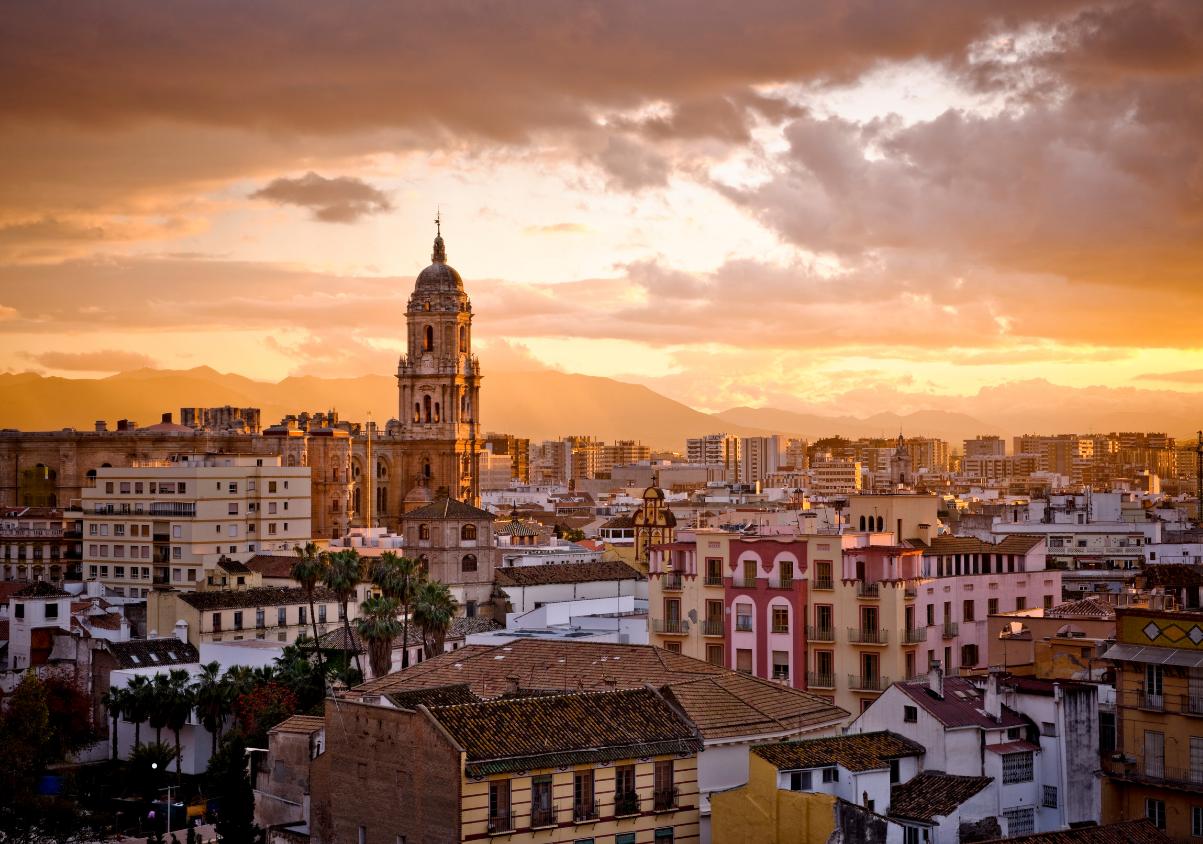
The view was formed by whitewashed houses, the Cathedral and the silhouette of Gibralfaro rising above the urban landscape. The panorama immediately captured his attention and anticipated the profound impression that the city would make on him.
In 19th-century Málaga, the Cathedral stood out clearly above an urban landscape much lower than it is today. Gibralfaro Castle and the Alcazaba completed a scene in which the city’s Andalusian heritage, Christian architecture and activity as an important port coexisted.
The landscape that welcomed Andersen remains recognisable from several points around the city. The Cathedral still dominates the historic centre, while the Alcazaba and Gibralfaro Castle retain their privileged position overlooking the Mediterranean.
Why Málaga made Hans Christian Andersen so happy
The writer’s fascination cannot be explained by monuments alone. What truly won him over was the way of life he discovered during his stay.
Andersen praised the natural surroundings, the open sea and the friendly character of the local population. Málaga gave him a sense of comfort and familiarity that led him to say he felt at home.
At the time, the city was an important commercial centre connected to several European ports. Sailors, merchants, businesspeople and travellers of different nationalities formed part of its everyday life.
This open and cosmopolitan atmosphere may have helped Andersen feel particularly comfortable. The activity around the port, the Mediterranean climate and life in the streets contrasted with the landscapes and temperatures of northern Europe.
The author also showed an interest in the habits of Málaga’s residents. Rather than viewing the city solely as a collection of monuments, he observed how its people interacted and how daily life unfolded in its squares, promenades and businesses.
Málaga Cathedral, one of the sights that impressed him most
The Cathedral of the Incarnation was one of the buildings that most attracted the writer’s attention.
Its enormous size, visible from the sea and from many parts of the city, made the church the main landmark on Málaga’s urban skyline.
Popularly known as La Manquita, or “the one-armed lady”, because one of its towers was never completed, the Cathedral was built on the site formerly occupied by the main mosque of Muslim Málaga.
Construction began in the 16th century and continued over several periods, which explains its combination of different architectural styles. The building contains Gothic, Renaissance and Baroque elements, although its overall appearance is particularly associated with the Renaissance.
During Andersen’s visit, the Cathedral already dominated Málaga’s skyline. The author used grand literary imagery to describe the effect of the enormous church rising above the surrounding houses.
Today, it remains one of the main landmarks through which visitors can reconstruct the Málaga that the writer encountered in 1862.
The Alcazaba and Gibralfaro overlooking the Mediterranean
Gibralfaro Castle also formed part of the first panorama Andersen saw as he approached the city.
Standing at the top of the hill, it offered a powerful image above the Mediterranean and served as a reminder of Málaga’s Andalusian past. At its foot stood the Alcazaba, a palatial fortress built during the Muslim period.
The two sites were once connected by a fortified defensive passage known as La Coracha.
The combination of walls, mountains, sea and sky created one of the scenes that most appealed to the Danish traveller.
Today, the Alcazaba and Gibralfaro Castle can be visited independently. Their viewpoints offer panoramic views of the port, La Malagueta bullring, Málaga Park and much of the coastline.
These views help visitors imagine the perspective that impressed Andersen when he arrived in the city by sea.
Fonda de Oriente, Andersen’s accommodation in Málaga
During his stay, Hans Christian Andersen lodged at the Fonda de Oriente, one of the leading hotels in 19th-century Málaga.
The accommodation was located on Alameda Principal, one of the city’s most elegant and lively areas. From his room, the writer could observe the trees, the fountain and the constant movement of people along the promenade.
At the time, the Alameda was one of the main meeting places for Málaga society. Its buildings, shops and inns welcomed travellers and merchants arriving from different countries.
Andersen viewed the establishment positively, both because of its location and because it allowed him to communicate in several languages.
The original building no longer survives, but a plaque now commemorates the Danish author’s stay in this part of the city.
Alameda Principal is therefore an essential stop for anyone wishing to explore the Málaga that Andersen knew.
Málaga’s English Cemetery also caught his attention
Another location connected to the writer’s journey is the English Cemetery in Málaga.
Opened in 1831, it was the first Protestant cemetery established in Spain. It was created to provide a dignified burial place for non-Catholic foreigners who lived or died in the city.
Andersen was surprised by its garden-like appearance, vegetation and proximity to the sea. Rather than resembling a conventional cemetery, the site gave him the impression of a peaceful garden separated from the movement of the city.
The cemetery is located on Avenida de Príes, close to La Malagueta, and contains the graves of notable figures including writer Gerald Brenan, poet Jorge Guillén and economist Marjorie Grice-Hutchinson.
A visit to the English Cemetery reveals another of the places that helped shape the romantic image of Málaga recorded by Andersen.
His journey to Granada before returning to Málaga
The writer’s stay in Málaga was divided into two stages.
From Málaga, he travelled to Granada, where he visited the Alhambra and was captivated by its palaces, courtyards, legends and decoration.
To Andersen, the monument seemed to contain ancient stories in every room. His nature as a storyteller led him to interpret the complex not only as a work of architecture, but also as a place filled with narratives.
After visiting Granada, he returned to Málaga before continuing his journey. His decision to return demonstrates the special connection he had developed with the city during his first few days.
It was then that he consolidated the sense of wellbeing he would later express in Travels in Spain.
Andersen’s statue in Plaza de la Marina
Málaga paid tribute to the writer in 2005, marking the bicentenary of his birth.
The city installed a bronze sculpture in Plaza de la Marina, just a short distance from Alameda Principal, Calle Larios and the port.
The artwork was created by sculptor José María Córdoba following a commission from the Danish Royal Family.
Andersen is depicted sitting casually on a bench, accompanied by a hat and a travelling suitcase. The composition allows residents and visitors to sit beside him and take photographs.
Rather than placing the writer on a distant pedestal, the sculpture integrates him into the public space as a traveller taking a break during his tour of the city.
Its location is no coincidence. Plaza de la Marina provides quick access to Alameda Principal, where the Fonda de Oriente once stood, and to the port that marked Andersen’s arrival in Málaga.
A route through Hans Christian Andersen’s Málaga
The main locations connected to the writer can be explored on foot along a route through the historic centre and the La Malagueta area.
The itinerary can begin at the statue in Plaza de la Marina before continuing along Alameda Principal, where his accommodation was located.
From there, visitors can enter the historic centre to see Málaga Cathedral and explore the streets Andersen discovered during his stay.
The route then continues towards Calle Alcazabilla, home to the Roman Theatre and the entrance to the Alcazaba. Those with more time can also climb to Gibralfaro Castle to admire the port and the Mediterranean.
The journey can end at the English Cemetery, located approximately 30 minutes on foot from Plaza de la Marina.
This route brings together literature, history and heritage, allowing visitors to observe the city through the eyes of one of the great European travellers of the 19th century.
A declaration of love that remains relevant today
Hans Christian Andersen’s words have become one of the best-known literary quotations about Málaga.
They continue to appear in tourism publications, cultural routes and tributes dedicated to the author. They also reflect an experience shared by many travellers who discover in the city a combination of light, heritage, sea and life in the streets.
Although modern Málaga is very different from the city the writer encountered in 1862, some of the elements that captivated him remain intact.
The Cathedral continues to rise above the historic centre, Gibralfaro dominates the bay and the Alameda retains its role as a connection between the heart of the city and the port.
The statue in Plaza de la Marina serves as a reminder that Andersen was not only the creator of some of literature’s most universal fairy tales. He was also a traveller who found in Málaga the place in Spain where he felt happiest and most at home.
The original descriptions of his arrival can be read through the Cervantes Virtual Centre, while information about the city’s tribute is available on the official Málaga City Council tourism website.

Latest news



Upcoming events
17
Sep
La Pequeña Cuba Gastro-Cultural Festival in San Pedro Alcántara 2026
18
Sep
World Wellness Weekend Marbella 2026
18
Sep
Candlelight: Queen vs. ABBA in Málaga
18
Sep
Candlelight: Coldplay and Imagine Dragons in Málaga
18
Sep
3 de Corazones – Pancho Céspedes, Enrique Ramil and José Luis Jaén in Málaga
Similar News
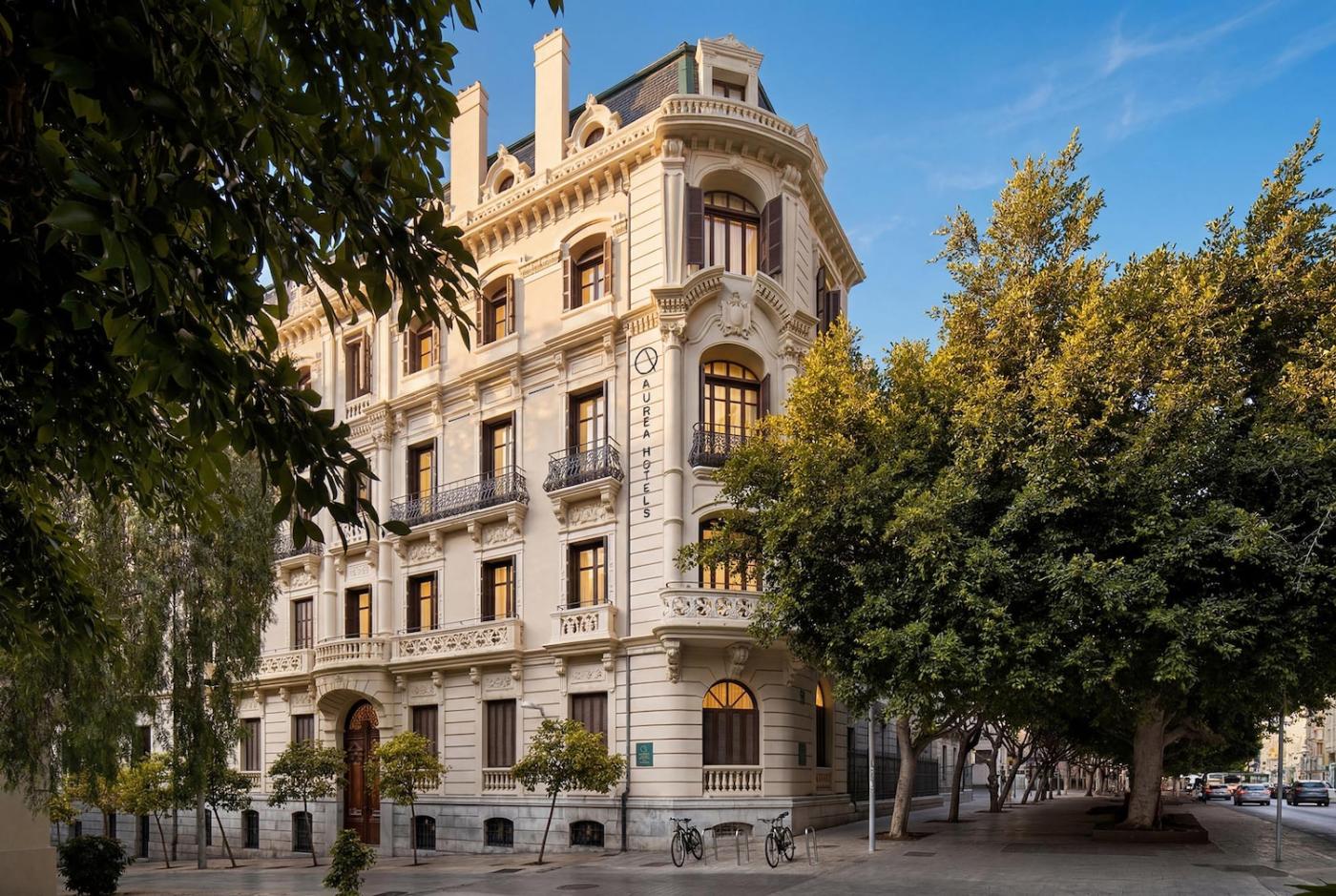
Málaga’s Palacio de la Tinta reborn as a five-star hotel opposite La Malagueta
Málaga

Virgen de la Victoria in Málaga 2026: times, procession and full route for 7 and 8 September
Málaga

Málaga school calendar 2026-2027: when classes start and all the main holiday dates
Málaga