Málaga Faces a Decisive Week Over the Location of the New La Rosaleda Stadium
Málaga City Council, the Andalusian Regional Government and the Provincial Council will review the final conclusions of a technical study comparing three possible locations for the city’s future stadium.
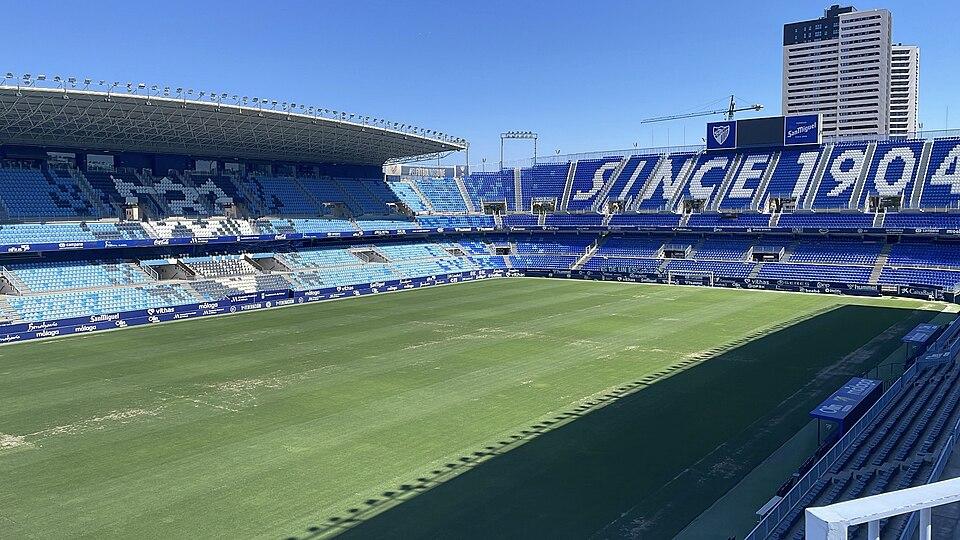

The future of La Rosaleda Stadium is entering a decisive stage. The three public authorities that own the ground — Málaga City Council, the Andalusian Regional Government and Málaga Provincial Council — are preparing to examine the conclusions of the technical report commissioned to identify the most viable option for the city’s new football stadium.
The decision has taken on even greater importance following Málaga CF’s promotion to La Liga. The club’s return to the top flight has reignited the debate over the need for a modern venue capable of meeting the sporting, commercial and operational requirements of elite football.
The study has been carried out by a joint venture formed by TYPSA and Fenwick Iribarren, which was tasked with assessing the strengths, limitations and feasibility of the different sites under consideration.
Although the report will play a major role in guiding the institutional debate, its conclusions will not be binding. The final decision will remain in the hands of the three administrations involved.
Five Initial Options Narrowed Down to Three
The technical assessment initially considered five potential locations for the New La Rosaleda Stadium.
However, Lagar de Oliveros and Manzana Verde were ruled out during the early stages of the process due to planning restrictions, accessibility issues and difficulties in adapting the sites to the requirements of the project.
Three alternatives remain under consideration: expanding the existing La Rosaleda Stadium, building a new venue on land near the University of Málaga, or developing the project in the San Cayetano area.
Each option offers different advantages, but also presents challenges related to urban planning, transport, available land and construction timescales.
Expanding La Rosaleda at Its Historic Martiricos Site
The first alternative would involve renovating and enlarging the current La Rosaleda Stadium.
Its main advantage is its location. The stadium stands in a well-established urban area with a strong social and emotional connection to Málaga CF and its supporters.
Keeping the club in Martiricos would preserve one of Málaga’s most recognisable sporting landmarks and avoid moving the stadium to another part of the city.
However, the option also presents major technical difficulties. An expansion could affect the surrounding road network and would require the temporary relocation or reorganisation of nearby facilities during construction.
The proximity of the Guadalmedina river is another significant constraint. Limited space makes it difficult to accommodate a stadium with between 45,000 and 50,000 seats, together with all the commercial, operational and hospitality areas expected in a modern football venue.
Despite these challenges, a previous proposal supports the technical feasibility of the project. In 2012, architect José Seguí produced a preliminary design that suggested La Rosaleda could be expanded to around 50,000 seats.
The option of remaining in Martiricos also appears to have the backing of Málaga mayor Francisco de la Torre, who has publicly expressed his preference for keeping the stadium at its current location.
University Land Stands Out for Its Transport Connections
The second option involves land located near the University of Málaga.
This site offers enough space not only for the stadium itself, but also for additional commercial and leisure facilities that could improve the long-term financial performance of the complex.
The development could include restaurants, retail spaces, entertainment facilities and other services capable of generating revenue throughout the year, rather than only on matchdays.
The area under consideration covers 66,037 square metres, with an estimated permitted building area of 14,441 square metres.
Accessibility is one of its strongest advantages. The site is close to the Málaga Metro, several bus routes and major roads, making it easier for supporters to reach the stadium and reducing reliance on private vehicles.
The relevant urban planning framework has already been approved, while development work in the area is at an advanced stage. This could shorten some of the administrative procedures compared with other options.
However, the site may still be affected by aviation, water management and road infrastructure restrictions. These issues would need to be resolved before construction could move forward.
San Cayetano Offers More Space but Longer Planning Procedures
The third possible location is San Cayetano, an area already identified in Málaga’s General Urban Development Plan as a potential site for a new stadium.
It offers the largest amount of available land, with approximately 124,893 square metres. This would provide enough room for a major sports complex and allow for future expansion.
The additional space could accommodate car parks, commercial areas, training facilities and improved access routes.
Its main disadvantage is the time required to complete the necessary planning procedures and infrastructure works.
The area still requires new transport links and several key planning documents have yet to be approved.
These include a Special Plan, an urban development plan and a sectorisation plan. Preparing, processing and implementing these documents could take several years.
For this reason, San Cayetano may offer the greatest long-term development potential, but it could also be the slowest option to deliver.
A Stadium Designed for Major European Competitions
The technical specifications state that the New La Rosaleda Stadium must meet UEFA Category 4 requirements, the highest stadium classification established by European football’s governing body.
The future venue is expected to have a capacity of between 45,000 and 55,000 spectators.
It will also need to comply with advanced standards covering safety, accessibility, evacuation systems, team facilities, media areas, hospitality services and operational management.
The assessment therefore goes beyond identifying where the stadium can be built. It also examines how each option would fit into the surrounding urban environment, affect traffic and create economic activity beyond football matches.
The Final Decision Rests with the Three Public Authorities
The report will help determine which location offers the best balance between cost, delivery time, accessibility, urban integration and commercial potential.
However, the consultants will not make the final choice. Their conclusions will serve as guidance, while Málaga City Council, the Andalusian Regional Government and Málaga Provincial Council will need to reach a joint agreement.
Expanding La Rosaleda would preserve the emotional and historical value of Martiricos, but space limitations remain a serious challenge.
The university site offers strong transport connections and a more advanced planning framework, while San Cayetano provides significantly more land but would require a much longer administrative process.
Málaga is therefore facing a decision that will shape the future of the club, the city’s transport network and one of its most important sporting facilities for decades to come.
Information source: El Español

Latest news


Upcoming events
17
Sep
La Pequeña Cuba Gastro-Cultural Festival in San Pedro Alcántara 2026
18
Sep
World Wellness Weekend Marbella 2026
18
Sep
Candlelight: Queen vs. ABBA in Málaga
18
Sep
Candlelight: Coldplay and Imagine Dragons in Málaga
18
Sep
3 de Corazones – Pancho Céspedes, Enrique Ramil and José Luis Jaén in Málaga
Similar News
Málaga Airport Makes History with More Than Three Million Passengers in One Month
Málaga
Port of Málaga looks beyond its docks to support future growth
Málaga
Guide to the Virgen del Carmen Processions in Málaga and the Province
Málaga