'Pasapalabra' reinvents itself with the new final challenge 'AlaZ' after losing 'The Rosco'

Pedro Pérez Bozal
19/06/2026 Updated at 21:13h.
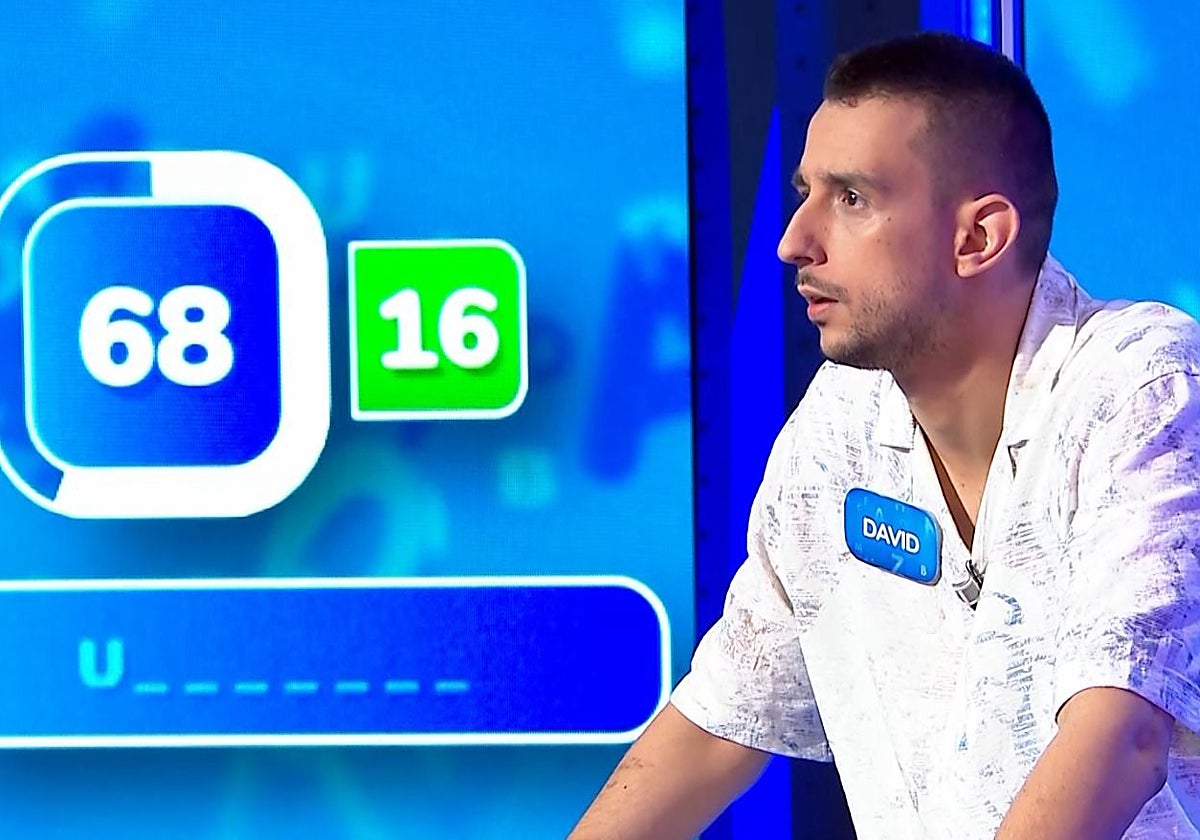
'Pasapalabra' has started a new chapter this Friday, less than a month after the Supreme Court ruling that mandated the removal of 'El rosco.' ... The Antena 3 game show bid farewell to its most iconic challenge on Thursday and just twenty-four hours later debuted 'AlaZ,' which is the new final phase based on the Swiss format 'DallAZetA'.
The introduction of 'AlaZ' represents one of the deepest changes in the recent history of the show hosted by Roberto Leal. However, the rest of the game's structure remains largely unchanged. Contestants continue to face the classic challenges that have accompanied the format for years and still enjoy the support of four celebrity guests. In the premiere episode, Lluvia Rojo, Unax Ugalde, Soraya Arnelas, and Luis Larrodera participated.
The disappearance of 'El rosco' comes after a long judicial journey. The Supreme Court's decision prevents ITV from continuing to exploit the final challenge, forcing the Spanish producer to find an alternative. The chosen one has been an adaptation of 'DallAZetA,' a contest broadcast for several seasons on Swiss television.
The mechanics introduce significant innovations compared to the one that identified 'Pasapalabra' for years. In 'AlaZ,' contestants must discover a specific word from a definition. The answer is represented by blank spaces indicating how many letters the term has. As the challenge progresses, the participant can attempt to solve the word, temporarily pass to the next definition by saying the classic "pasapalabra," or request an additional clue. This last option has a cost: losing five seconds of the accumulated time.
The differences between 'AlaZ' and 'El rosco'
The new dynamics somewhat resemble the popular Hangman game, as the contestant has a visual reference about the exact length of the word. This element introduces a different strategic layer than previously known. Participants must not only find the correct solution but also mentally check if it fits with the available number of letters, which can consume valuable seconds.
The main difference with 'El rosco' is that each definition has only one possible answer. In the historic challenge of the program, a single definition could admit several valid synonyms that started with the corresponding letter. This is no longer the case.
Time management also changes. Until now, participants started the final challenge with 85 seconds. With 'AlaZ,' the initial figure rises to 110 seconds. The reason is simple: the possibility of asking for clues takes time away, and, additionally, the process of checking the length of the words causes contestants to spend more seconds on each definition.
Visually, the transformation is evident. The traditional circular arrangement of letters that named the rosco disappears and is replaced by a horizontal representation. The new challenge features its own graphics, renewed typography, specific music, and a different staging.
Viewers also gain prominence thanks to a clearer presentation of the information. While in 'El rosco' much of the follow-up depended on listening carefully to the definitions and answers, now the questions are superimposed on the screen. Moreover, once each word is solved, the correct solution remains visible to the audience.
Another relevant novelty is the possibility to choose the direction of play. The contestant who has accumulated the most seconds during the program can decide whether to face the challenge from A to Z or in reverse, from Z to A.
Despite all these differences, similarities with 'El rosco' are inevitable. After all, both belong to the same genre of linguistic contests based on letters, definitions, and mental speed. Similarities are common in these types of international formats and are not an exception within the television market. Indeed, the industry itself has been adapting similar mechanics with more or less profound variations depending on the country and network for decades.
Roberto Leal presented this Friday the biggest change in the history of the contest
The big question now is the public's response. 'El rosco' was not only a final challenge but one of the main audience drivers for Antena 3. It almost daily reached the golden minute of Spanish television. It remains to be seen if 'AlaZ' will be able to generate the same level of anticipation and loyalty.
Meanwhile, the corporate conflict around the 'Pasapalabra' brand continues far from being settled. Telecinco is preparing the return of 'El rosco' to its schedule in the coming months after acquiring the rights to the format. The question is whether it will do so without legal obstacles. ITV could rely on previous resolutions, including the 2019 ruling that defended the close link between the contest and its most famous final challenge, to argue that both elements are inseparable.
The new mechanics introduce clues, strategy, and a renewed staging
It is also not ruled out that MC&F will closely monitor the evolution of 'AlaZ' and consider possible legal moves if it deems there are excessive similarities with the format it exploits internationally.
On the other hand, Mediaset is also involved in another legal front related to the compensation derived from the broadcasting of 'Pasapalabra' between 2012 and 2019. The Provincial Court of Madrid recently set at 73 million euros the amount that the audiovisual group must pay to ITV for the unauthorized use of the contest's rights.
- Topics
- Television
- Antena 3
- Mediaset
- Pasapalabra

Latest news


Upcoming events
17
Sep
La Pequeña Cuba Gastro-Cultural Festival in San Pedro Alcántara 2026
18
Sep
World Wellness Weekend Marbella 2026
18
Sep
Candlelight: Queen vs. ABBA in Málaga
18
Sep
Candlelight: Coldplay and Imagine Dragons in Málaga
18
Sep
3 de Corazones – Pancho Céspedes, Enrique Ramil and José Luis Jaén in Málaga
Similar News

Málaga Airport Makes History with More Than Three Million Passengers in One Month
Málaga
Port of Málaga looks beyond its docks to support future growth
Málaga
Guide to the Virgen del Carmen Processions in Málaga and the Province
Málaga