The war in Iran opens a scenario of uncertainty for air routes with Europe starting in May
International organizations warn of an imminent kerosene shortage at European airports
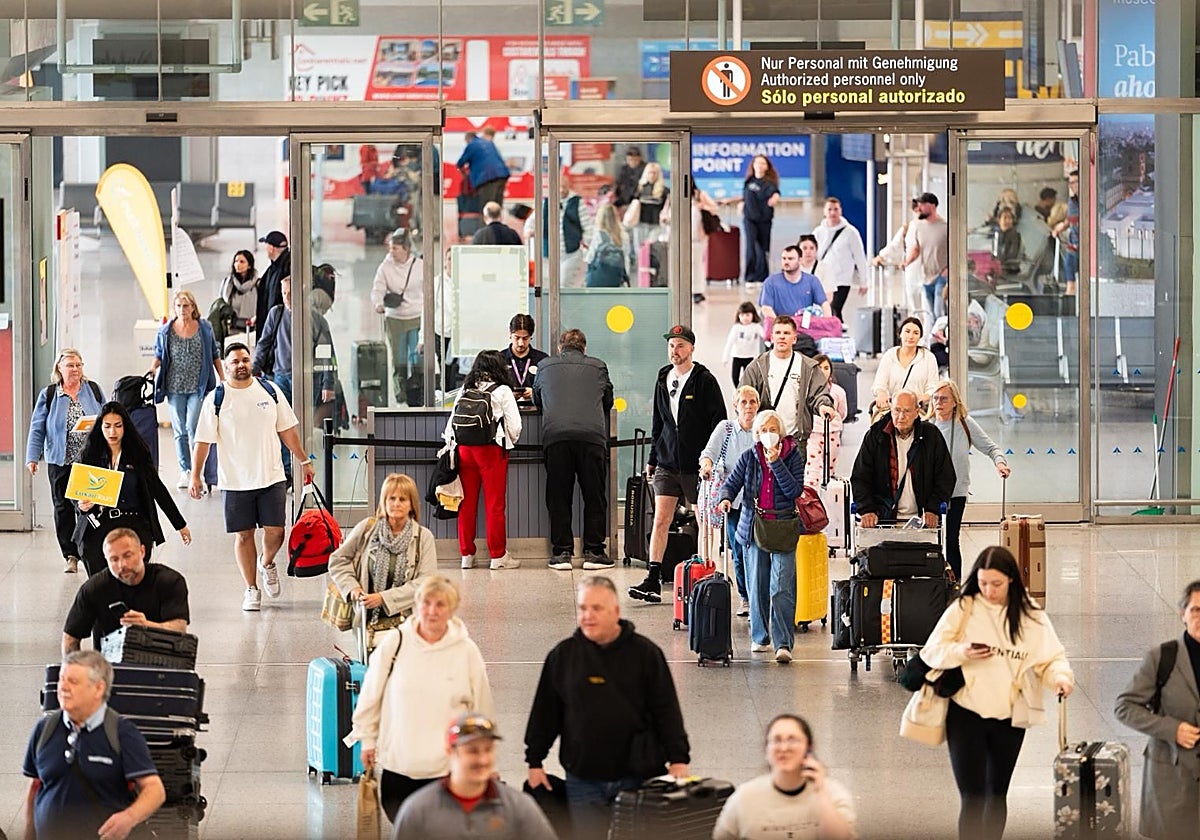

The war in Iran opens a new front in the air transport sector: a scenario of uncertainty marked by kerosene reserves in ... Europe. The duration of this conflict affects the schedules made by airlines at European airports according to statements from various international organizations and government leaders who have recently spoken about an imminent shortage of aviation fuel (kerosene) in Europe, pointing to next June as the turning point if the logistical crisis and the conflict in the Strait of Hormuz persist.
In fact, on April 16, Fatih Birol, executive director of the International Energy Agency (IEA), stated that "Europe has enough jet fuel for about six weeks if at least half of the imports from the Middle East are not replaced." Also, Willie Walsh, general director of the International Air Transport Association (IATA), stated the next day that by the end of May, flight cancellations could begin to be seen in Europe due to the physical lack of kerosene.
However, in Spain, the president of the Airline Association (ALA), Javier Gándara, warned this week that no problems with the supply of aviation kerosene are anticipated at Spanish airports, which puts it in a better situation than surrounding countries. He explained that this is because only 11% of crude oil imports to Spain come from the Middle East, and more than 80% of the aviation kerosene consumed in Spain is produced in refineries located within the country. Even so, he made it clear that this circumstance "does not immunize Spain from possible effects on flights from other places to our country, in case these destinations had problems if the conflict extends over time." In Europe, 50% of the refined kerosene passes through Hormuz.
Related news
Flying, increasingly expensive, longer, and more vulnerable
Will Spain withstand the tourist surge caused by the war?
How will all this affect Malaga Airport? The answer is a scenario of uncertainty marked by the evolution of the war because the Refuel Aviation regulation requires airlines operating in Europe to load 90% of the fuel they will use on each trip. Thus, for example, on a flight from Malaga to Rome, the plane will fill the tank without issues at Malaga airport, but on the journey from Rome to Malaga, it may find that there is a shortage of fuel at that facility and it cannot meet the requirement to load with that 90% stipulated by law.
Spanish airports have guaranteed kerosene, but the situation in Europe is quite different
Therefore, the three airlines that move almost half of the passengers at this facility, Ryanair, Vueling, and Easyjet, ensure that they are currently operating normally, but the immediate future will be determined by the duration of the armed conflict and by the specific situation of each of the European airports that connect with the Costa del Sol, ruling out problems on routes between Spanish destinations because here operators have guaranteed the supply.
Expectations
From Ryanair, which this high season will connect Malaga with 91 cities and will increase to 6.6 million the seats it has put on the market, do not rule out having to review the schedule. The communication manager of this airline, Alejandra Ruiz, explained that "our suppliers guarantee us the supply of fuel until mid-May. If the Strait of Hormuz remains closed, then we cannot rule out that there will be a shortage at some European airports, in which case we will have to review the schedule." Ruiz specified that "we will not be able to choose which routes will be affected, it will depend on the airports where there is a lack of fuel." However, she confirmed that "Spain is in a good position given the country's refining capacity, around 80% of the kerosene we use at Spanish airports is produced here. Suppliers guarantee that there will be no supply problems in Spain this summer."
On the other hand, from the Spanish airline Vueling, which has put 2.3 million seats on the market to fly from Malaga to fourteen destinations in Spain and Europe this high season, which started in March and will end in October, they stated that "at this moment the situation is very fluid, we are pending the evolution and everything will depend on how long the situation lasts. For now, as of today, we are operating normally."
Also, from the British low-cost airline Easyjet, which has an active base of operations at Malaga airport during the high season, advanced to this newspaper that "currently our operations are functioning normally. Like all airlines, we are in close contact with fuel suppliers, airports, and competent authorities to closely monitor the situation and act as necessary."
It is important to highlight the significance of European connections for Malaga Airport. It is enough to note that in the high season of 2025, because Aena has not yet advanced the data planned for this summer, of the 259 routes scheduled, 210 were concentrated in European countries and 31 in flights that connected Spanish airports.
Precisely, this week, Gándara announced that airlines have reinforced their operations on the Costa del Sol for this summer season, putting 22.4 million seats on sale, an 8.6% increase in seats to fly from Malaga compared to last year. A fact that highlights a greater dynamism of activity on the Costa del Sol since the average growth in Spain will be 5.7%. Malaga airport is the fourth in volume of seats in the Aena network.
KLM and Lufthansa have already canceled flights, without affecting Malaga
Even before the reopening of the Strait of Hormuz last Friday, major European airlines began to move. Thus, the German Lufthansa announced measures such as the cessation of activity of a subsidiary that was dragging losses and the early retirement of several less energy-efficient airplanes. Also, the Dutch KLM announced that they will cut 160 trips in May, i.e., 1% of all their flights in Europe, showing the same concern. These measures have not affected Malaga airport where both companies operate. From the European Commission, it has been ruled out that there is an immediate risk of "widespread cancellations," and they have assured that "there are no signs of a systematic fuel shortage. We follow the situation very closely, also with the IEA and the sector," said the community spokesperson for Transport and Energy, Anna-Kaisa Itkonen. This scenario of uncertainty has also been felt in Spain where Volotea has canceled several flights originating or destined for Bilbao for this month and the next, adjustments considered "necessary to guarantee operational stability and to continue offering a solid service, minimizing the impact while the conflict lasts." They have also introduced a fuel surcharge that can reach up to 14 euros.

Latest news



Upcoming events
17
Sep
La Pequeña Cuba Gastro-Cultural Festival in San Pedro Alcántara 2026
18
Sep
World Wellness Weekend Marbella 2026
18
Sep
Candlelight: Queen vs. ABBA in Málaga
18
Sep
Candlelight: Coldplay and Imagine Dragons in Málaga
18
Sep
3 de Corazones – Pancho Céspedes, Enrique Ramil and José Luis Jaén in Málaga
Similar News
Málaga Airport Makes History with More Than Three Million Passengers in One Month
Málaga
Port of Málaga looks beyond its docks to support future growth
Málaga

Guide to the Virgen del Carmen Processions in Málaga and the Province
Málaga