Five Getaways in the Málaga Countryside as an Alternative to Holy Week
Beyond processions and live performances, there are options to enjoy in a different way in the province: from towns with art to routes among Spanish firs.

Holy Week can be enjoyed not only through processions and live performances in Malaga or some of the towns where the passion is intensely lived during those days. Each year, more people are looking for alternatives in the interior of the province to enjoy these holidays in a different way, away from crowds and at a more leisurely pace.
The interior of Malaga offers one of its best times of the year during these dates. Recent rains have brought green back to the mountains and valleys, rivers are flowing stronger than usual, and the towns display an especially well-cared-for image. Added to this is a wide range of hiking trails, cultural proposals, and small gastronomic discoveries that make any getaway a complete experience.
From Alto Genal to the Guadiaro valley, passing through the Sierra de las Nieves, Guadalteba, or the interior Axarquía, here are five proposals to rediscover the province of Malaga during Holy Week from another perspective.
Alto Genal once again stands out as one of the great refuges for those looking to disconnect in the interior of Malaga, especially in these weeks when the landscape begins to green again after the rains. The chestnut groves, still far from the autumn spectacle, are now beginning to cover with the first green leaves, creating a very lively and changing environment.
But, beyond nature, there is another reason for the rise of this area in recent years: the transformation of its small towns. Parauta, Cartajima, Pujerra, or Igualeja have been incorporating elements that make them even more attractive to visitors. In Parauta, for example, the urban route is filled with rush chairs and other decorative details that turn its streets into a unique walk, beyond the Enchanted Forest, currently closed.
Cartajima has embraced murals and outdoor art, while in Pujerra initiatives such as crochet or small artistic interventions have proliferated, adding a unique identity to the town. This includes routes like the Lost Trail of Cartajima or the traditional paths between chestnut groves, allowing for a combination of walking and discovery. The result is a very complete getaway, where the appeal is not only in the landscape but also in the ability of these towns to reinvent themselves without losing their essence.
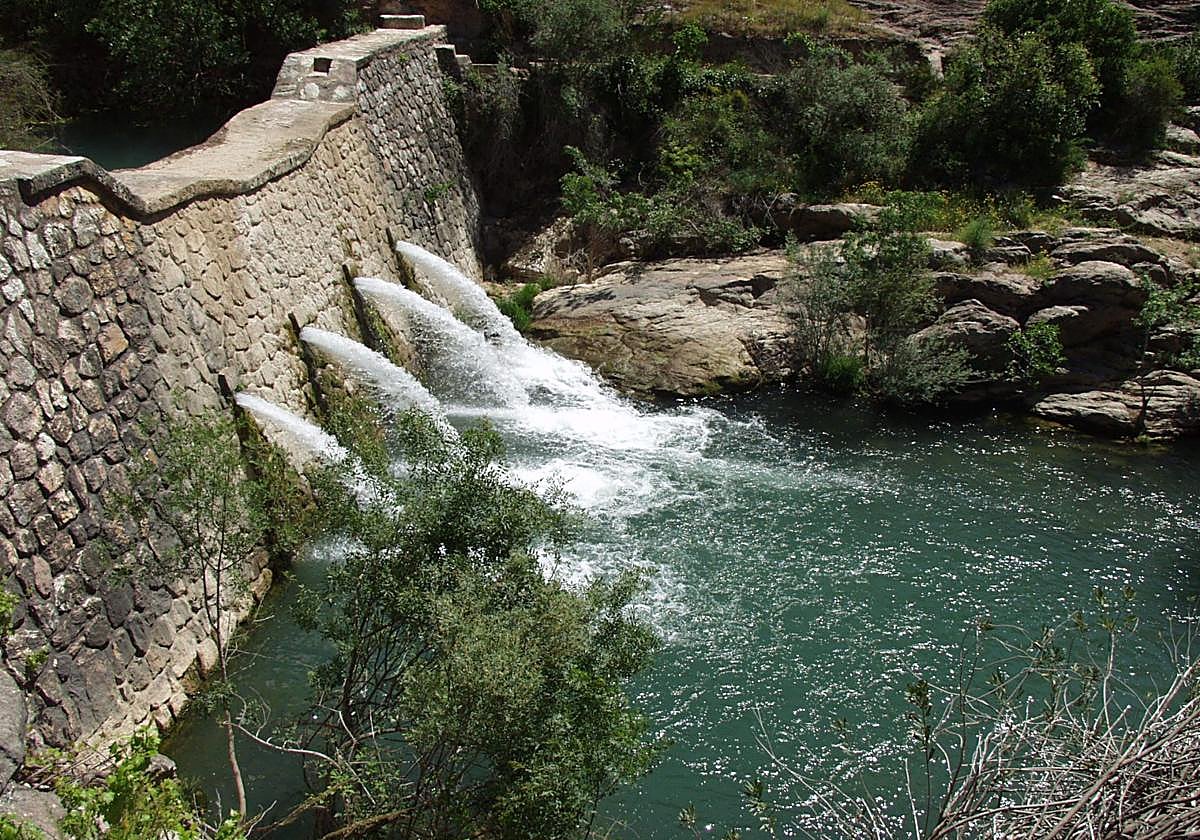
The heart of the Sierra de las Nieves presents itself this spring as one of the most complete destinations in the interior of Malaga. The rains of recent weeks have reactivated streams, springs, and small waterfalls, making many routes particularly rewarding experiences. Among them, one of the most sought after during this season stands out: the Cascadas route from Tolox, with a more accessible alternative to the pool or Charco de la Virgen, ideal for those who prefer a shorter route.
From there, the possibilities multiply. Trails like those of the Water Cave or Puerto Bellina allow walking among Spanish firs on accessible routes, while, for those looking for a greater challenge, there is always the climb to the summit of Torrecilla, whether from Yunquera, Tolox, or from the Quejigales.
But not everything is hiking or mountaineering. Towns like Yunquera, El Burgo, or Tolox add extra value with their urban centers. Yunquera preserves a very well-maintained traditional framework. El Burgo hides remnants of its old castle integrated among houses, almost invisible at first glance, while Tolox, in addition to its growing commitment to art, keeps corners linked to its defensive past, like that castle street that is barely visible. In Yunquera, one must look for a curious winery under the ground.
These are complemented by enclaves like the Turón river in El Burgo, or the many trails that start from these towns, which venture into Spanish fir forests or reach spectacular waterfalls. All this makes the area a very complete getaway, where nature, history, and heritage intertwine without the need for long journeys.
Guadalteba is one of those territories where history is not told in museums, but on the ground. Towns like Teba, Ardales, or Cañete la Real allow for a route among some of the most important fortresses in the interior of Malaga, many of them visitable and with interpretation centers. This is the case of the Estrella Castle in Teba; the Peña Castle in Ardales; or the Hins Canit Castle in Cañete la Real, enclaves that help understand historical episodes as exciting as those led by figures such as Sir James Douglas or the Andalusian rebel Omar Ben Hafsún.
Indeed, the figure of the latter inevitably leads to looking towards Bobastro, one of the great historical landmarks of the province, located in a spectacular natural setting and full of symbolism. Beyond these more well-known enclaves, the area also holds other less obvious vestiges, such as the Turón fortress, where few visible remains are left, but still the incentive of a more authentic and less traveled visit.
All these castles share a common denominator: their strategic location, which today translates into some of the best viewpoints in the interior of Malaga. From these, one can dominate mountains, valleys, and reservoirs that shape an open and highly recognizable landscape. Added to these views are other natural enclaves of great value, such as the mountains surrounding Cañete la Real or the surroundings of Ardales.
The getaway is completed with a wide network of trails. From routes like that of Carboneras, which crosses an unexpected pine forest in Cañete la Real, to the itineraries that connect Teba with this municipality within the Great Trail of Malaga, passing through circular routes of Ardales next to the Turón river. All this makes Guadalteba a very complete proposal, where heritage, landscape, and hiking combine without much crowding.
In the interior of the Axarquía, there is a territory that has been strongly claiming its own identity for some time: the Moscatel Heart. Moclinejo, Almáchar, and El Borge form this triangle of towns very close to each other where the Moscatel grape is not just a crop, but a way of life that has shaped the landscape for centuries.
Although the harvest is still far away, spring is a key moment in this agricultural cycle. The steep slopes, covered with vineyards, now receive the sun that will mark the development of the grape in the coming months. Among wine presses, drying racks, and rural roads, the visitor can begin to understand how this unique territory is built, declared an Important Heritage Agricultural System.
The getaway also allows delving into very specific spaces that help interpret this culture. In Moclinejo, the winery of Antonio Muñoz Cabrera (Dimobe) offers an entrance to the world of Moscatel wine; in Almáchar, the Raisin Museum delves into a centuries-old tradition; and in El Borge, the Bandolero Gallery provides a broader view of local history, beyond the stereotypes, in a town marked by its past.
This is complemented by the possibility of linking small routes, such as the climb to Cerro Patarra from Moclinejo or Almáchar, or simply getting lost in the urban centers, with narrow streets, viewpoints, and temples that surprise with their size and richness. It is a peaceful getaway, very tied to the territory, where each stop allows for a better understanding of one of the most unique agricultural cultures of Malaga.
If there is a common thread in this getaway, it is water. The Guadiaro river acts as the backbone of a territory that connects Cortes de la Frontera, Jimera de Líbar, and Benaoján, with the almost inseparable proximity of Montejaque, just a walk away from the first. These days, after the rains, the valley offers one of its most grateful images, with springs and water sources in full operation, such as those of Artezuelas, in the Jimera Station, or the one that springs up next to the also railway-originated nucleus of Benaoján, both feeding a river that sets the pace for the entire area.
This prominence of water is complemented by some of the great natural and heritage landmarks of the interior of Malaga. The Cueva del Gato, near the Benaoján Station (one can walk there on a trail if desired), continues to be one of the great attractions, but it is not the only one. On the way to Jimera, the Cueva de la Pileta appears, a jewel of prehistory that adds a cultural dimension to the getaway. Beyond that, the Buitreras del Guadiaro offer one of the most spectacular landscapes of the province, with the river boxed between vertical walls. Also, the Angosturas, in the transit between the stations of Jimera and Benaoján, less spectacular, but equally recommendable.
The tour can be completed with shorter walks along the river or incursions into areas where swimming spots and areas are already being prepared for the summer, especially in Jimera and at the Cortes Station. In the first case, routes such as the Orchid Paths can also be done. All this without the need for long trips, linking small journeys that allow enjoying the environment calmly.
And, like any good trip through the interior, the experience also has a gastronomic component. In Benaoján and Montejaque, one can still find the traditional water molletes in bakeries like Máximo or Hermanos Gil, as well as local products like the pork crackling cake. Further west, in the hamlet of Salitre, which, although it is in Algatocín, looks towards the Guadiaro, proposals like the Valdivia restaurant elevate beef to another level. It is, in short, a getaway where nature, history, and flavor come together around one of the most lively rivers in Malaga.

Latest news



Upcoming events
17
Sep
La Pequeña Cuba Gastro-Cultural Festival in San Pedro Alcántara 2026
18
Sep
World Wellness Weekend Marbella 2026
18
Sep
Candlelight: Queen vs. ABBA in Málaga
18
Sep
Candlelight: Coldplay and Imagine Dragons in Málaga
18
Sep
3 de Corazones – Pancho Céspedes, Enrique Ramil and José Luis Jaén in Málaga
Similar News

Málaga Airport Makes History with More Than Three Million Passengers in One Month
Málaga

Port of Málaga looks beyond its docks to support future growth
Málaga
Guide to the Virgen del Carmen Processions in Málaga and the Province
Málaga