The Costa del Sol expects a worse Easter week, despite offers and changes in plans due to the Iran war.
Hotels expect an occupancy rate of 73%, even lower than in 2024 when rain spoiled these holidays, and tourist accommodations in Malaga report a 10% drop.
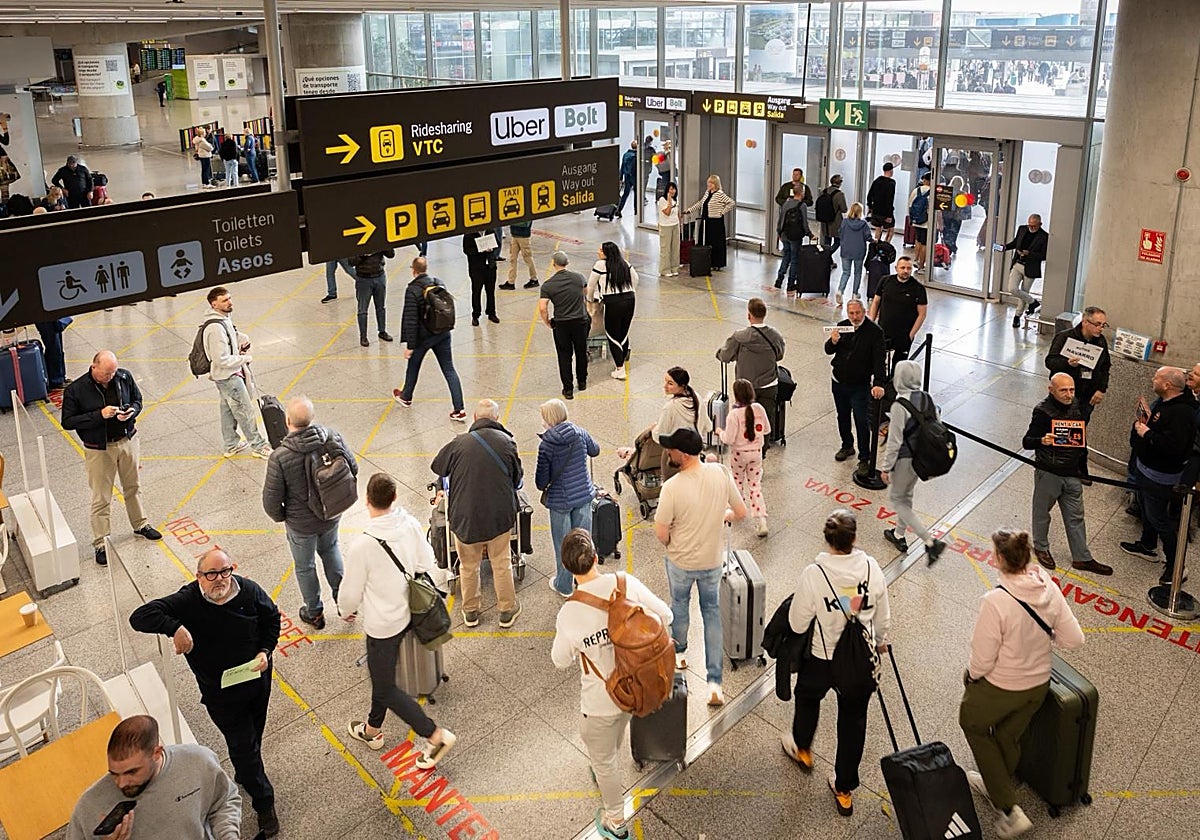

The wave of offers due to falling demand, the special campaign in the domestic market, and the war in Iran, which has led to a rethinking of Easter holiday plans both in search of 'safe haven' destinations and proximity due to the rising fuel costs, has boosted last-minute bookings and improved the initial forecasts of a significant drop in demand. Despite this, hoteliers expect one of the worst first vacations in terms of occupancy, with levels lower than those of 2024, considered the lowest in history due to the prevalence of rain that prevented the majority of processions and caused a flood of cancellations by those who planned to enjoy the sun and beaches.
The first report from the Association of Hotel Entrepreneurs of the Costa del Sol (Aehcos) indicates that establishments will fill an average of 73.9% of their rooms from March 27 to April 6. This figure contrasts with the 80.18% recorded last year and the 75.98% of 2024. The last-minute offers launched due to falling demand and the strong rise in international tourism have partly cushioned the decline in national demand due to the suspension of high-speed trains, they note. Now, for the period of highest demand, between April 2 and April 6, hoteliers estimate an occupancy rate of 78.03%, below the 83.22% recorded in 2025 and the 87.81% reached in 2023.
The president of Aehcos, José Luque, explains that "the current situation of the railway connection is clearly conditioning the evolution of bookings, especially in the domestic market, which has a significant weight during Easter." He also recalls that "the first vacation in 2025 was conditioned by episodes of meteorological instability, while the forecasts for this year are more favorable, reinforcing the idea that the current decrease in bookings is more linked to connectivity issues than to climatic factors, which directly affect demand." In this regard, they emphasize that "this drop of between five and seven percentage points compared to last year is directly related to the high-speed rail disconnection, which is particularly affecting the domestic market, traditionally key on these dates, although it is partly being compensated by an increase in international demand."
Regarding the most demanded destinations, they point to Marbella-Benahavís, with forecasts to fill around 86% of the rooms on key days, as well as Málaga capital and Rincón de la Victoria, which reach 85%. Good levels are also seen in Mijas, with 79%, and Benalmádena, with 74%. Aehcos insists in this first advance of forecasts that "connectivity is a strategic element for the destination" and warns that "situations like the current one have an immediate effect on tourist activity, especially in periods of high demand."
Likewise, the president of the Association of Tourist Homes of Andalusia (AVVA-Pro), Juan Cubo, confirms that Málaga is below last year's reservation levels, although he points out that last-minute bookings are narrowing the gap. Thus, he notes that from the initial drop of 20%, it has already shortened to a 10% decrease in demand. "We are confident that bookings in the days leading up to it will be key," he states, insisting that "the impact is being uneven." He explains that in the rural offer there are stays of more than eight nights, so we are at figures from last year, even a little above and with a price a little higher, two, three points above last year. However, he details that on the coast the average stay is "a little shorter than in rural areas," but the occupancy is in a similar situation to previous years. However, the destination most affected by the high-speed disconnection is Málaga, of which he comments that "it is recovering from that drop we had initially seen. Right now, we are about 10% less in bookings than last year at this date. Prices in Málaga are similar to last year's."
78%
is the expected hotel occupancy on key Easter days, from April 2 to April 6, which represents a decrease compared to the 83.2% recorded in 2025
Cubo shows his confidence that "with last-minute bookings, in the end, we may be able to save the Easter campaign. We think that the Gulf war is impacting, surprisingly, positively by diverting travelers who had planned trips to the Middle East and are now looking for safe destinations." The president of AVVA-Pro assures that "initially the first part of the week is a bit weaker, while on the main days there is less difference compared to last year's occupancy."
The pull of inland tourism is confirmed by Félix Zea, co-founder of Ruralidays, who assures that "bookings in rural houses for Easter are growing strongly and exceed 80% in Málaga." He acknowledges that rural tourism will not be affected by the high-speed crisis, as most visitors arrive by car or plane to Málaga. "Rural tourism in the Malaga province has become a safe haven value against the uncertainties with the railway transport and the international crisis marked by the war in Iran," he highlights. The occupancy for Easter in these types of accommodations in the province has risen sharply. From Holy Wednesday to Resurrection Sunday, the occupancy will be over 82%, compared to 73% last year. Therefore, the growth has been 9%. Córdoba follows, with 80.5%, a 17% increase; Granada, with 79% and a 12% increase; and Jaén, with 78%, and a 19% increase.
Zea explains that the overall occupancy in Andalusia will be 78%, eight points higher than a year ago. The first client for these dates is the Spaniard, with 34.2%. They are followed by the German, with 25.4%; the British, with 17%; and the Dutch, with 3.7%. "The most booked areas in the province are Torrox, Frigiliana, Antequera, and Nerja," comments Félix Zea, who specifies that "mostly, visitors are looking for inland villages that are well connected to the coast. This sector is a safe haven value. The cut in high-speed is not affecting us, because our foreign clients come by plane, and Spaniards usually come by car."
Travel agencies agree that the arrival of tourists who had planned to travel to destinations like Egypt or Jordan and have discarded them due to the war in Iran is already being felt. "The diversion of travelers is occurring and will benefit us this Easter," states the president of the Association of Travel Agencies, Sergio García, to specify that "we will be able to make a more thorough assessment after Easter, but it could be a decisive factor to offset the loss of national tourists due to the high-speed disconnection. We are noticing a recovery compared to the initial drop," he declares.
García advances that the people of Malaga in these first vacations of the year concentrate their outings in Andalusia and the rest of Spanish destinations. "They are a minority, between 8 or 9%, who plan trips to distant destinations at this time. Those who plan trips abroad usually opt for the classic European capitals, where flights are cheaper than to Madrid," he concludes, adding that there is already a noticeable increase of around 5% in the price of fuel in plane tickets.

Latest news



Upcoming events
17
Sep
La Pequeña Cuba Gastro-Cultural Festival in San Pedro Alcántara 2026
18
Sep
World Wellness Weekend Marbella 2026
18
Sep
Candlelight: Queen vs. ABBA in Málaga
18
Sep
Candlelight: Coldplay and Imagine Dragons in Málaga
18
Sep
3 de Corazones – Pancho Céspedes, Enrique Ramil and José Luis Jaén in Málaga
Similar News
Málaga Airport Makes History with More Than Three Million Passengers in One Month
Málaga
Port of Málaga looks beyond its docks to support future growth
Málaga

Guide to the Virgen del Carmen Processions in Málaga and the Province
Málaga