The spring of sulfurous waters that is similar to the one in Carratraca
In Ardales, there is a historic spring, which was well-known in the 19th century and has been restored to value after years of neglect.
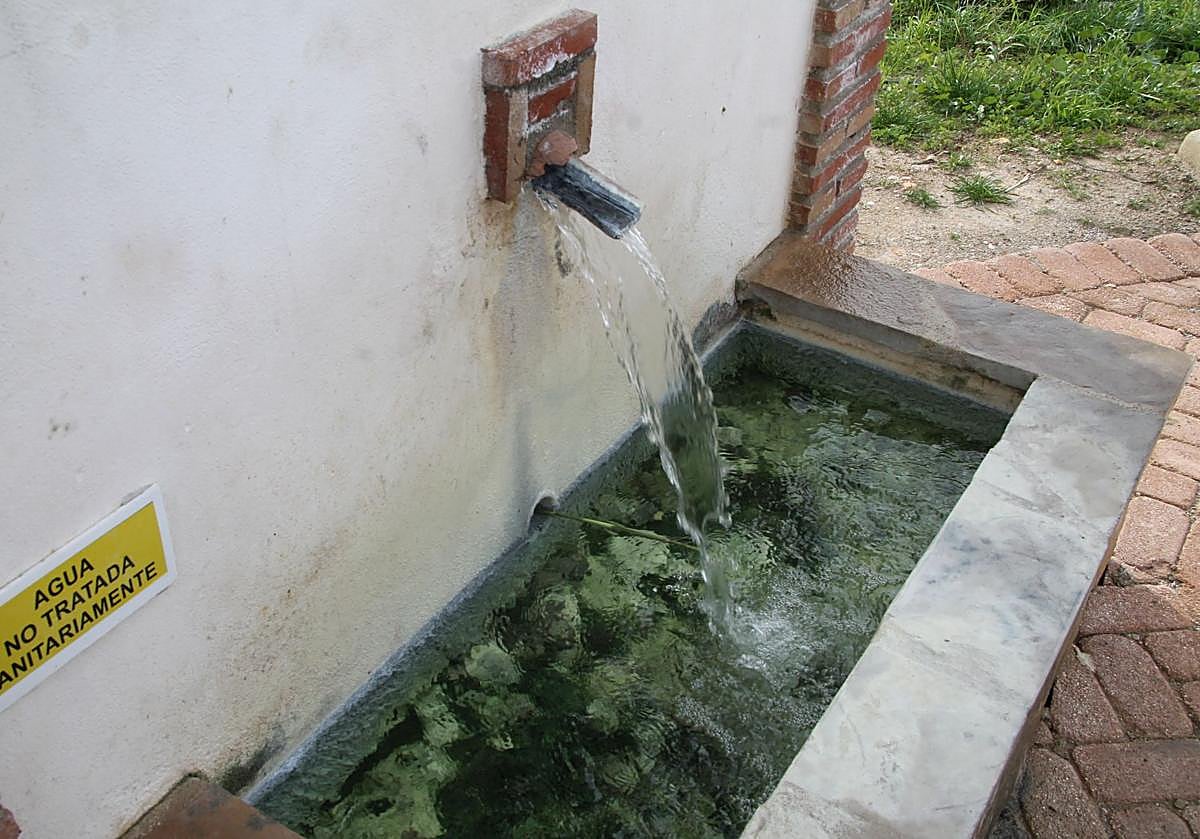

For centuries, it has gone almost unnoticed, hidden from the view of many neighbors and away from the usual routes of inland tourism. However, just outside the town of Ardales, a unique water has been flowing for over a century, rich in minerals and with therapeutic properties. This is the historic sulfurous spring located at the entrance of the village, a modest but long-standing site that, after recent improvement works, is once again arousing interest for its heritage, geological, and health values.
According to geologist Juan Carlos Romero on his website Aula Museo de Geología de Málaga, this spring was already known and used in the 19th century, when the fountain and pillar that are still preserved today were built. It was never a large thermal complex or a prestigious spa, but it was a point of continuous use by the local population, particularly linked to hygiene, livestock supply, and the popular belief in the healing properties of its waters.
The waters of Ardales are sulfhydric in type, rich in sulfur compounds, placing them in the same group as other better-known therapeutic springs in Andalusia. Romero also highlights a little-discussed fact: these waters are even "more mineralized" than those of the famous Carratraca spa, which enhances their interest from a hydrogeological perspective. However, their scale, location, and historical development have always been very different.
Unlike the thermal splendor that Carratraca reached in the 19th century—when its spa attracted the bourgeoisie from Malaga and even famous personalities from the country or abroad—the Ardales spring never had such prominence. Its role was much more discreet and local, integrated into the daily life of the municipality and without major associated infrastructures. Precisely for this reason, over time, it was relegated to the background and its state became clearly improvable.
Juan Carlos Romero already pointed out in 2018, in his analysis published in Aula Museo de Geología de Málaga, the need for an intervention that would protect and dignify the site. That diagnosis must be contextualized at that time: then, the fountain and its surroundings presented a very degraded aspect, with little signage and without treatment according to its historical value. Since then, and especially after the municipal action carried out last year, the spring has experienced a visible improvement, although still contained and without great pretensions.
The recent intervention has allowed organizing the space, cleaning the immediate surroundings, and highlighting the existing historical elements, such as the fountain and the pillar. It is not a profound transformation or an artificial recreation, but a first step to prevent its abandonment and make it more recognizable both to residents and visitors. It even includes a mosaic with a map based on 18th-century drawings. In this regard, Romero insists that the site still has room for improvement, but he positively values that action has been taken after years of neglect.
Beyond its basic recovery, the debate now opens towards the future. The geologist even proposes a broader vision, linked to the territory: the possibility of integrating Ardales within a therapeutic axis that connects Álora, Carratraca, and the town itself, taking advantage of the existence of several sulfurous springs in this part of the province. A proposal that Romero already presented at a conference held in Carratraca and which points to a regional approach to hydrothermal heritage.
In the same line, he poses a reflection that connects with models widely spread in other European countries: the creation of small public pools or controlled bathing spaces, with regulated tourist use and a symbolic entrance fee for their maintenance. "Abroad, there is a great fondness for balneotherapy," says Romero, convinced that simple and well-managed formulas could help energize the environment without the need for large investments or aggressive impacts.
Today, the sulfurous spring of Ardales does not aim to compete with the great historical spas nor recreate a past it never had. Its value lies precisely in its authenticity, in its condition as a witness to an ancestral relationship between humans and water, and in its potential as a heritage resource linked to the landscape, geology, and health. The recent action has served to bring it out of abandonment and put it back on the local map; the next challenge will be to decide how far the municipality wants to go with this unique legacy.
This spring, known as Fuente Hedionda (and popularly also as 'Aguahuevo' due to its smell), is located just before the roundabout that leads to the main entrance of the urban center, that is, on Avenida Caminito del Rey. After the last intervention, it now has comfortable pedestrian access. Its waters flow into the Arroyo de la Torre, which flows into the nearby Río Turón, and thus to the Conde del Guadalhorce reservoir, better known as El Chorro, one of the large reservoirs in the province of Málaga.
*This spring should not be confused with the old Ardales spa that was in Frailes, in the province of Jaén. They share a name, but they correspond to completely different locations and histories.

Latest news

Upcoming events
17
Sep
La Pequeña Cuba Gastro-Cultural Festival in San Pedro Alcántara 2026
18
Sep
World Wellness Weekend Marbella 2026
18
Sep
Candlelight: Queen vs. ABBA in Málaga
18
Sep
Candlelight: Coldplay and Imagine Dragons in Málaga
18
Sep
3 de Corazones – Pancho Céspedes, Enrique Ramil and José Luis Jaén in Málaga
Similar News

Málaga Airport Makes History with More Than Three Million Passengers in One Month
Málaga
Port of Málaga looks beyond its docks to support future growth
Málaga

Guide to the Virgen del Carmen Processions in Málaga and the Province
Málaga