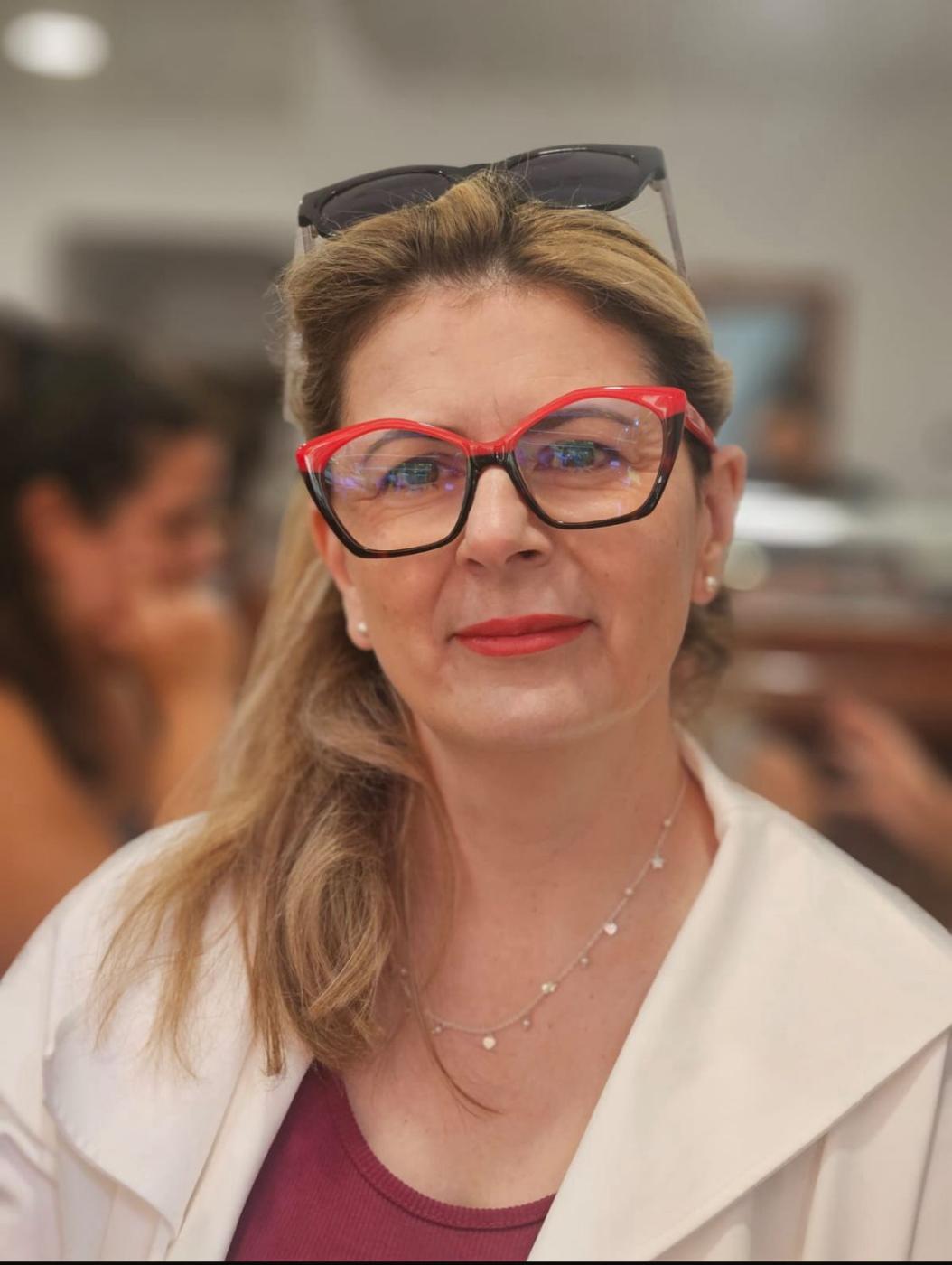
Interview with Helena España
The mission of Ola Inclusiva Andalucía

1. What is your organization's mission?
The mission of Ola Inclusiva Andalucía is to ensure that all children and young people with specific educational support needs receive the resources, specialized care, and accommodations that are recognized by law but too often do not reach schools.
We advocate for effective compliance with Andalusian and national education regulations, supporting families so that their rights do not depend on their level of knowledge or ability to make claims.
We work to ensure that inclusion is a reality throughout Andalusia, without territorial or administrative inequalities.
⸻
2. What is your long-term vision?
We aspire to an Andalusia where every student with educational needs receives the support they are entitled to by law: PT, AL, monitors, adequate ratios, early diagnosis, and justified accommodations.
Our goal is an educational system that acts in a timely manner, is transparent, and does not force families to fight alone for rights that are already legally recognized.
We want Andalusia to become a benchmark for educational inclusion and regulatory compliance.
⸻
3. Why should donors trust your organization?
Because Ola Inclusiva Andalucía is an independent citizen movement, made up of families and professionals who experience the shortcomings of the education system on a daily basis.
We are transparent, and every action we take has a direct impact on schools, families, and government agencies.
In addition, we offer basic legal guidance and support so that families can understand and exercise their educational rights without fear or misinformation.
We have no political or economic interests: our only priority is the children and young people of Andalusia.
⸻
4. What makes your organization unique?
We are the first citizen platform that connects hundreds of families from all the provinces of Andalusia, bringing to light situations that were previously hidden and generating social, media, and institutional pressure.
Our strength is based on four pillars:
1. Real support for families, both emotional and administrative.
2. Basic legal support, providing guidance on regulations, procedures, and how to claim rights.
3. Public and media visibility, so that problems are not silenced.
4. Direct dialogue with centers, delegations, and political leaders.
This combination gives us a collective voice with strength, legitimacy, and credibility.
⸻
5. What are the organization's core values?
• Strict compliance with education law
• Real educational inclusion
• Equality between provinces and centers
• Transparency
• Firm defense of children's rights
• Respect for diversity
• Empathy and support for families
• Social responsibility
⸻
6. What has the organization achieved to date?
In Andalusia, we have achieved the following:
• Supporting numerous families in the processes of diagnosis, curriculum adaptation, and requesting resources established by law.
• Identifying and reporting delays and shortcomings that violate regulations.
• Ensuring that many students finally receive PT, AL, or monitors after our interventions.
• Raising awareness in regional and national media of the situation of students with specific educational support needs.
• Organize regional actions with a significant social impact.
• Establish direct communication with public officials and convey proposals for regulatory and organizational improvements.
• Create a network of empowered families who are aware of their rights.
⸻
7. Can you share any success stories?
Yes, there are numerous cases throughout Andalusia:
• Students who, after months without resources, have finally received PT or AL thanks to coordinated pressure and legal advice from Ola Inclusiva.
• Families who were unaware of their right to a psycho-educational assessment and have managed to start the process correctly.
• Schools that have corrected procedures or adjusted accommodations after being reminded of the current regulations.
• Cases in which a simple formal letter—well-founded legally—has unblocked entrenched situations.
Each advance is an example of the power of organization and effective enforcement of the law.
⸻
8. How do you measure the success of your programs and actions?
We measure results in:
• Number of Andalusian families supported.
• Positive resolution of cases presented.
• Resources obtained in accordance with education regulations.
• Improvements in care and organization in centers.
• Media coverage in Andalusia.
• Responses and commitments from the Regional Ministry and Delegations.
• Reduction of inequalities between provinces.
Success is measured in terms of both human impact and legal compliance.
⸻
9. How do you evaluate the impact of your activities?
We evaluate:
• The evolution of each case according to the educational rights violated or restored.
• Testimonials from families and teachers.
• Real changes in schools following our interventions.
• Institutional reaction and administrative corrections.
• Comparative data before and after our legal and social intervention.
We are a dynamic platform that continuously reviews and improves its strategy, always based on current regulations.
⸻
10. Which populations do you target and how do you work with them?
We target:
• Andalusian families with children with special educational needs or specific support needs.
• Students with SLI, ASD, ADHD, dyslexia, intellectual disabilities, high abilities, specific learning difficulties, behavioral problems, etc.
• Educational centers that require guidance on inclusion regulations.
• Professionals, volunteers, and people who are sensitive to education.
We work through:
• Individualized support and support groups.
• Basic legal guidance on rights and procedures.
• Training for families on educational regulations.
• Dissemination and awareness-raising on social media and in the media.
• Meetings with educational administrations.
• Regional public actions.
• Collaboration with associations in other provinces.

Latest news





Upcoming events
12
Nov
El Desembarco, la traición de Viriato at La Caja Blanca
12
Nov
HOMER El Mero Mero at Sala Trinchera Málaga
13
Nov
Marbella Startup Lab – Innovate & Collaborate
13
Nov
Candlelight: Coldplay & Imagine Dragons at Sala Fundación Unicaja María Cristina
13
Nov
Candlelight: Tribute to Ludovico Einaudi at Anantara Villa Padierna
Similar News