The whitewashed Málaga village named one of Spain's Magical Villages for 2027: what to see and why it is so special
Casares, one of Málaga province's most distinctive whitewashed villages, has been selected as one of Spain's Magical Villages for 2027. Its white houses perched on a mountainside, narrow historic streets, panoramic views and connection to Blas Infante have helped secure its place among the 14 new municipalities joining this national tourism network.
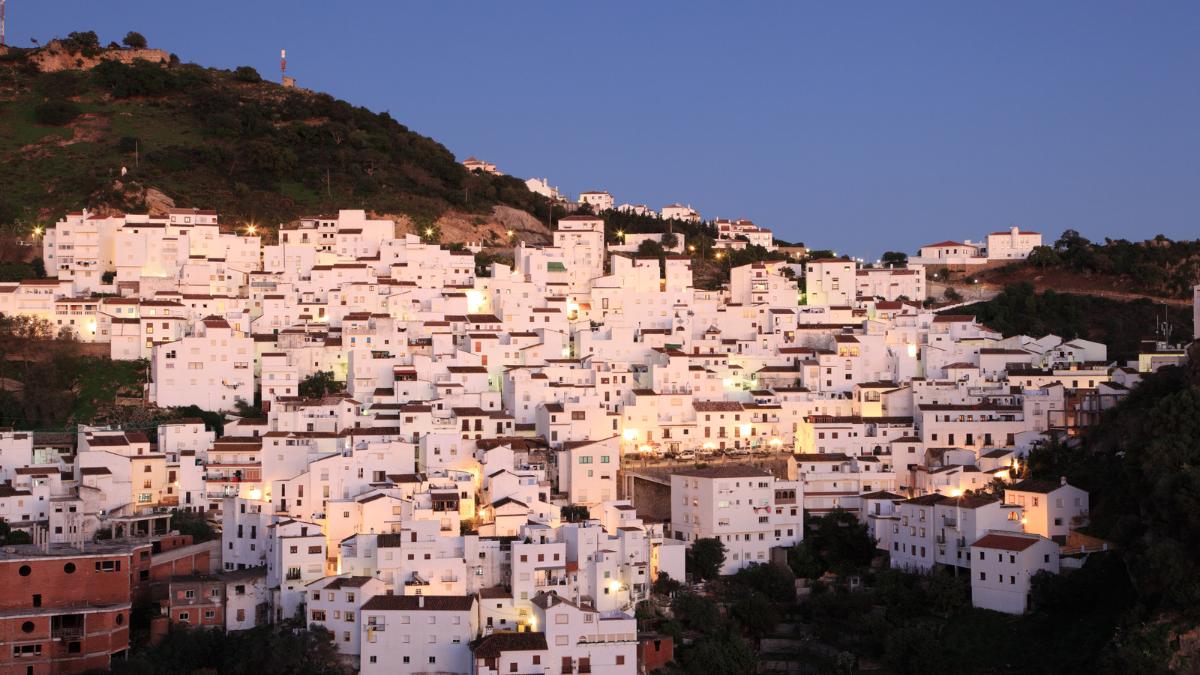

Some villages attract visitors with their monuments, while others stand out for their spectacular natural surroundings. Casares combines both in one of the most recognisable landscapes in Málaga province. Its whitewashed houses appear to cascade down a rocky hillside, forming a maze of narrow streets and stepped buildings that preserve the character of a traditional Andalusian village.
This municipality in the western Costa del Sol has received a new distinction: Casares has been named a Magical Village of Spain for 2027, recognising its historical heritage, traditional architecture and natural environment.
The village is among 14 new Spanish municipalities selected to join the national network, which aims to promote destinations with distinctive cultural, historical and scenic qualities.
Casares Town Council has welcomed the announcement, viewing the recognition as an opportunity to showcase the village's attractions and strengthen its reputation as a destination for cultural and nature tourism.
But what makes Casares so special, and which places should visitors explore?
Why has Casares been named a Magical Village of Spain for 2027?
The main reason behind the recognition is the distinctive layout of Casares.
Unlike towns built on relatively flat ground, the streets of Casares follow the steep contours of the mountain, creating a maze of whitewashed houses and narrow lanes that climb towards the old castle.
The arrangement of the buildings, positioned at different heights, is one of the village's most striking architectural features.
Its surrounding natural landscape also played an important role in the assessment.
From different viewpoints around Casares, visitors can enjoy sweeping panoramas of the mountains and valleys in this western part of Málaga province.
The village also has a rich historical heritage reflecting different periods of Andalusian history.
Casares Councillor for Historical Heritage, Alejandro García Vidal, explained that the jury was particularly impressed by the village's natural beauty and architecture, which is closely adapted to its mountainous setting.
The recognition also highlights Casares as the birthplace of Blas Infante, an important figure in the history and identity of Andalusia.
Casares, a whitewashed village that seems to cling to the mountainside
One of the most memorable views of Casares is from a distance.
White houses cluster around a rocky hill and spread down its slopes, forming a compact village that contrasts with the green and ochre tones of the surrounding countryside.
At the highest point stand the remains of the old castle, overlooking the settlement.
This unusual arrangement is not simply an architectural choice.
The layout developed over centuries in response to the steep terrain, the need to make use of limited space and the presence of defensive structures.
Walking through Casares therefore means discovering streets that change level frequently, stairways and small corners tucked between traditional houses.
The village's appeal is not concentrated in a single monument: much of its charm comes from the streets and buildings themselves.
This distinctive character is one of the reasons Casares has been included in Spain's Magical Villages network.
What to see in Casares: the places worth visiting
The new tourism recognition provides a good opportunity to discover some of the municipality's main attractions.
Although its streets and viewpoints are highlights in their own right, Casares also has several sites of historical and cultural interest.
Casares Castle and its panoramic views
At the highest point of the village stand the remains of Casares Castle, built on a rocky outcrop overlooking the surrounding area.
The fortified enclosure is one of the main reminders of the village's medieval past.
Its elevated position once allowed extensive views over the surrounding territory.
Today, the castle area is one of the best places to admire the scenery and appreciate the arrangement of the whitewashed houses from above.
The walk uphill also takes visitors through some of Casares' most characteristic streets.
The former Church of the Incarnation
Within the historic castle area stands the former Church of the Incarnation, a building associated with the religious and architectural changes that followed the Christian conquest.
The building dates back to the 16th century and has undergone several alterations over time.
Today, the site houses the Blas Infante Cultural Centre, which forms part of Casares' cultural heritage.
Its location at the top of the village makes it a convenient addition to a visit to the former fortress.
Blas Infante's birthplace
Casares is particularly well known as the birthplace of Blas Infante Pérez de Vargas, who was born in 1885.
The politician, writer and thinker played a central role in the development of modern Andalusian identity and is widely known as the Father of the Andalusian Homeland.
His birthplace is now a cultural space dedicated to his life and legacy.
The building also serves as a tourist information office, making it a useful starting point for exploring the municipality.
Inside, visitors can find information about Blas Infante and Casares' main attractions.
Plaza de España and the historic village streets
Plaza de España is one of the central spaces in everyday life in Casares.
From the square, visitors can explore narrow streets, whitewashed façades and quiet corners that reflect the traditional architecture of Andalusia's white villages.
Walking through the area reveals how the houses have been adapted to the steep hillside.
Stairways, small passageways and unexpected views appear around different corners.
Exploring on foot is recommended, although comfortable footwear is advisable because some streets have steep gradients.
Baños de la Hedionda
Another interesting attraction in the municipality is Baños de la Hedionda, located outside the historic village.
The site is known for its sulphurous waters and its connections with different historical periods.
Local legend associates the baths with Julius Caesar, although this story belongs to local folklore and should not be treated as an established historical fact.
Regardless of the legend, the baths form part of the municipality's cultural and natural heritage.
Access arrangements may vary depending on the season and conservation measures, so visitors should check the latest municipal information before travelling.
Sierra Crestellina and the surrounding countryside
Casares' attractions extend well beyond its historic streets.
Sierra Crestellina is one of the most recognisable natural areas nearby, with dramatic mountain formations, Mediterranean vegetation and opportunities for birdwatching.
The area offers panoramic views and a different side of the Costa del Sol, away from beaches and large urban centres.
Anyone planning to go hiking should choose routes appropriate to their experience and check weather conditions and any access restrictions.
What is Spain's Magical Villages network?
Pueblos Mágicos de España, or Magical Villages of Spain, is an initiative promoted by a non-profit association that has worked since 2016 to identify, recognise and promote municipalities with outstanding cultural, historical and natural heritage.
The network aims to raise the profile of destinations that preserve distinctive aspects of their local identity.
It considers characteristics such as traditional architecture, scenery, customs, gastronomy and tourism resources.
Its purpose goes beyond producing a list of attractive destinations.
The association also encourages cooperation between municipalities and initiatives that can benefit local economies.
The project seeks to support tourism linked to the character of each destination, while promoting heritage conservation and economic activity in smaller communities.
In this context, Casares' new recognition provides an opportunity to increase its visibility within Spain's tourism sector.
Casares among 14 new Magical Villages of Spain for 2027
The Málaga municipality is one of 14 Spanish towns and villages selected to join the network in 2027.
The new destinations are located in different autonomous communities, including Navarra, Galicia, Castilla y León, Extremadura, Catalonia, Madrid and the Valencian Community.
The new additions are:
| Municipality | Province |
|---|---|
| Artajona | Navarra |
| Burguillos del Cerro | Badajoz |
| Candeleda | Ávila |
| Casares | Málaga |
| Guardamar del Segura | Alicante |
| Jódar | Jaén |
| Medina de Pomar | Burgos |
| Morata de Tajuña | Madrid |
| Rianxo | A Coruña |
| Riba-roja d'Ebre | Tarragona |
| Sabiote | Jaén |
| Trillo | Guadalajara |
| Unha | Lleida |
| Villaviciosa de Odón | Madrid |
In Andalusia, Casares has been selected alongside Jódar and Sabiote, both located in Jaén province.
The inclusion of these three destinations reflects the diversity of landscapes and historic settlements found across Andalusia.
How many Magical Villages are there in Málaga province?
With Casares joining the network, Málaga province will have a larger presence among Spain's Magical Villages.
According to the list published in connection with the announcement, 13 municipalities in Málaga province are now associated with the initiative, including Casares.
The municipalities listed are:
- Alfarnate.
- Arriate.
- Atajate.
- Canillas de Aceituno.
- Casarabonela.
- Casares.
- Comares.
- Cómpeta.
- El Borge.
- Fuente de Piedra.
- Gaucín.
- Moclinejo.
- Tolox.
These destinations are distributed across several areas of Málaga province, including the Axarquía, Serranía de Ronda and other inland regions.
Each offers different attractions, ranging from mountain landscapes and historic architecture to local gastronomy and cultural traditions.
The previous most recent additions were Arriate and Gaucín, recognised for 2026.
This variety helps promote destinations that complement the better-known coastal attractions of the Costa del Sol.
What does the Magical Village title mean for Casares?
Being recognised as a Magical Village of Spain could help Casares attract more attention from travellers interested in places with a distinctive cultural identity.
Membership of a national network creates opportunities for joint promotion with other destinations and participation in tourism initiatives focused on heritage.
It may also encourage visitors to discover places that do not always feature among the province's most widely promoted attractions.
In Casares' case, its proximity to the Costa del Sol makes it possible to combine a village visit with other nature-based and cultural experiences.
However, the distinction does not automatically guarantee a specific increase in visitor numbers or economic benefits.
Its impact will depend on how promotional opportunities are developed and how tourism is managed alongside the conservation of local heritage.
For shops, restaurants and tourism businesses, greater visibility could provide opportunities to attract new customers.
Casares combines mountain scenery with the Costa del Sol
One of Casares' distinctive characteristics is its location in western Málaga province, close to the boundary with Cádiz.
Although it belongs to the western Costa del Sol area, its historic centre looks very different from the coastal towns.
The village occupies an elevated position surrounded by mountains and natural landscapes.
This allows visitors to enjoy a rural setting without travelling too far from some of the coast's main tourism destinations.
The municipality also includes areas closer to the sea, adding to its geographical diversity.
This combination of inland and coastal environments helps broaden Casares' tourism offering.
Visitors can discover historic sites, walking routes, local gastronomy and places of cultural interest.
How to plan a visit to Casares
The best way to experience Casares is to allow enough time to explore its historic centre on foot.
A visit can begin in Plaza de España before continuing through the streets that climb towards the castle.
From there, visitors can enjoy some of the best panoramic views and discover part of the village's historical heritage.
Blas Infante's birthplace is another worthwhile stop for anyone interested in Andalusian history.
Those with more time can extend their visit to other attractions within the municipality, such as Baños de la Hedionda or the natural landscapes around Sierra Crestellina.
Before visiting, it is worth remembering that some streets are narrow and have steep gradients.
Visitors should also check the opening hours of cultural attractions and access conditions for natural sites.
The local tourist information office provides details of walking routes, monuments and other attractions.
Casares receives new recognition for its outstanding heritage
The selection of Casares as a Magical Village of Spain for 2027 highlights one of Málaga's most distinctive historic settlements.
Its whitewashed houses cascading down the mountainside, narrow streets and dramatic surrounding landscape were among the key reasons behind the recognition.
The distinction also acknowledges the village's cultural heritage and its connection to Blas Infante.
Joining the national network will provide greater opportunities to promote its attractions alongside other Spanish destinations.
Casares demonstrates that some of Málaga's most remarkable attractions can be found away from the beaches, in small villages where architecture, history and natural scenery come together.
With its new title, the municipality strengthens its place among the inland destinations worth discovering in Málaga province.

Latest news

Upcoming events
25
Nov
Gospel Legends – Gospel Ladies & Company in Málaga
27
Nov
Black Friday 2026 in Málaga
27
Nov
Málaga Christmas Lights Switch-On 2026
27
Nov
Candlelight: Michael Jackson at Sala Fundación Unicaja María Cristina
27
Nov
Christmas in the Garden of Oz – Magical Light Show at Málaga Botanical Garden