


Málaga mayor defends tourism's economic benefits while acknowledging housing and holiday rental challenges
Francisco de la Torre has highlighted the importance of tourism for Málaga's economy, employment and cultural development, while calling for better management of its impact on local residents. The mayors of Málaga and Palma joined the president of Grupo Hotusa in Barcelona to discuss the future of tourism in major cities.
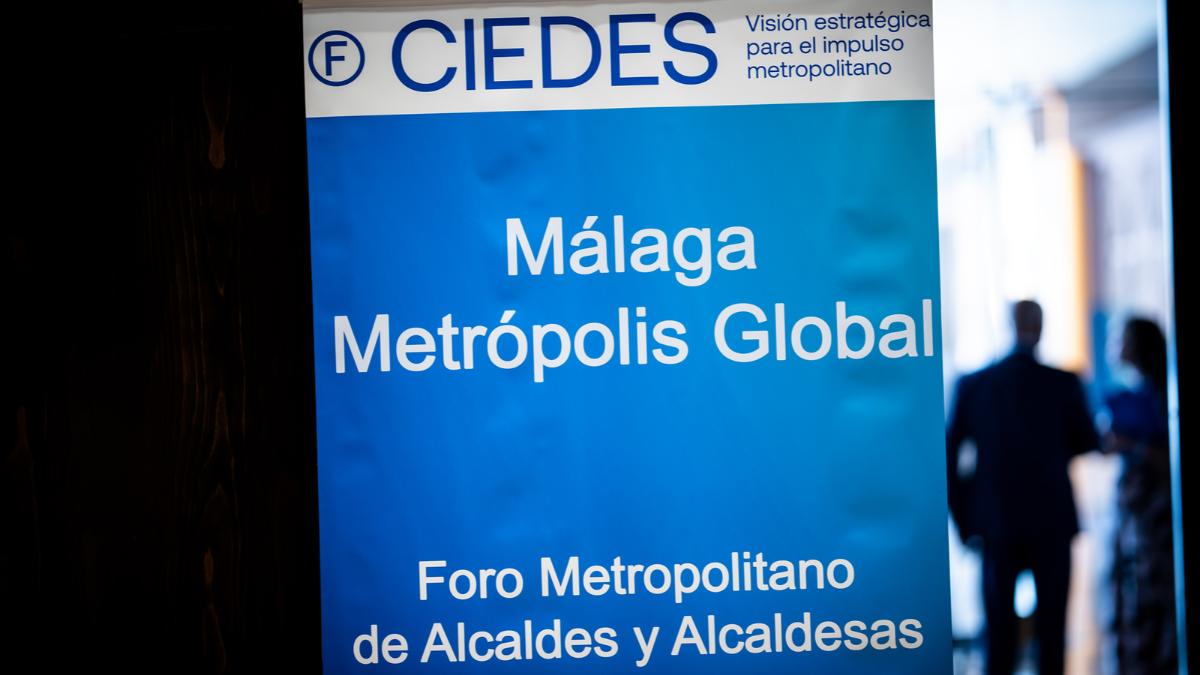

Tourism remains one of the main driving forces behind Málaga's economy, but its continued growth presents challenges that local authorities cannot afford to ignore. This was one of the central messages delivered by the city's mayor, Francisco de la Torre, during the second Tourism and Urban Development Forum, held in Barcelona on Monday, November 16, 2026.
Organised by Grupo Hotusa, the event brought together public officials and tourism industry representatives to examine how tourism is shaping the development of cities.
De la Torre joined Palma mayor Jaime Martínez and Grupo Hotusa president Amancio López for a discussion about the sector's economic importance and its wider consequences.
All three recognised tourism's contribution to local economies, although they expressed different views on holiday rental properties and taxation.
The conversation highlighted one of the main challenges facing cities such as Málaga: how to benefit from tourism without undermining housing affordability or residents' quality of life.
Francisco de la Torre highlights the benefits of tourism for Málaga
During the discussion, Málaga's mayor emphasised the contribution tourism has made to the city's economic and urban development.
De la Torre argued that Málaga has benefited from tourism, while stressing that its effects must be managed carefully to ensure the advantages also reach local residents.
He linked the sector to employment opportunities, the expansion of services and the city's ability to attract visitors.
His position focused on maintaining high-quality tourism that supports the local economy while preserving Málaga's appeal as a place to live.
Tourism generates business for hotels, restaurants, shops and service providers. However, increasing visitor numbers also create additional demands on transport, urban maintenance and public spaces.
For this reason, the discussion went beyond the economic advantages of tourism to consider the responsibility of public authorities to manage its consequences.
Málaga and Palma agree on tourism's importance to their cities
Palma mayor Jaime Martínez expressed a similar view regarding tourism's contribution to the local economy.
He explained that the Balearic capital would be a very different city without tourism, both in terms of its economic development and the transformation it has undergone over recent decades.
Martínez stressed the importance of recognising the positive contribution of an industry that supports a substantial proportion of economic activity in many Spanish destinations.
However, he also acknowledged that tourism presents difficulties requiring effective institutional responses.
Málaga and Palma share several characteristics: both are internationally recognised destinations with significant tourism activity and increasing pressure on certain urban services and public spaces.
Although their tourism models and local circumstances differ, both cities face the challenge of balancing visitor numbers with the needs of permanent residents.
Culture remains one of Málaga's strongest tourism attractions
Culture was another important theme during the discussion.
Francisco de la Torre highlighted the importance of cultural attractions for both local residents and visitors to Málaga.
Over recent decades, the city has strengthened its cultural reputation through museums, exhibitions, artistic events and the restoration of historic buildings and public spaces.
These attractions provide an alternative to traditional beach tourism, particularly for visitors interested in cultural experiences and city breaks.
The mayor argued that cultural investment also benefits residents by expanding opportunities for leisure and access to heritage.
Palma mayor Jaime Martínez similarly emphasised that culture allows cities to strengthen their identities and distinguish themselves from competing destinations.
Both mayors agreed that heritage and cultural programming can play a significant role in the development of urban tourism.
The discussion reflects a wider trend among destinations seeking to attract visitors interested not only in accommodation and entertainment, but also in discovering local history, traditions and cultural life.
Holiday rentals and housing dominate the debate about tourism's future
One of the most controversial subjects at the event was the expansion of short-term holiday rental properties.
This form of accommodation has become increasingly significant in destinations with strong visitor demand, but it has also generated debate over its relationship with the residential housing market.
Participants discussed the possible consequences for housing availability, neighbourhood relations and the wider tourism industry.
Palma's mayor described the situation as a complex problem involving several interconnected factors.
According to Martínez, the growth of holiday rentals has coincided with an existing housing shortage, making it difficult to find solutions that satisfy both residents and visitors.
He also expressed concern about the impact of certain types of holiday accommodation on professional standards within the tourism industry and the image of destinations.
In his view, effective housing policies are essential to addressing the situation.
De la Torre says restricting holiday rentals alone will not solve the housing crisis
Málaga's mayor introduced an important distinction into the discussion.
Francisco de la Torre argued that housing affordability problems cannot be attributed exclusively to holiday rental apartments.
During his intervention, he referred to a national shortage of one million homes, a figure used to illustrate the scale of Spain's housing difficulties.
The mayor called for a coordinated approach involving different levels of government.
His argument was that housing shortages result from several factors, including the available supply, demand and public policy.
Against this background, he supported exploring measures that would allow tourism to coexist with access to suitable housing.
The discussion is particularly relevant to Málaga, where tourism and residential growth have intensified debate over the availability of properties for long-term rental.
However, the mayor's comments did not amount to a definitive solution, nor did they mean that any new measures had been approved.
Málaga mayor suggests exploring a levy on holiday rental guests
Among the potential measures raised by De la Torre was the introduction of charges for visitors staying in holiday rental properties.
The mayor suggested that revenue generated through such a system could help support rental accommodation for vulnerable families.
This proposal introduces the idea of redistributing some of tourism's economic benefits.
Rather than focusing exclusively on the impact of holiday rentals, the approach would allow part of the income generated by tourism to support social needs.
However, this was a possibility discussed at the forum, not a newly approved tourist tax in Málaga.
Any such measure would require further consideration of its terms, implementation and legal framework.
The suggestion also highlights the differences of opinion surrounding tourism taxation, particularly when new charges are proposed for visitors or accommodation providers.
Hotusa president criticises holiday rentals as unfair competition for hotels
Grupo Hotusa president Amancio López expressed particularly strong criticism of residential properties being used for short-term tourist accommodation.
During the discussion, he questioned the conversion of residential housing into a business providing accommodation for visitors.
López argued that this model can create unfair competition for traditional hotels and contribute to the shortage of housing available to residents.
He also warned about the neighbourhood disputes that can arise when tourist accommodation operates within residential buildings.
His remarks reflect concerns within parts of the hotel industry about differences in the regulatory obligations imposed on hotels and other accommodation providers.
However, holiday rentals operate within a regulated market, and the rules governing them vary between Spanish regions and municipalities.
The debate over their impact remains open and involves balancing the interests of tourism businesses with those of residents and property owners.
Hotusa opposes higher taxes on the tourism industry
Although Amancio López was critical of holiday rental apartments, he also questioned proposals to introduce additional taxes affecting the hotel industry.
The businessman argued that tourism is a strategically important industry for Spain and expressed opposition to measures that could undermine its competitiveness.
He suggested that Europe has significant economic opportunities in the service sector, particularly when compared with global powers such as the United States and China, which hold strong positions in technology and manufacturing.
From this perspective, López argued against fiscal measures that could make tourism businesses less competitive.
His position contrasts with proposals supporting the use of tourism-related tax revenue to finance public services, infrastructure or housing programmes.
The discussion demonstrates that there is no single agreed approach to distributing the costs associated with tourism growth.
While some representatives believe visitors should contribute more directly to funding the needs of cities, others warn that increased taxation could affect the attractiveness and competitiveness of destinations.
Barcelona tourism forum examines how tourism can transform cities
The discussion involving Francisco de la Torre formed part of the second Tourism and Urban Development Forum organised by Grupo Hotusa, held at Barcelona's World Trade Center.
The event brought together public representatives, business leaders and specialists involved in tourism and urban development.
The mayors' session took place under the title Cities That Lead: Tourism as a Driver of Urban Change.
Its purpose was to explore how cities can use tourism to support economic development and improve urban environments.
Other sessions examined air connectivity, airport infrastructure and the contribution of major cultural, sporting and professional events to the development of cities.
These issues are closely connected to the challenges facing destinations that need to maintain their international appeal without overlooking the needs of local communities.
Málaga's participation provided an opportunity to exchange experiences and ideas with other cities facing similar pressures.
Málaga's challenge: balancing tourism, housing and quality of life
The debate in Barcelona has once again placed the future of tourism at the centre of urban policy discussions.
For Málaga, maintaining a competitive tourism industry also means addressing its possible consequences for housing, transport and public services.
Cultural attractions, employment and economic activity are among the benefits highlighted by the institutional representatives.
However, tourism growth also raises questions about how those benefits should be shared and how potential negative effects can be reduced.
In this context, Francisco de la Torre's comments point towards an approach in which tourism remains central to the city's economic strategy, alongside measures designed to manage its wider impact.
Proposals concerning holiday rentals, tourism taxation and cooperation between public authorities form part of a discussion that is likely to continue over the coming years.
The message from Málaga's mayor was that tourism represents an opportunity for the city, but its success should also be measured by its ability to improve life for local residents.
The remaining challenge is to translate that balance into practical policies that preserve economic activity without worsening housing affordability or neighbourhood relations.

Latest news




Upcoming events
19
Nov
Javier Perianes – Piano Recital in Málaga
21
Nov
Diego Guerrero Live – Saturdays at the MACP in Málaga
21
Nov
Candlelight: Tribute to Joan Manuel Serrat at Sala Fundación Unicaja María Cristina
21
Nov
Queen Tribute: Freddie Mercury Show
21
Nov
Candlelight: Tribute to Adele at Sala Fundación Unicaja María Cristina
Similar News

Ryanair launches four new direct flights from Málaga to Italy and Germany: destinations, schedules and fares
Provincia de Málaga

Ten Spooky Destinations in Spain for a Halloween Escape
Provincia de Málaga
