


Ronda plans to limit tourist groups to 30 people and regulate coaches near the Puente Nuevo
The town council is preparing new regulations to reduce overcrowding in the historic centre. Proposed measures include restrictions on guided tours, scheduled arrivals for tourist coaches and limits on the use of megaphones in busy areas
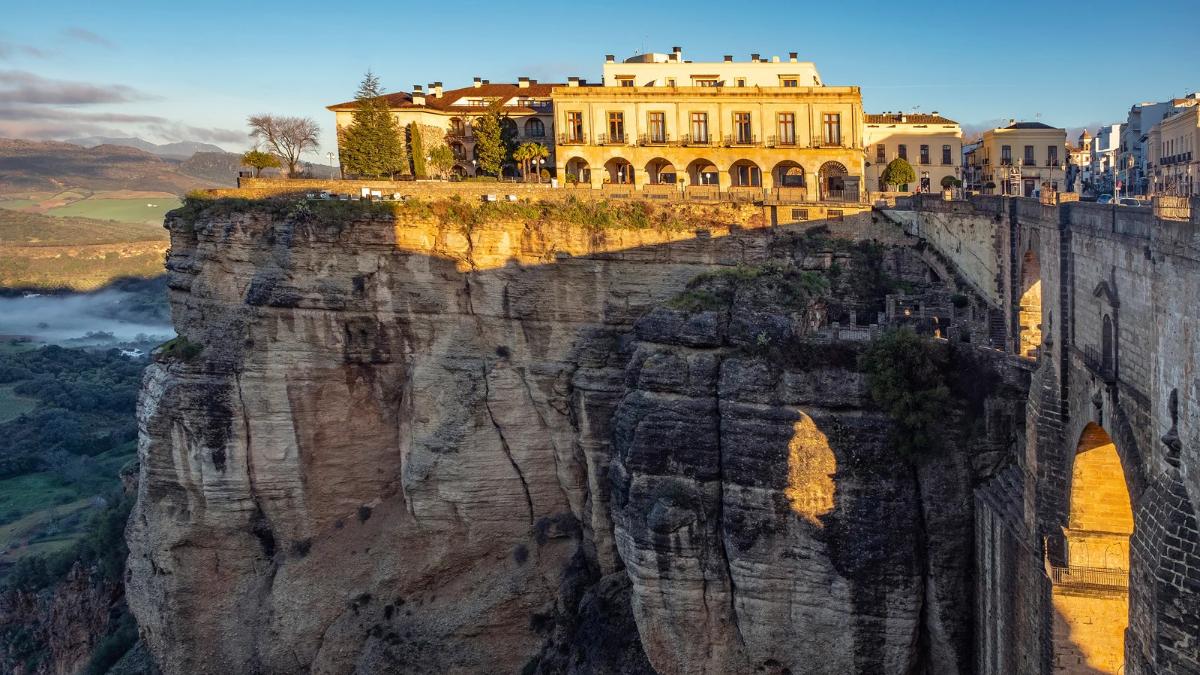

Ronda is preparing new rules to manage visitor numbers around its main attractions and prevent overcrowding from disrupting the daily lives of local residents. The town council has begun developing regulations that could limit organised tourist groups to a maximum of 30 people, control the arrival of coaches and restrict where tour guides can stop to give explanations in the historic centre.
The initiative will focus particularly on the area surrounding the Puente Nuevo, one of the most visited landmarks in Málaga province, and the route connecting Plaza de la Merced, Alameda del Tajo, Calle Virgen de la Paz and Calle Armiñán.
Ronda's mayor, María de la Paz Fernández, presented the proposal alongside Tourism Councillor Ángel Martínez, explaining that the aim is to balance tourism activity with the needs of local residents.
The proposed legislation will be called the Municipal Ordinance for Coexistence and the Sustainable Regulation of Tourist Flows in Ronda.
The measures are currently being studied and are not yet in force. The council has opened a public consultation to gather suggestions and intends to submit the ordinance to the municipal council in December 2026.
The initiative responds to growing visitor numbers and the concentration of organised tourist groups in certain streets and historic areas.
Ronda considers limiting guided tourist groups to 30 people
One of the most significant proposals is to introduce a maximum of 30 people per organised tourist group.
The measure aims to reduce congestion when large numbers of visitors move through the busiest streets of Ronda's historic centre at the same time.
Some groups arriving by coach can currently include between 50 and 55 visitors, according to information discussed during the presentation of the initiative.
Groups of this size can make it difficult for pedestrians and residents to move through certain areas.
Reducing the number of people in each group could help distribute visitors more evenly and make the streets easier to navigate.
However, the proposed 30-person limit has not yet been approved and is not currently a legal requirement.
Its introduction will depend on the final wording of the ordinance, the approval process and the conditions established by the town council.
The municipality has also not published details of all the possible exceptions that the regulations might include.
The proposal is primarily intended to regulate organised tours and improve how they operate in the town's busiest areas.
Puente Nuevo and Alameda del Tajo among the areas targeted by the new rules
The future regulations will focus on Ronda's principal tourist route through the historic centre.
This corridor connects some of the town's most recognisable landmarks and attracts a significant proportion of its visitors.
The areas identified by the council include Plaza de la Merced, Alameda del Tajo, Calle Virgen de la Paz, Puente Nuevo and Calle Armiñán.
Together, these locations form a route containing monuments, viewpoints, shops and streets used by both tourists and residents.
Puente Nuevo is one of the most popular attractions along this route.
Its dramatic position above the El Tajo gorge and the views of the surrounding landscape encourage many visitors to stop and take photographs.
When several organised groups arrive at the same time, crowds can form and make it difficult for other people to pass through.
The proposed regulations aim to establish guidelines to prevent such situations, particularly during the busiest times of day.
The initiative does not currently involve closing Puente Nuevo to visitors or prohibiting access to Ronda's historic centre.
Instead, the intention is to manage organised groups and reduce the difficulties caused by overcrowding.
Tourist coaches could face new arrival schedules in Ronda
Another proposed measure concerns coaches bringing organised groups of visitors into the town.
Ronda receives numerous day trips, including excursions from other destinations across Andalusia and the Costa del Sol.
When several coaches arrive within a short period, large numbers of tourists can gather at the same access points and attractions.
To address this, the council is considering distributing arrivals throughout the day using designated time slots.
One option under discussion would establish an indicative limit of 50 coaches between 9 am and 2 pm, and another 50 from 2 pm onwards, during periods of particularly high demand.
The aim would be to prevent most organised visits from being concentrated in the morning.
Such a system could also help tour operators plan their itineraries and distribute visitor numbers more evenly across the historic centre.
However, the proposed figures and time slots are still under consideration and must be confirmed in the final ordinance.
The council is also considering working with tourism companies to coordinate routes and arrival times.
Tour guides may be prevented from stopping in certain streets
The explanations given by tour guides during organised visits could also become subject to new restrictions.
Ronda Town Council is considering prohibiting explanatory stops in locations where groups obstruct pedestrian movement.
The intention is not to prevent professional guides from carrying out their work, but to identify suitable places for stopping and areas that should remain clear.
During guided tours, visitors commonly gather around their guide to hear explanations about monuments and local history.
This can create difficulties in narrow streets, building entrances and locations where several groups meet.
The new ordinance could identify places where guided explanations are permitted and others where visitors must continue moving.
The council is also studying signage and information measures to help tour operators understand recommended routes.
Any restrictions will depend on the final regulations approved by the municipality.
Ronda considers banning megaphones to reduce noise from guided tours
Noise pollution is another issue the council intends to address.
Among the measures announced is the possibility of banning megaphones and other amplified sound equipment used by tourist guides in certain public areas.
The aim is to reduce disturbances caused by these devices, particularly in streets shared by homes, businesses and large numbers of visitors.
Explanations delivered through amplified equipment can be heard over considerable distances, increasing background noise when several tours operate nearby.
The regulations could encourage quieter communication systems, such as individual listening devices commonly used during guided visits.
However, the town council still needs to establish which devices would be permitted and which would be restricted.
The measure forms part of a wider initiative to improve coexistence and protect everyday life in the historic centre.
Why does Ronda want to change how tourism is managed?
The proposal is linked to the growth of tourism in the town.
Ronda is one of Andalusia's best-known historic destinations, attracting visitors interested in its architecture, dramatic scenery and cultural heritage.
Puente Nuevo, Alameda del Tajo and the streets of the old town form part of the principal routes followed by tourists.
The concentration of visitors in these locations can create difficulties during busy periods.
The problem is not necessarily limited to the total number of tourists, but also concerns how they are distributed throughout the day.
When many excursions arrive at the same time and follow similar itineraries, certain streets can become extremely busy for short periods.
For this reason, the council believes new measures are needed to manage organised visitor movements more effectively.
The initiative aims to maintain the economic benefits of tourism while protecting access and mobility for residents.
April, May and October among the busiest tourist months
The town council also intends to pay particular attention to periods when visitor numbers increase.
April, May and October have been identified among the months with particularly high tourism activity.
During these periods, Ronda can receive substantial numbers of excursions and organised groups.
Visitor numbers are not always evenly distributed, with certain times of day and popular routes attracting a significant proportion of arrivals.
This is why the proposed ordinance includes measures relating to group size, arrival schedules and stopping points.
The aim is to reduce the busiest periods of congestion and encourage a more balanced distribution of tourism activity.
The council is also considering monitoring mechanisms to assess how effectively the new measures work.
Residents and tourist guides can contribute to the proposed regulations
The process of preparing the ordinance includes a public consultation.
Ronda Town Council has published an announcement on its electronic administrative website inviting residents, associations, businesses and other interested parties to submit suggestions.
The consultation is listed as Consulta pública previa de ordenanza para convivencia y regulación sostenible de flujos turísticos, dated November 11, 2026.
The feedback received will help the municipality assess different needs before finalising the text.
Tourism professionals are among the groups directly affected by the proposed changes.
Tourism Councillor Ángel Martínez has already met with the Ronda Tourist Guides Association to discuss the initiative.
Cooperation with these professionals is particularly important because their activities take place in the very locations where the new rules are expected to apply.
Alongside any legal obligations eventually introduced, the council is also considering voluntary cooperation agreements and recommendations to improve how visits are organised.
When will Ronda's new tourism restrictions come into force?
None of the proposed measures is currently in force.
The council intends to complete the consultation process and submit the final ordinance for approval at the ordinary municipal council meeting in December 2026.
If the proposal receives the necessary approval, further administrative and publication procedures will still be required before it can take effect.
There is therefore no confirmed date from which tourist groups will be legally required to limit their numbers to 30 people.
Possible penalties for non-compliance and the procedures for enforcing the regulations have not yet been announced either.
These details will need to be established in the final version of the ordinance.
Until then, the initiative should be understood as a municipal proposal undergoing consultation and development.
What could change for tourists visiting Ronda?
If the measures are eventually approved, the main changes will affect organised excursions, guided tours and tourist coach arrivals.
Large groups may need to split into smaller parties to comply with the maximum number of participants established by the regulations.
Companies organising excursions could also need to adjust their arrival times and plan different routes through the historic centre.
Tour guides would need to know where they can stop to give explanations and what communication systems are permitted.
For people visiting Ronda independently, the current proposal does not include a general restriction on access to the town's main monuments or public spaces.
The announced intention is to improve mobility and reduce excessive concentrations of visitors, rather than prevent tourists from discovering Ronda's best-known landmarks.
The precise impact will depend on the final wording adopted by the town council.
Ronda aims to balance tourism with everyday life for local residents
The proposed ordinance represents another attempt to address one of the town's principal challenges: maintaining its appeal to visitors without allowing tourism activity to disrupt daily life.
Debates about traffic and pedestrian access in Ronda's historic centre are not new.
Previous administrations have considered measures affecting vehicle circulation and access to certain historic areas.
Among the initiatives that generated significant debate were restrictions on traffic along the route between the bullring, Puente Nuevo and the walls of the San Francisco neighbourhood.
The latest proposal introduces a different approach, focusing specifically on visitor flows, organised tours and the shared use of public spaces.
The council wants residents, business owners, tourism professionals and visitors to be able to share an urban environment that is particularly sensitive because of its historical importance.
Ronda will spend the coming weeks considering regulations that could limit tourist groups to 30 people, control coach arrivals and restrict guided-tour stops and megaphone use near Puente Nuevo and other busy areas.
The public consultation is already open, and the next planned step is to present the proposal at the December municipal council meeting. Until it is approved and comes into force, the announced restrictions should not be considered definitive.

Latest news



Upcoming events
13
Nov
Candlelight: Coldplay & Imagine Dragons at Sala Fundación Unicaja María Cristina
13
Nov
Candlelight: Tribute to Ludovico Einaudi at Anantara Villa Padierna
13
Nov
A View from the Bridge – Arthur Miller at Teatro del Soho
13
Nov
Candlelight: Queen vs. ABBA at Sala Fundación Unicaja María Cristina
13
Nov
Madonna & 80s and 90s Icons Tribute by Diva Fever in Marbella
