Istán, the Spring of the Costa del Sol: Water, Nature and History Near Marbella
Fountains, Moorish irrigation channels, natural pools and mountain trails make this whitewashed village, located just a short distance from Marbella, an appealing escape for the final days of summer.

A Whitewashed Village Shaped by Water
Istán lies between Marbella’s coastline and the mountains of the Sierra de las Nieves. Its location allows visitors to leave the busy coast behind and quickly enter a landscape of orchards, woodland, rivers and green hillsides.
Water provides the central theme of any visit. Springs, fountains and historic irrigation channels cross the municipality, explaining why Istán is widely known as the Spring of the Costa del Sol.
Combined with the narrow, whitewashed streets of its historic centre, this landscape makes the village an appealing September excursion for anyone looking to escape the lingering summer heat.
El Chorro Fountain and Moorish Irrigation Channels
One of the first stops can be the El Chorro fountain and washhouse at the beginning of Calle Chorro. Its seven spouts provide drinking water and recall the essential role once played by public fountains in everyday village life.
A traditional communal washhouse survives beside the fountain. Together, they form one of Istán’s most recognisable corners and illustrate how water became integrated into the village’s architecture.
Irrigation channels of Andalusian origin remain another defining part of the landscape. Some continue to carry water towards orchards and cultivated land. The Acequia del Chorro is particularly notable, beginning near the source of the River Molinos and continuing through lush vegetation.
Charco del Canalón
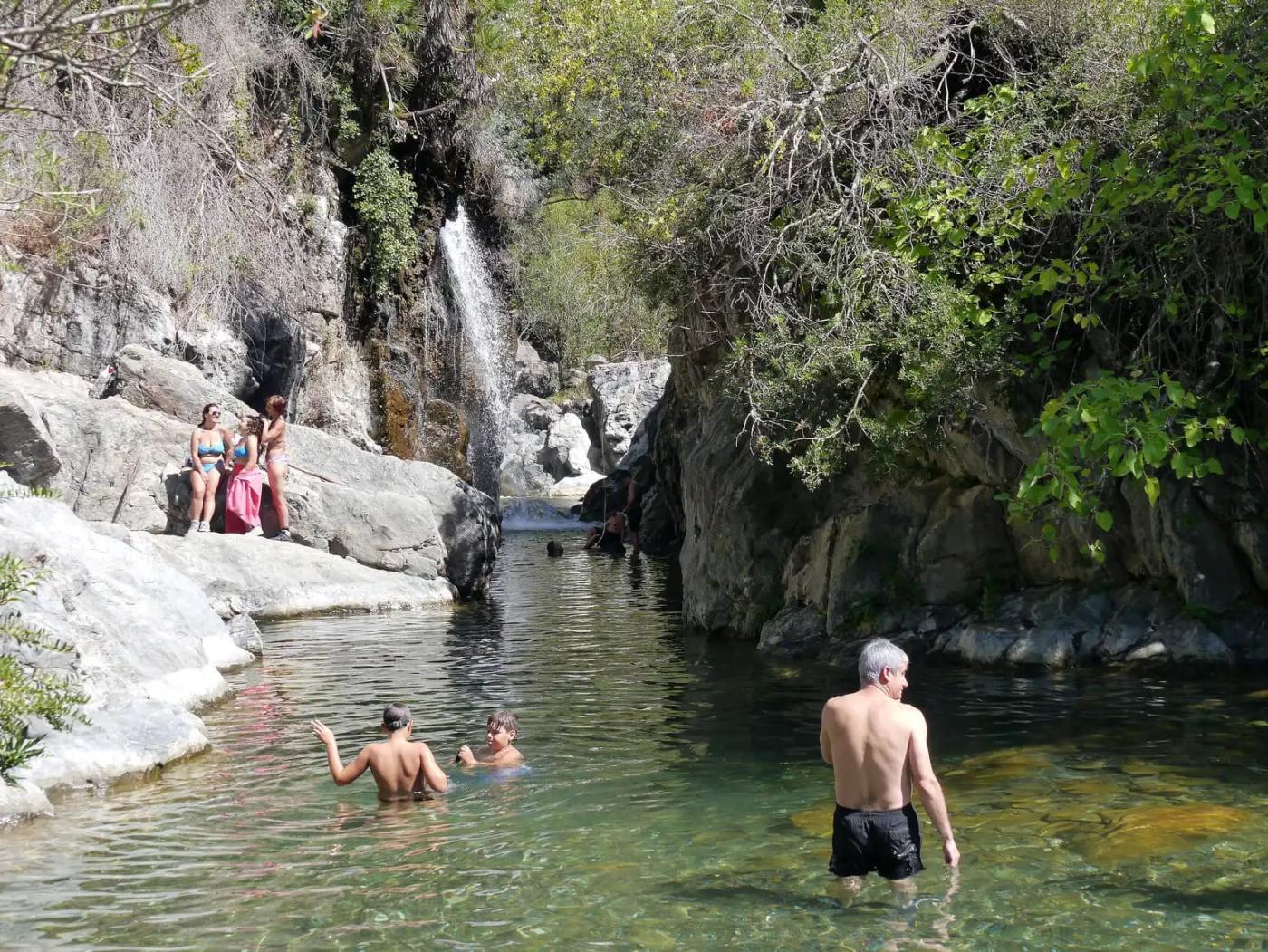
Charco del Canalón is one of the municipality’s best-known natural attractions. Located on the River Verde, it features pools, small cascades, rocky formations and riverside vegetation.
The official trail from Istán is approximately 7.2 kilometres long and follows a linear route of medium difficulty. The estimated walking time is one hour and 30 minutes each way, meaning visitors should allow several hours for the complete excursion.
Suitable footwear, drinking water and sun protection are essential. Walkers should also check the latest trail conditions and avoid the hottest part of the day. The presence of natural pools does not mean swimming will always be permitted or safe.
Trails Through Orchards, Rivers and Mountains
The countryside surrounding Istán offers a variety of hiking and mountain-biking routes. Trails pass irrigation channels, historic rural tracks, chestnut trees, orchards and valleys shaped by the Verde and Molinos rivers.
The Cañada del Infierno, the source of the River Molinos and several natural pools close to the village are among the places that can be explored.
September can be a rewarding time to discover these landscapes, although daytime temperatures may remain high. Starting early, checking the weather forecast and choosing a route suited to each visitor’s fitness level are strongly recommended.
Viewpoints Over the Reservoir and Mountains
Visitors looking for a less demanding activity can explore the viewpoints surrounding the village. These natural balconies provide views of the whitewashed houses, neighbouring mountains and La Concepción reservoir.
Herriza II viewpoint has become particularly popular for photographs thanks to its large swing and oversized wooden bench. Peñón viewpoint provides another broad panorama of the landscape surrounding Istán.
Tajo Banderas viewpoint is also worth visiting. Historically connected with several military episodes, its elevated position was traditionally used to observe the surrounding territory.
Escalante Tower and the Historic Centre
The route through the village can continue to Escalante Tower, regarded as Istán’s oldest surviving building. This defensive structure of Nasrid origin stands on Calle San Miguel and is protected as a Site of Cultural Interest.
Parts of its vaulted interior, a semicircular arch and elements of the former enclosure remain visible. Its position allowed the surrounding territory to be monitored during the final centuries of Muslim rule.
The Church of San Miguel stands nearby. Originally built in the 16th century, it was reconstructed following the Morisco uprising. Around three kilometres outside the village, the Hermitage of San Miguel occupies a natural cave.
Traditional Food to Complete the Visit
Istán’s cuisine reflects its mountain setting, cultivated land and seasonal produce. Traditional recipes include gazpachuelo, maize soup, fennel stew, berza and migas.
Local sweet specialities include wine-flavoured ring biscuits, olive oil cakes and hornazos. Citrus fruit, particularly oranges, also plays an important role in the municipality’s food and celebrations.
A full-day itinerary could combine a walk through the historic centre, a short route beside the irrigation channels, stops at several viewpoints and a meal featuring local dishes.
Before travelling, visitors should check the municipal information about the Moorish irrigation channels, the Charco del Canalón trail and Istán’s tourism routes.

Latest news



Upcoming events
17
Sep
La Pequeña Cuba Gastro-Cultural Festival in San Pedro Alcántara 2026
18
Sep
World Wellness Weekend Marbella 2026
18
Sep
Candlelight: Queen vs. ABBA in Málaga
18
Sep
Candlelight: Coldplay and Imagine Dragons in Málaga
18
Sep
3 de Corazones – Pancho Céspedes, Enrique Ramil and José Luis Jaén in Málaga