Benaoján, the Málaga village surrounded by caves, rivers and mountains that offers an escape from the summer heat
In the Serranía de Ronda, this whitewashed village combines mountain scenery, the Guadiaro River, one of Andalusia’s most impressive underground systems and the remarkable Pileta Cave.
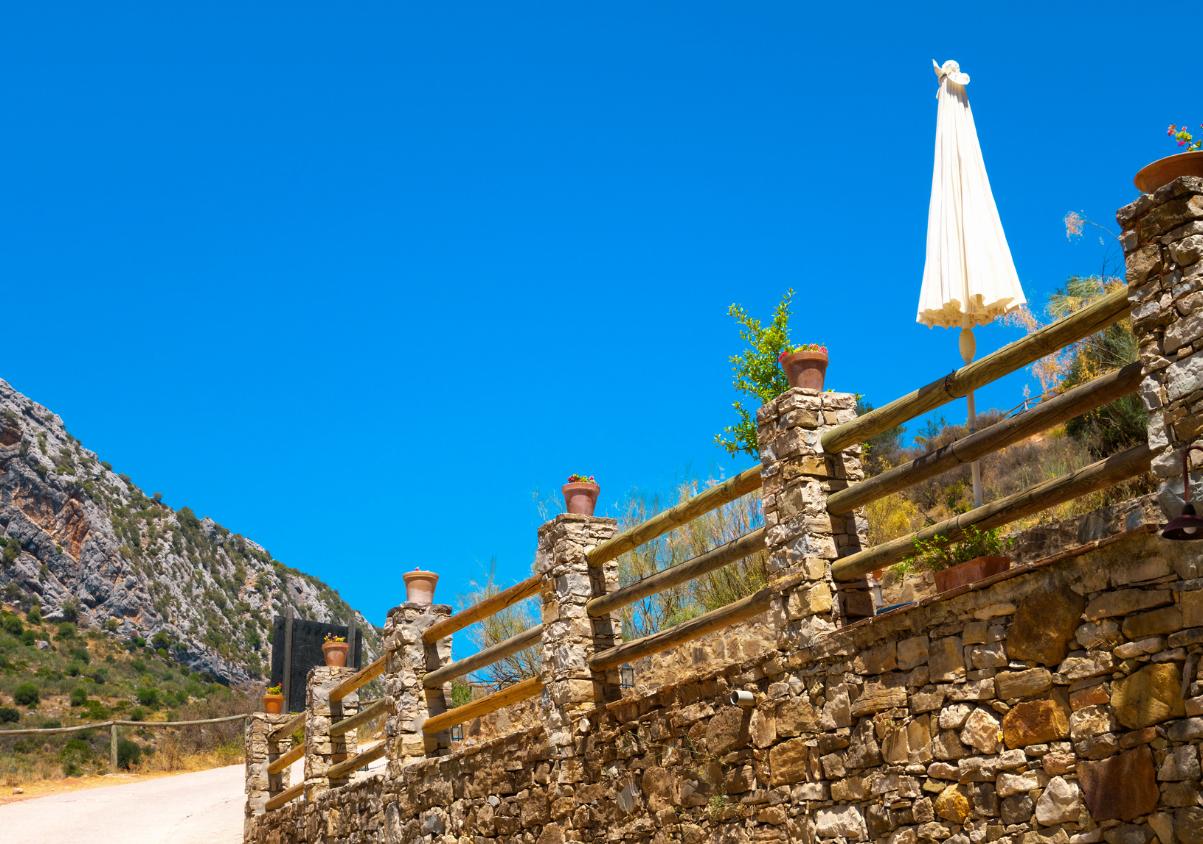

When summer temperatures soar along the coast, inland Málaga offers a completely different landscape. One of the best examples is Benaoján, a small white village in the Serranía de Ronda, surrounded by limestone mountains, rivers, vegetation and spectacular caves.
Located next to the Sierra de Grazalema Natural Park and within easy reach of Ronda, Benaoján is particularly famous for its connection with water and the underground world. Nearby are Gato Cave, Pileta Cave and the Hundidero-Gato cave system, as well as the Guadiaro River and several walking routes through one of the most dramatic landscapes in Málaga province.
Gato Cave, Benaoján’s great natural landmark
Few places represent the landscape of Benaoján better than Cueva del Gato, or Gato Cave. Its enormous opening in the mountain is the natural outlet for the waters of the Gaduares River after travelling underground for several kilometres from the Hundidero area.
At its entrance lies the famous Charco Frío, whose name literally means “cold pool” and refers to the notably low temperature of its water. Its clear colour and dramatic rocky surroundings have made it one of the most recognisable natural landmarks in inland Málaga.
The cave is protected as a Natural Monument of Andalusia and is also home to important colonies of cave-dwelling bats, while archaeological evidence shows that humans were present in this area thousands of years ago.
There is, however, an important point for anyone planning to visit in summer 2026: official access to Gato Cave and its access trail is currently temporarily closed following damage caused by flooding during the previous winter. Visitors should therefore check the latest restrictions before travelling.
A village shaped by the Guadiaro River
Water is a constant feature of the landscape around Benaoján.
The lower part of the municipality is home to Benaoján-Montejaque railway station, close to the Guadiaro River, where paths lead through riverside vegetation, mountain scenery and historic rural buildings.
The abundance of springs and waterways also explains the historical presence of mills and other hydraulic structures. Places such as Los Cascajales, also known as Molino del Nacimiento, are reminders of a time when water power played an important role in the local economy.
The contrast with the Costa del Sol could hardly be greater: promenades and beaches give way to rivers, rocky gorges and mountain paths.
Pileta Cave, a journey into Prehistory
One of Benaoján’s most remarkable attractions is the Cueva de la Pileta, located several kilometres from the village.
Inside is one of the most significant collections of prehistoric cave art in Andalusia.
Its galleries contain paintings and engravings from different periods, including representations of horses, goats, deer, fish and other animals, together with numerous abstract signs.
The cave was discovered in the early 20th century, and its archaeological significance led to its designation as a Historic-Artistic Monument in 1924.
Entering Pileta Cave means leaving the intense summer sun behind and stepping into a completely different world of underground chambers, geological formations and traces of human activity dating back thousands of years.
Hundidero-Gato, a vast underground system
The geology of Benaoján and its surroundings reaches its most dramatic expression in the Hundidero-Gato cave system.
The Gaduares River disappears underground through Hundidero, in the neighbouring municipality of Montejaque, before re-emerging several kilometres later at Gato Cave in Benaoján.
Between the two entrances lies an extensive network of underground galleries, lakes and chambers that has made the area an important destination for experienced cavers.
It is not, however, a conventional tourist route. Exploring the system requires specialist experience, appropriate equipment and the necessary permits, and should not be confused with an ordinary hiking trail.
Hiking, scenery and local food in the Serranía de Ronda
Beyond its caves, Benaoján is also an excellent base for exploring one of the greenest and most rugged parts of Málaga province.
Its location between the Líbar mountains and the Guadiaro valley provides access to hiking trails, rural paths and nearby white villages such as Montejaque, while Ronda is also within easy reach.
The village itself is worth exploring, with narrow streets, whitewashed houses and steep slopes typical of traditional Andalusian mountain settlements.
Benaoján is also well known for its charcuterie tradition, with cured meats and other pork products forming an important part of its local gastronomy.
A different way to discover inland Málaga
Benaoján brings together an unusual combination of prehistoric caves, rivers, dramatic rock formations, rural heritage and some of the most impressive scenery in the Serranía de Ronda.
It is an appealing choice for anyone looking to leave the coast behind for a day and discover another side of Málaga, particularly when combined with nearby Montejaque or Ronda.
Gato Cave remains one of the area’s major natural symbols, but visitors planning a trip should currently take the access restrictions into account, as the Andalusian Regional Government has temporarily closed both the Natural Monument and its access trail following damage caused by winter flooding, according to the official notice from the Junta de Andalucía.

Latest news


Upcoming events
17
Sep
La Pequeña Cuba Gastro-Cultural Festival in San Pedro Alcántara 2026
18
Sep
World Wellness Weekend Marbella 2026
18
Sep
Candlelight: Queen vs. ABBA in Málaga
18
Sep
Candlelight: Coldplay and Imagine Dragons in Málaga
18
Sep
3 de Corazones – Pancho Céspedes, Enrique Ramil and José Luis Jaén in Málaga